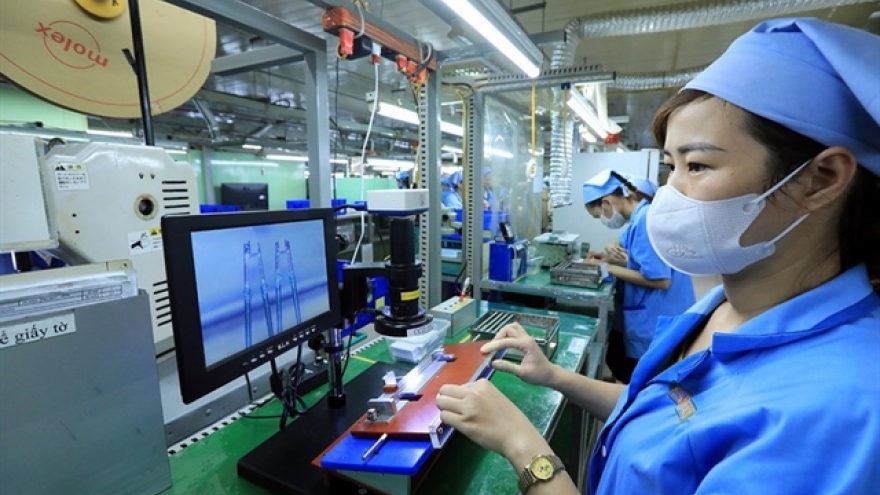
Why global firms are turning to Vietnam amid supply chain disruptions

VOV.VN - Amid ongoing disruptions to global supply chains caused by geopolitical conflicts, economic fluctuations and rising protectionism, Vietnam is increasingly being seen as a stable and reliable destination for companies restructuring their supply chains.
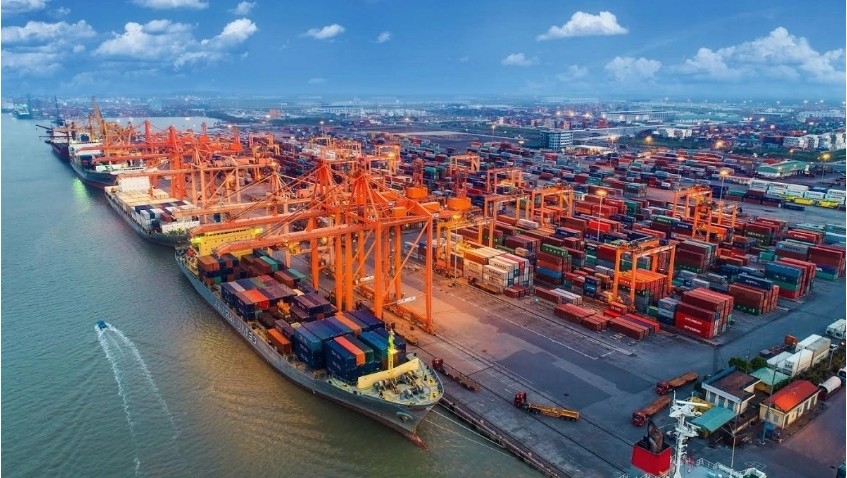
Vietnam’s new position in global supply chains
In recent years, supply chain diversification has become a strategic necessity for multinational corporations seeking to reduce reliance on a single market or production base. Within this global realignment, Vietnam has gained attention thanks to its political and social stability, abundant labor force, competitive costs and deep integration into the global economy through a broad network of next-generation free trade agreements.
Vietnam’s import-export turnover has remained at high levels, placing the country among the most open economies in the region. Products labeled “Made in Vietnam” are playing an increasingly visible role in global value chains, particularly in electronics, textiles and garments, footwear, furniture and processed agricultural products. Notably, Vietnam is gradually moving beyond basic processing and assembly toward production stages that require higher technical standards and generate greater added value.
A clear indicator of Vietnam’s growing role as a trusted partner is the sustained inflow of foreign direct investment (FDI).
To date, Vietnam has investment ties with 153 countries and territories, recording 44,801 valid FDI projects with total registered capital exceeding US$525.8 billion. Many multinational corporations continue to expand production in Vietnam, treating the country as a long-term base within regional and global supply chains rather than a short-term alternative.
According to Nguyen Huu Tuan, Director of the Center for E-commerce and Digital Technology Development under the Ministry of Industry and Trade of Vietnam, participation in high-quality global supply chains is essential to Vietnam’s economic upgrading.
“High-quality global supply chains form a critical link between production and consumption, and between domestic and international markets. This is also a key factor enabling Vietnam to move from a manufacturing country toward greater competitiveness,” Tuan said.
However, experts note that to maintain and strengthen this position, Vietnam cannot rely solely on labor cost advantages or investment incentives. It is necessary to improve product quality, standardize production processes, accelerate digital transformation and develop supporting industries. Only when domestic enterprises are capable of deeper participation in the value chain can Vietnam’s role as a “trusted partner” be sustained over the long term.
Vietnam-US ties as a key supply chain pillar
Within the broader global supply chain landscape, economic and trade relations between Vietnam and the US constitute a key pillar. The US currently ranks 11th among foreign investors in Vietnam, with 1,501 projects and total registered capital of nearly US$12.3 billion, and remains one of Vietnam’s largest and most important export markets.
As of October 31, 2025, Vietnam had 266 investment projects in the US, with total registered capital of nearly US$1.4 billion, ranking sixth among the 85 countries and territories where Vietnam invests.
In trade terms, bilateral turnover reached approximately US$141.4 billion during the past 10 months of 2025, up 27.2% year on year. Vietnam’s exports to the US amounted to US$126.2 billion, an increase of 27.6% and accounting for 32.3% of total exports, while imports from the US reached US$15.2 billion, up 23.8% and representing 4.1% of total imports.
Reviewing more than three decades since normalization of bilateral relations, Pham Quang Vinh, former Deputy Foreign Minister and former Ambassador of Vietnam to the US, said economic and trade ties have consistently served as a central pillar in relations between the two countries.
“Over the past 30 years, economic and trade cooperation has been an extremely important pillar in Vietnam-US relations, linking interests between the two countries and their business communities,” Vinh said.
According to Vinh, bilateral trade between Vietnam and the US stood at less than US$0.5 billion in 1994 and reached US$149.6 billion in 2024, an increase of nearly 300 times.
From the perspective of the US business community, Vietnam is regarded as a successful destination in supply chain diversification.
Virginia Foote, Vice Chair of AmCham Vietnam, said the US has become a highly important export market and a success story for Vietnam.
These assessments point to growing confidence among US companies in Vietnam’s manufacturing capacity, ability to meet standards and stability within global supply chains serving one of the world’s largest markets. At the same time, this confidence comes with stricter requirements related to environmental protection, labor standards, transparency and sustainable development.
As global uncertainties persist, Vietnam’s recognition as a trusted link in global supply chains presents both an opportunity and a challenge. By making effective use of strategic partnerships while strengthening the internal capabilities of domestic enterprises, Vietnam can not only maintain its current role but also gradually move to a higher position in the global value chain.
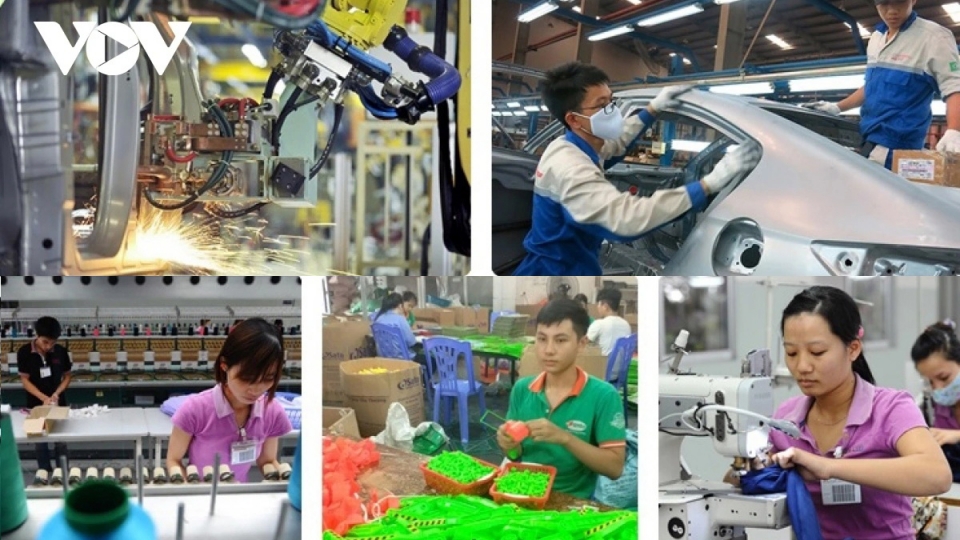
Private sector participation in supply chains - Key to sustainable export growth
VOV.VN - To achieve sustainable export growth, Vietnam must boost the role of domestic private enterprises in supply chains to leverage opportunities from multinational corporations and reduce reliance on foreign direct investment (FDI ) businesses.