Warning over risks to trust in international payments

VOV.VN - Full compliance with obligations under letters of credit (L/Cs) is essential to safeguard the credibility of the financial system and help contain risks, as any deviation can erode trust and affect the broader trade and investment environment.
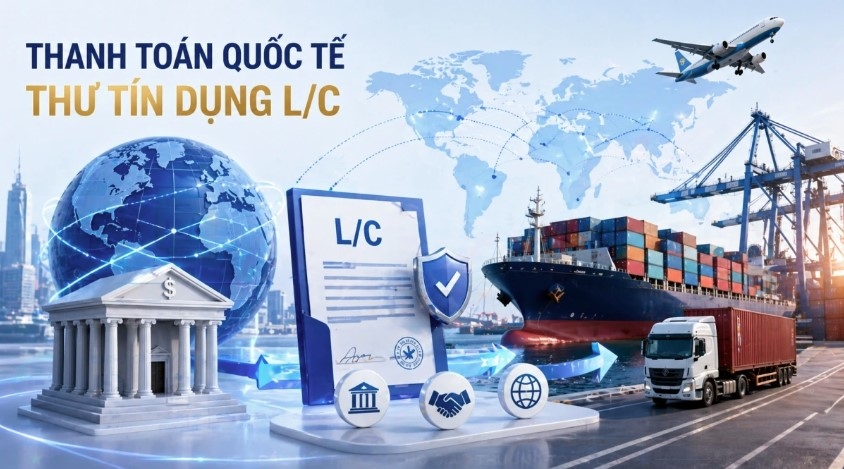
As global trade increasingly relies on payment assurance mechanisms, letters of credit (L/Cs) have long been regarded as a trusted guarantee between international buyers and sellers. Recent developments, however, indicate that this mechanism is facing certain risks, including documentary fraud and a lack of transparency in control procedures at intermediary banks. When trust, the core element of international payment, is weakened, the impact extends beyond individual transactions to the wider trade and investment environment.
The issue is no longer which payment method to choose, but how to reinforce trust within a system that is becoming increasingly complex and evolving.
At a recent discussion on international payments held in Hanoi, legal and financial experts, along with representatives of investors and businesses, discussed operational principles and existing constraints in this field.
According to participants, Vietnam has made progress in incorporating international practices into its domestic legal framework. A core principle of L/Cs, that compliant documents must be honoured, is set out in the UCP 600 to ensure transparency and safety in international transactions.
However, some cases have arisen in which payment obligations were delayed or not fulfilled despite documents being confirmed as compliant, raising concerns about consistency in implementation.
Participants noted that this is not only a technical banking issue but also a matter of trust- a fundamental factor supporting international trade and investment relations.
In the context of deepening integration, consistent and full implementation of L/C payment obligations is seen as an important condition for maintaining the credibility of the financial system. When obligations are not met, the impact may extend beyond a single transaction and affect how international partners assess the trade and investment environment.
Notably, as Vietnam participates in multiple free trade agreements (FTAs), international payment standards are increasingly linked to national credibility. Delays or incomplete handling of payment obligations may increase risks to trust, particularly among foreign investors who place high importance on transparency and stability.
Experts said stronger adherence to international standards is needed, along with timely handling of emerging issues to prevent risks from spreading.
They also underlined the need to improve implementation capacity and awareness among relevant parties.
Amid intensifying global competition, the reliability of payment instruments such as L/Cs remains a key factor in sustaining trade flows and attracting investment.
Ensuring consistent fulfilment of payment obligations is therefore essential to maintaining confidence in the financial system and supporting stable international trade and investment relations.
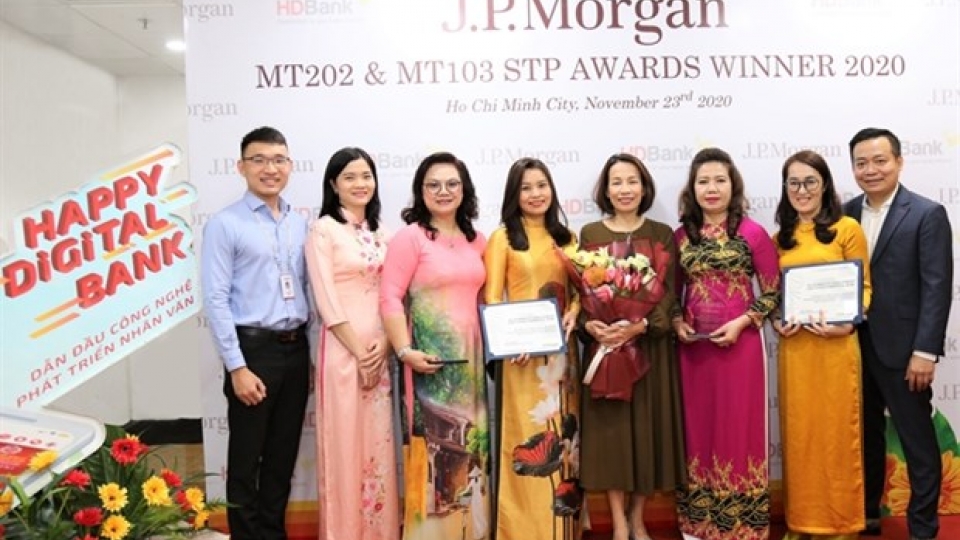
HDBank wins award for outstanding international payment service
For its almost 100 percent success rate in straight-through processing, the Ho Chi Minh City Development Joint Stock Commercial Bank has received the MT202 and MT103 STP awards for international payment services from J.P. Morgan Chase Bank.

UnionPay International, VNPAY cooperate in QR code payment
UnionPay International (UPI), a subsidiary of China UnionPay, said on June 21 that it has signed a cooperation agreement on payment by QR code with Vietnam Payment Solution Joint Stock Company (VNPAY) - the biggest QR code payment firm in Vietnam.