


Vietnamese exports face tougher challenges in EU market

Vietnam-EU trade continued to grow strongly in the first seven months of 2026 despite sluggish European economic growth, but Vietnamese exporters are facing tougher requirements on the environment, quality, packaging, e-commerce and product traceability.

The Vietnamese Trade Office in Belgium and the EU has urged businesses to proactively adapt to stricter EU regulations, particularly in steel, agricultural and food products, and e-commerce.
For steel, the EU has imposed a duty-free quota of 18.3 million tonnes covering 26 product categories since July 1, with a 50% tariff on imports outside the quota. As a partner with a free trade agreement with the EU, Vietnam benefits from part of the quota reserved for countries with such agreements. However, the Trade Office expects Vietnamese steel exports to remain under pressure and has called for further negotiations on quotas.
E-commerce is also facing new cost pressures. Since July 1, the EU has ended duty exemptions for parcels worth less than 150 EUR (about 171 USD), replacing them with a temporary 3 EUR charge per item. From November, each product category in a small parcel will also incur a 2 EUR handling fee, potentially affecting the competitiveness of Vietnamese goods sold directly to EU consumers.
Food and agricultural exports face tighter safety and quality controls. The EU's Rapid Alert System for Food and Feed (RASFF) issued 10 alerts involving Vietnamese food products in July and August, including lychee, tuna, cinnamon, black pepper, pangasius, shrimp, rambutan and green tea. Some cases were considered serious and rejected at the border.
Vietnamese businesses also need to prepare for new EU rules, including the EU Deforestation Regulation (EUDR), expected to take effect in late December, new packaging and packaging-waste rules that entered into force on August 12, and measures banning products made with forced labour.
The Trade Office has called for stronger early-warning mechanisms to keep businesses informed of policy and technical changes, as well as tighter quality controls of agricultural and food products from the production stage.
Despite the challenges, the EU remains a major market for Vietnamese goods. Two-way trade reached 52.6 billion EUR in the first seven months, up 23.2% year on year. Vietnam's exports rose 26% to 45.6 billion EUR , while imports increased 6% to 7 billion EUR.
Manufactured goods were the main growth driver, with machinery, mechanical equipment and electrical machinery accounting for nearly 60% of exports. Textiles and garments, wood and wooden products, toys and sporting goods also recorded strong growth. By contrast, exports of iron and steel, footwear, coffee, seafood and furniture declined.
Trade between Vietnam and Belgium hit around 2.59 billion EUR, including 2.15 billion EUR in Vietnamese exports and 443.5 million EUR in imports.
The growth came despite sluggish EU economic performance, with the bloc's GDP rising 0.7% year on year in the second quarter. Belgium's central bank forecasts GDP growth of around 0.6% for 2026.
Beyond traditional export sectors, the Trade Office has proposed expanding Vietnam-Belgium cooperation in logistics, seaports, renewable energy, hydrogen, green technology and the circular economy, in line with Belgium's development priorities.
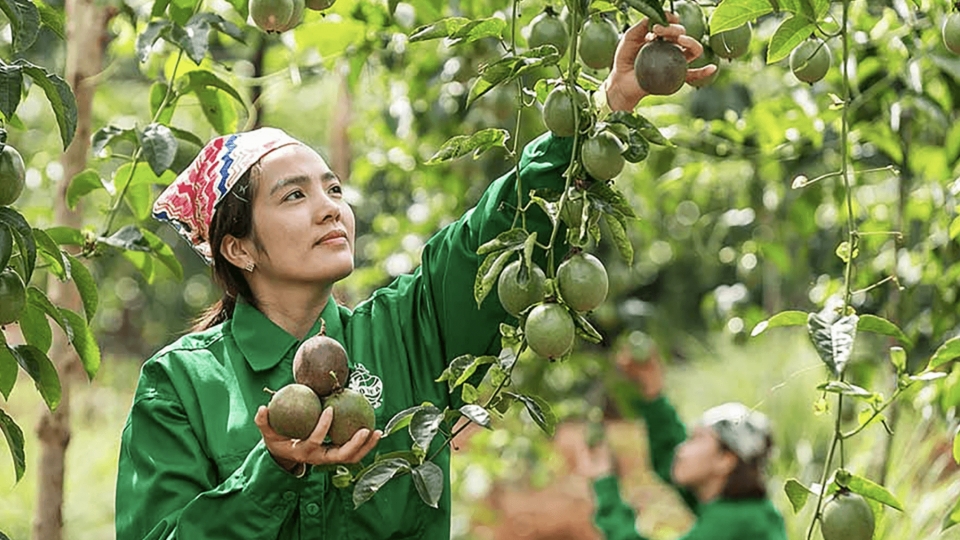
Passion fruit leads record US$ 343 million agricultural exports to EU in 7 months
VOV.VN - Vietnam's seven-month fruit and vegetable exports to the European Union reached a record US$ 343.3, recording an average annual growth rate of 29.4% since 2022 and accounting for 7.2% of the country's total fruit and vegetable export turnover.


