Vietnam TECHFEST 2025: Advancing nationwide innovation ecosystem

The Management and Sustainable Development Institute (MSD), the lead organisation of the Social Open Innovation Community, officially launched the SOAR Initiative (Social Open Innovation for All Resilience) on December 12.
It aims to introduce a new framework for assessing social impact and advance a responsible and collaborative open-innovation ecosystem in Vietnam.
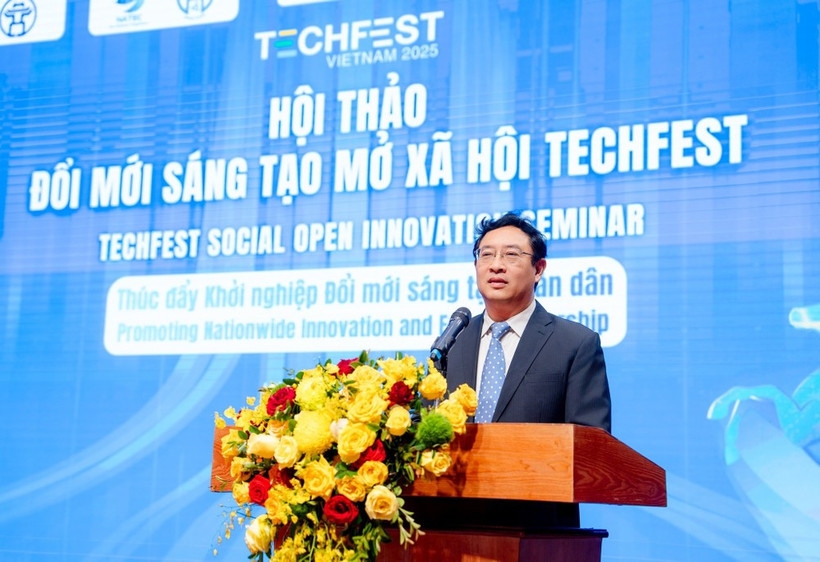
The launch took place during a seminar on social open innovation under the theme “Promoting Mass Innovation and Entrepreneurship", held as part of TECHFEST Vietnam 2025.
SOAR is built on four pillars: promoting sustainable business models and solutions, co-creating with communities to ensure solutions accurately reflect real needs, and advancing open innovation through win–win–win collaboration between enterprises, investors, social organisations and communities. The final pillar is developing transparent systems to measure the social impact.
Opening the seminar, Pham Hong Quat, Director of the National Agency for Technology Entrepreneurship and Commercialisation Development (NATEC), underlined the crucial role of social open innovation in national development, helping Vietnam address challenges such as the middle-income trap, population ageing, environmental pollution and urban pressures.
He said the Social Open Innovation Community is expected to generate new technological solutions that deliver tangible socio-economic benefits.
Speaking at the event, Dutch Ambassador to Vietnam Kees van Baar highlighted social open innovation as a critical bridge between economic development and community welfare. He welcomed Vietnam’s efforts to promote inclusive innovation and digital transformation, noting that technology must be human-centred, as emphasised in the Vietnamese Politburo’s Resolution No. 57-NQ/TW on breakthroughs in science – technology development, innovation and national digital transformation.
He emphasised the need to ensure equal digital access for all, from young people, women to vulnerable groups, and reaffirmed the Netherlands’ commitment to supporting Vietnam to promote innovation, sustainability, and inclusive growth.
Nguyen Phuong Linh, Executive Director of the Management and Sustainable Development Institute - United Way Vietnam, highlighted key challenges in Vietnam’s social innovation scene such as limited data, weak collaboration structures, poor impact measurement, and a shortage of skilled human resources.
She said sustainable development requires strong foundations in innovation, openness, connectivity and inclusiveness, adding that social open innovation derives its strength from connection: linking community voices with startup capabilities, business challenges with academic expertise, and diverse resources so that “no one is left behind.”
From a business perspective, Sun Sukkun, Project Owner at Shinhan Square Bridge, Shinhan Financial Group Hope Foundation, shared insights into the group’s social open innovation model, developed in the Republic of Korea and expanded to Vietnam in 2021. The platform connects startups, enterprises, social organisations, and communities to co-create solutions, test business models, and scale social impact.
He emphasised that open communication is key to working well together, especially when startups partner with big companies, and that seasoned mentors are crucial for breaking down obstacles. He also noted that social open innovation brings both economic and social benefits.
Recommendations collected at the workshop will help shape TECHFEST Vietnam 2025’s continued efforts to advance the social open innovation ecosystem, promoting sustainability, inclusiveness and broad public participation in the national innovation agenda.
The workshop was expected to become an annual flagship event of TECHFEST Vietnam, providing a platform for in-depth dialogue among policymakers, businesses, academic institutions, social organisations, and practitioners. A regular engagement mechanism will enable the ecosystem to stay aligned with emerging trends, share effective models, propose policy directions, and strengthen multi-stakeholder cooperation to accelerate social open innovation initiatives serving sustainable development.
Australia–Vietnam TechFest 2025 strengthens bilateral innovation cooperation
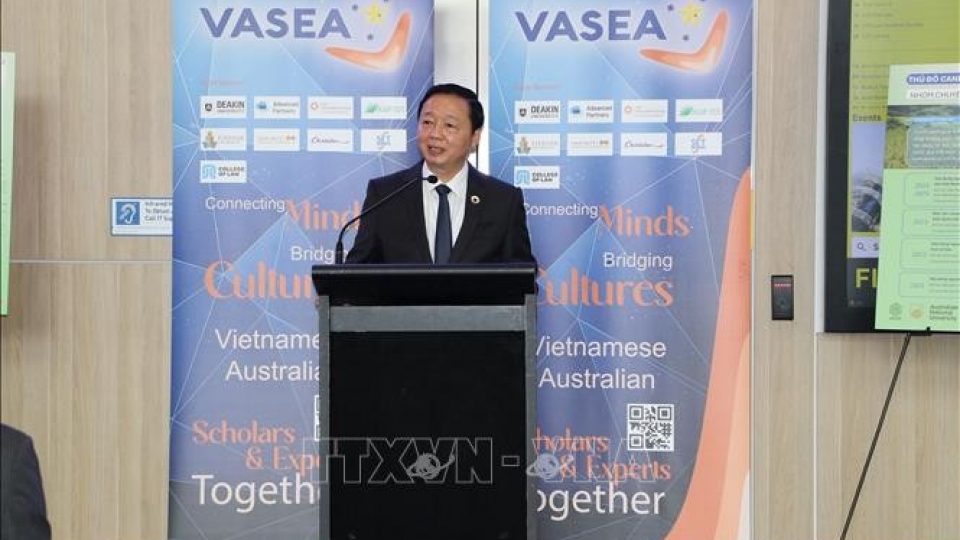
The Science and Technology Dialogue Forum, a flagship event within the Australia–Vietnam TechFest series hosted by the Vietnamese Australian Scholars and Experts Association (VASEA), was recently held at the University of Technology Sydney (UTS), bringing together senior leaders, innovators, and industry partners.