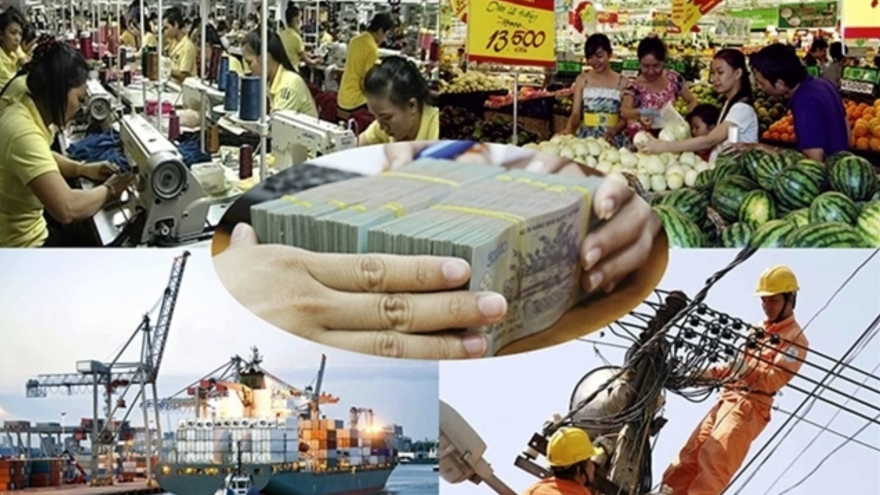
Vietnam targets improvements in business environment, national competitiveness

VOV.VN - Improving the business environment and enhancing national competitiveness remain key objectives set out by the Government in Resolution No. 02, issued earlier this year.
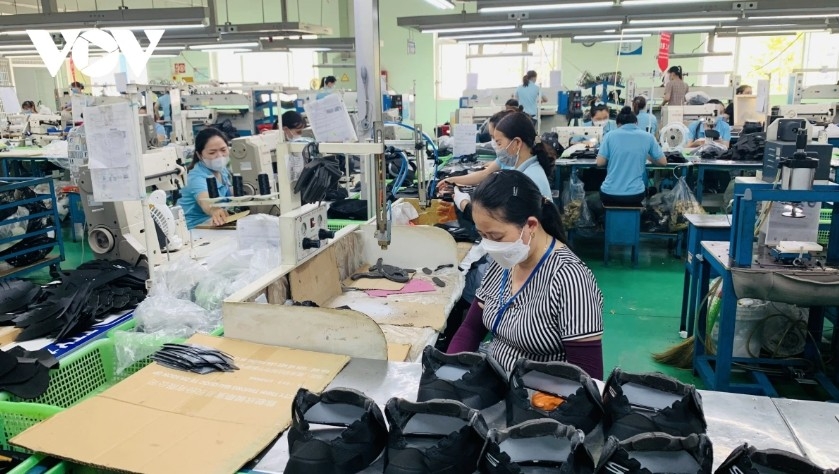
The resolution devises specific targets in line with domestic conditions and emerging development trends, with the aim of improving Vietnam’s standing in international rankings. Economists say effective implementation of these targets in 2026 would offer a solid basis for rapid and sustained growth, supporting the goal of double-digit GDP growth.
Resolution No. 02 outlines targets for 2026 to improve Vietnam’s competitiveness under international assessment frameworks, including placing Vietnam among the top 50 countries in the UN Sustainable Development Goals ranking; advancing at least one place in the Global Innovation Index of the World Intellectual Property Organization; moving up at least two places in the UN E-Government Development Index; and improving by at least four places in the World Bank’s Logistics Performance Index.
These indicators are commonly used to assess the quality of the investment and business environment, including transparency, stability, fair competition and compliance costs, and are closely examined by multinational corporations when making investment decisions.
Based on exchanges with international investors, Bui Kim Thuy, Vice Chairwoman of the President Club business association, said investors assess Vietnam primarily through indicators such as policy transparency, predictability and stability, implementation speed, infrastructure quality, logistics costs, labour quality, consistency between central and local authorities, and procedural and legal risks. Improvements across these areas, she said, would make Vietnam not only attractive to investors but also a leading strategic destination in Asia.
Alongside international rankings, Resolution No. 02 also introduces new requirements to improve indicators showing the perceptions of citizens and businesses regarding the performance of government agencies related to the domestic business environment. These include raising the national average score of the Public Administration Service Satisfaction Index to 86% and increasing the nationwide median score of the Provincial Competitiveness Index (PCI) by one point.
Dau Anh Tuan, Deputy Secretary General and Head of the Legal Department of the Vietnam Chamber of Commerce and Industry (VCCI), described the inclusion of a specific target for the national median PCI score as a notable milestone reflecting a more practical approach. He noted that the median score currently stands at around 65-66 out of 100, indicating considerable room for reform at the local level.
Analysts say recent reforms in local economic governance have shown positive results, particularly in traditional and relatively straightforward areas such as facilitating market entry for new businesses and reducing administrative processing time.

However, in the next development phase, reforms will need to focus more on areas that are more challenging but still offer huge potential, including market transparency, labour productivity and workforce quality.
Resolution No. 02 defines these priorities through a guiding approach focused on building streamlined institutions, efficient infrastructure, smart governance and widely applicable practices, aimed at encouraging innovation, unlocking productive capacity and mobilising resources for growth.
Le Duy Binh, Director of Economica Vietnam, said the resolution was issued as Vietnam prepares for a new growth cycle and seeks to establish a new growth model centred on innovation and total factor productivity, particularly as the private sector is expected to play a stronger role. He said the resolution marks a shift toward turning institutional reform efforts into concrete actions.
Economists also highlighted the resolution’s emphasis on practical and effective measures, including further reviewing and improving the list of conditional business lines, standardising and cutting business conditions, and shifting regulatory oversight from licensing and pre-approval to disclosure-based management and post-inspection, under clear standards and technical regulations.
With concrete targets measured by both domestic and international indicators, and implementation focused on effectiveness, innovation and breakthroughs, economists expect effective implementation of Resolution No. 02 in 2026 to support the Government’s action programme to carry out the resolution of the 14th National Party Congress and help achieve double-digit GDP growth from 2026.

Vietnam shows significant improvement in business environment: EIU
Vietnam jumped 12 places in the Economist Intelligence Unit (EIU)’s latest business environment rankings which measure the attractiveness of doing business in 82 countries with 91 crucial indicators.