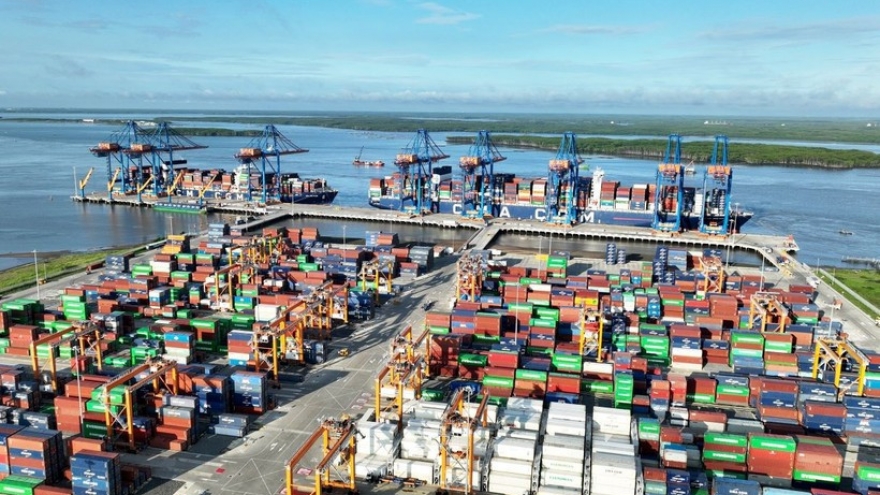
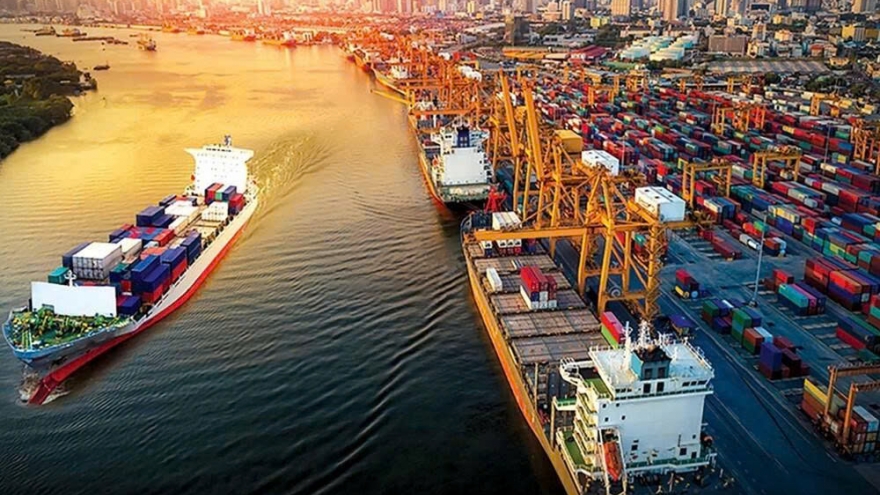
Vietnam sustains strong growth, but key risks remain

VOV.VN - Vietnam is sustaining an impressive economic growth trajectory in 2025, prompting major international institutions to express optimism about the country’s full-year outlook.
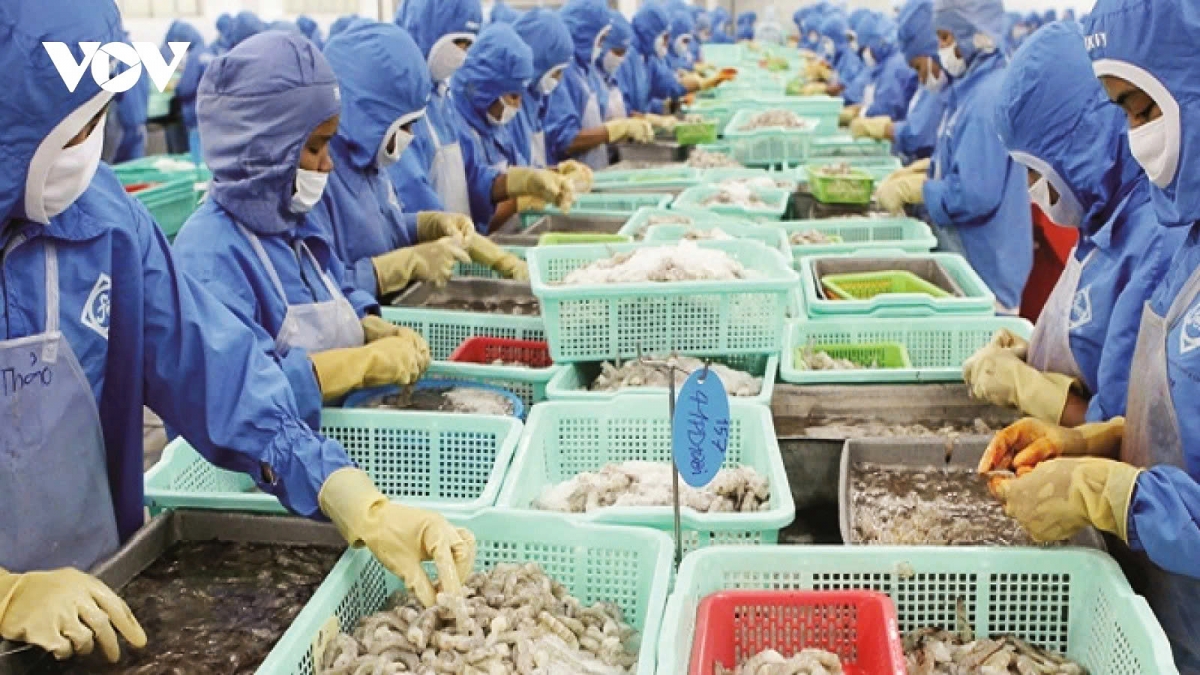
However, global tariff tensions, inflationary pressure and currency fluctuations remain critical factors to monitor during the remainder of the year.
Robust growth outlook
Leading institutions including the World Bank (WB), Asian Development Bank (ADB) and Singapore’s United Overseas Bank (UOB) have issued upbeat forecasts for Vietnam. Amid global uncertainty, their positive assessments are seen as a boost to investor confidence and a potential signal of a new growth cycle.
According to the latest Vietnam Economic Update from the WB, Vietnam’s GDP is projected to grow 6.6% in 2025, driven by a strong 7.5% expansion in the first half. Growth is expected to moderate to 6.1% in 2026 before rebounding to 6.5% in 2027 as global trade recovers and Vietnam strengthens its position as a competitive manufacturing hub.
The WB recommends Vietnam leverage its ample fiscal space to accelerate public investment, safeguard financial stability and push forward structural reforms. Mariam J. Sherman, WB Director for Vietnam, Cambodia and Laos, emphasised that effective public investment could ease infrastructure bottlenecks, create jobs, support green development and enhance human capital.
The ADB also revised its 2025 GDP forecast for Vietnam upward, from 6.6% to 6.7%, citing continued reform momentum and sustainable infrastructure investment. The bank noted that exports surged ahead of new US tariffs, while government support measures bolstered first-half performance. However, growth is expected to slow in the latter half of the year once reciprocal tariffs take effect.
ADB Country Director Shantanu Chakraborty highlighted progress in governance, transparency and tariff reform under Resolution 68 on private sector development of the Politburo. He stressed the need to strengthen both physical and social infrastructure, particularly education and healthcare, to support emerging industries such as semiconductors, artificial intelligence and the digital economy.
Lingering risks and structural challenges ahead
The ADB also cautioned that Vietnam remains one of the six most climate-vulnerable countries in the world, especially the Mekong Delta. Significant investment in renewable energy, grid transmission and battery storage is deemed essential, said Chakraborty.
He expressed his belief that one of the key priorities that needs to be strengthened is infrastructure, in order to create spillover effects, boost public investment, improve FDI inflows, and enhance market confidence.
The rise of new technology sectors such as semiconductors, artificial intelligence, and the digital economy requires a highly skilled workforce. The government has announced numerous skills-enhancement programs, and these must go hand in hand with reforms to create sustainable growth momentum, he added.
The ADB assessed that Vietnam’s economic outlook for 2025–2026 is positive, but global uncertainties cannot be underestimated. If major partner economies grow more slowly than expected or if international financial volatility increases, Vietnam will be strongly affected. According to the ADB, in addition to hard infrastructure, “soft infrastructure” such as education and health care also needs to be prioritised to build the foundations for the future.
Meanwhile, Singapore’s UOB reported that Vietnam’s 2025 economic performance has exceeded expectations, with GDP expanding 7.85% in the first three quarters. Nevertheless, rising trade and tariff tensions may weigh on the fourth quarter. The UOB maintained its Q4 growth forecast at 7.2%, while raising its full-year projection to 7.7% from 7.5%.
Achieving the government’s official target of 8.3–8.5% would require exceptionally strong Q4 growth of 9.7–10.5%, it said.
According to Suan Teck Kin, the UOB’s Head of Research, Vietnam is one of ASEAN’s fastest-growing economies with a projected rate above 7%, outpacing Indonesia, Malaysia, Singapore and Thailand. Manufacturing continues to be the key differentiator, generating significantly higher value-added compared to resource-dependent sectors.
The UOB expert reminded that Vietnam’s high level of economic openness, with exports and services accounting for 83% of GDP, also makes the country particularly sensitive to shifts in US trade policy.
The Ministry of Finance reported that Vietnam’s GDP rose 8.23% in Q3 2025, the fastest pace since Q3 2022. For the first nine months of the year, GDP grew 7.85%, reaffirming Vietnam’s status as one of Southeast Asia’s strongest-performing economies.
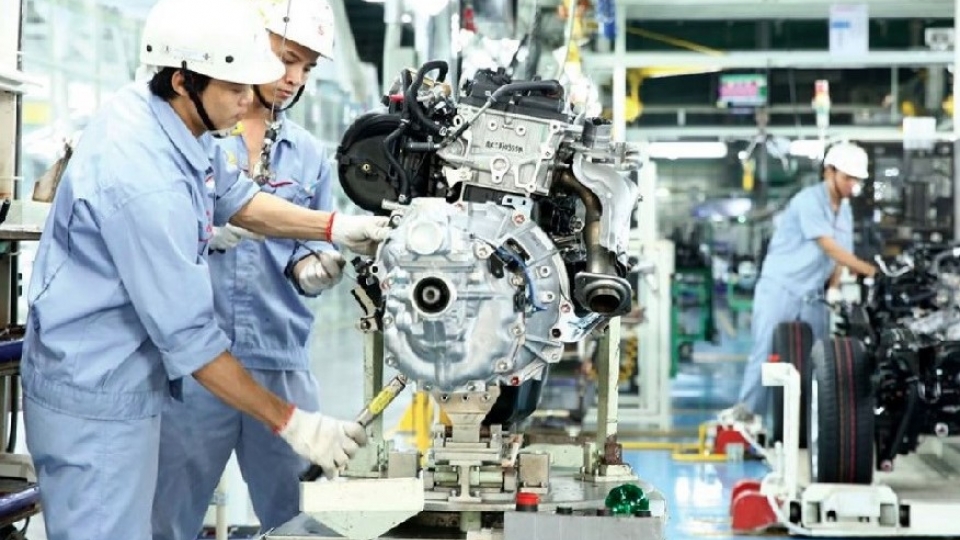
PMI rises for fifth consecutive month with continued manufacturing growth
VOV.VN - Vietnam’s Manufacturing Purchasing Managers’ Index (PMI) reached 53.8 points in November, slightly below October but still above the 50-point mark, signaling continued improvement in business conditions and marking five months of sustained recovery, according to S&P Global’s latest report.