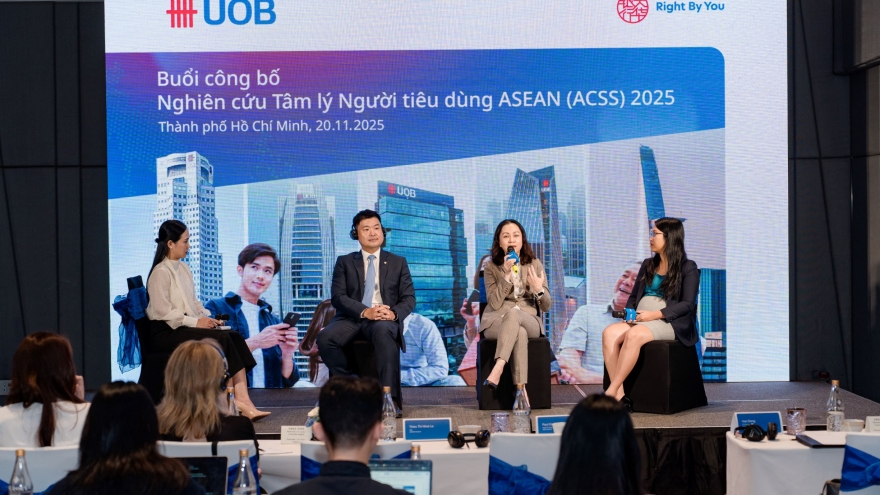
Vietnam stands out for investment appeal and innovation in ASEAN

VOV.VN - As the ASEAN economy shifts strongly toward a knowledge-based growth model, Vietnam is being assessed by regional leaders and experts as one of the bloc’s most dynamic economic and technology drivers.
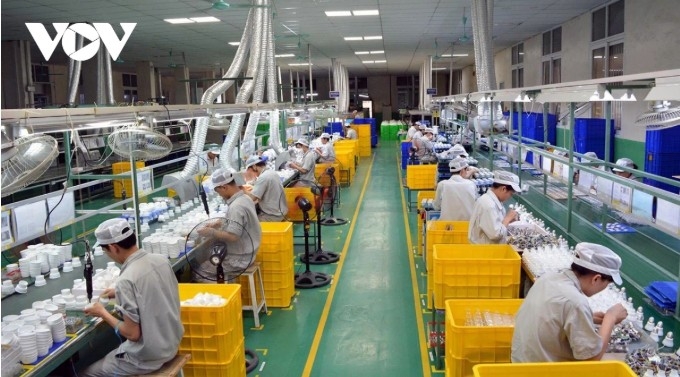
As the ASEAN economy shifts strongly toward a knowledge-based growth model, Vietnam is being assessed by regional leaders and experts as one of the bloc’s most dynamic economic and technology drivers.
At the Cyberjaya Conversation Summit 2025 in Kuala Lumpur on December 3, speakers discussed ASEAN’s sustainable competitiveness and expressed strong impressions of Vietnam’s economic performance, not only in its attractiveness to investment but also in its innovation capacity.
Addressing the forum, ASEAN Secretary-General Dr. Kao Kim Hourn said the region has made notable progress in the Global Innovation Index (GII). The World Intellectual Property Organization (WIPO) has ranked six ASEAN member states among the world’s top 60 innovators. He noted that Vietnam and Indonesia are “exceeding expectations” in WIPO’s GII rankings. In 2024, ASEAN as a whole attracted about US$230 billion in foreign direct investment (FDI), led by Singapore, Indonesia and Vietnam.
Ei Sun OH, senior adviser at the Pacific Research Center, said Vietnam is currently regarded as the most prominent country in Southeast Asia, drawing large inflows of foreign investment and posting very strong economic growth. Meanwhile, Rushdi Abdul Rahim, chairman and chief executive officer of the Malaysian Industry-Government Group for High Technology (MIGHT), affirmed that Vietnam ranks among ASEAN’s leading high-technology nations, alongside Malaysia and Singapore.
Experts, however, emphasized the importance of ensuring investment quality across the region. OH stressed that the top priority is to channel high-quality, high-technology investments into Vietnam to create new jobs and generate higher incomes for the population. He noted that Vietnam, together with Malaysia, is striving to position itself as “part of the global electronics supply chain. Lessons drawn from Malaysia’s development of its electronics industry, he said, could be “very useful for Vietnam.
The summit, which aimed to propose ideas and anticipate challenges ASEAN may face over the next 10 to 15 years, brought together government leaders, industry representatives and academics from nine member states.
In his opening remarks, Malaysian Deputy Prime Minister Ahmad Zahid Hamidi underscored innovation as the core factor for strengthening competitiveness, the foundation of economic resilience, and a catalyst for regional growth. Meanwhile, Malaysia’s Minister of Science, Technology and Innovation Chang Lih Kang outlined a vision to enhance regional competitiveness that includes the ability to “design chips, build satellites, invent artificial intelligence (AI) models,” and pioneer sustainable energy solutions. To achieve the goal of becoming the world’s fourth-largest economy by 2030, ASEAN must shift from technology adopters to “technology creators,” he said.
Leaders and experts also agreed that accelerating digital transformation and expanding the adoption of AI are essential. Syed Mohamed Tahir, chairman of technology firm Dagang NeXchange Berhad, stressed that AI deployment must be accompanied by “appropriate legal, policy and regulatory frameworks.”
On regional cooperation, experts warned that ASEAN’s competitiveness cannot be sustained if countries work in isolation. They also described “science diplomacy” as a strategic necessity.
According to Syed Mohamed Tahir, ASEAN should move from competition toward economic complementarity. To promote this cooperative approach, he highlighted three key factors: the development of high-quality human capital, the ability for skilled workers to move freely across the region “without worries about visas,” and investment in a regional innovation ecosystem, particularly for small and medium-sized enterprises (SMEs) and startups.
Dr. Kao Kim Hourn concluded that ASEAN must work hand in hand to build sustainable competitiveness in order to effectively implement the ASEAN Plan of Action on Science, Technology and Innovation 2026-2035 and realize the ASEAN Community Vision 2045.
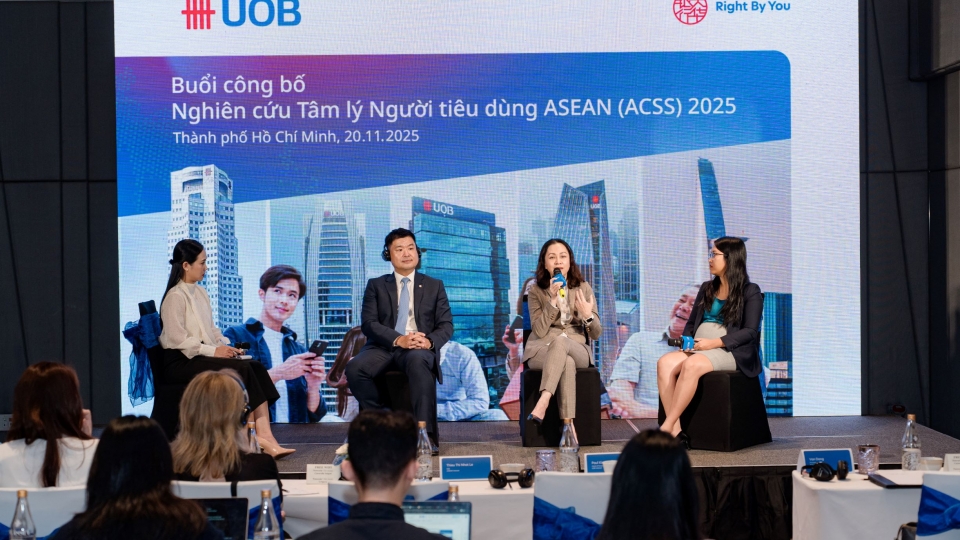
Vietnam leads ASEAN in consumer optimism: UOB
VOV.VN - Vietnam continues to lead the region in consumer optimism driven by positive economic outlook and confidence in personal finances, according to the sixth edition of the ASEAN Consumer Sentiment Study (ACSS) by the Singapore-based United Overseas Bank (UOB).
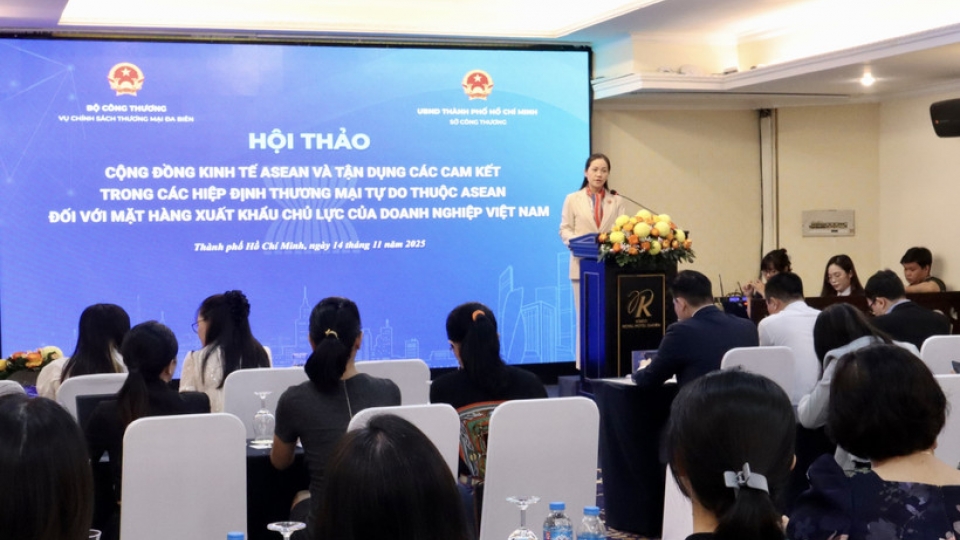
Vietnam sees ample room to expand trade, investment in ASEAN
ASEAN’s rapidly growing consumer market continues to present major opportunities for Vietnamese enterprises, though firms are increasingly required to meet higher technical and origin standards.