Vietnam, Singapore expand financial and capital market cooperation

VOV.VN - Amid global economic uncertainties, deeper connectivity between Vietnam's and Singapore's financial and capital markets could unlock new drivers of national growth while advancing the broader ambition of a more integrated, dynamic, and sustainable ASEAN financial ecosystem.
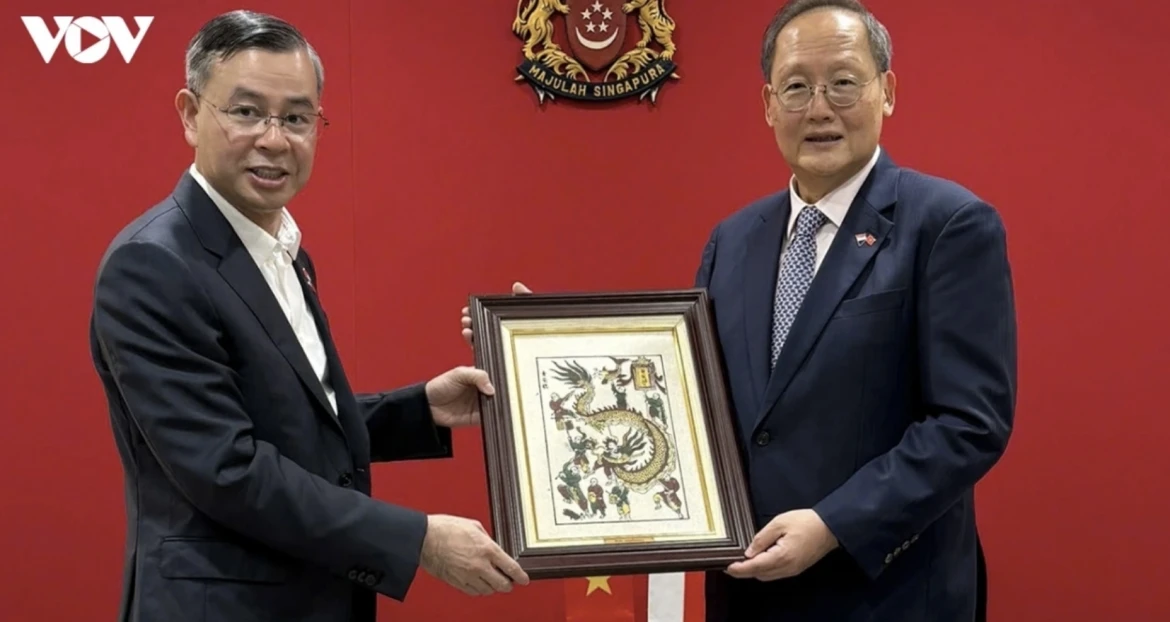
Vietnam's Minister of Finance Ngo Van Tuan made the remarks during talks on May 29 with Singapore's Minister for Manpower and Second Minister for Trade and Industry Tan See Leng, held as part of the official visit to Singapore by Party General Secretary and State President To Lam and a high-ranking Vietnamese delegation.
He noted that Singapore is currently one of Vietnam’s leading trade and investment partners and holds a particularly important position among Vietnam’s relationships within ASEAN. Economic cooperation between the two countries continues to develop dynamically, substantively, and effectively, highlighted by the Vietnam-Singapore Industrial Park (VSIP) model and collaboration in finance, digital transformation, the green economy, and innovation.
One of the key issues discussed was the development of new VSIP projects, specifically VSIP Hai Phong II and VSIP Binh Duong IV. Both sides agreed to continue coordinating efforts to expedite the necessary procedures, including the issuance of Investment Registration Certificates (IRCs) for these projects. This is considered a significant component of the broader Vietnam-Singapore economic partnership, particularly as VSIP continues to be viewed as a highly effective and symbolic model of bilateral investment cooperation.
Singapore is one of Vietnam’s top investors and trading partners, with cumulative foreign direct investment (FDI) exceeding US$80 billion. The VSIP model stands as a symbol of successful economic cooperation between the two countries and offers substantial opportunities for expansion into emerging areas such as green and smart industrial parks, innovation, and high technology.
In addition to advancing VSIP projects, both sides placed considerable emphasis on energy cooperation. Singaporean representatives praised Vietnam’s potential for wind, hydropower, and solar energy development. The two countries expressed their intention to strengthen connectivity, particularly through the ASEAN power grid and Vietnam-Singapore joint ventures, to unlock and capitalise on this potential in the coming years.
During the discussions, significant attention was also devoted to cooperation in developing metro and urban railway systems in Vietnam. Singaporean officials stated that Singapore have proposed support to the Hanoi Metropolitan Railway Management Board in establishing core technical standards and standardising operational procedures for future metro lines, with the aim of improving system integration and optimising costs.
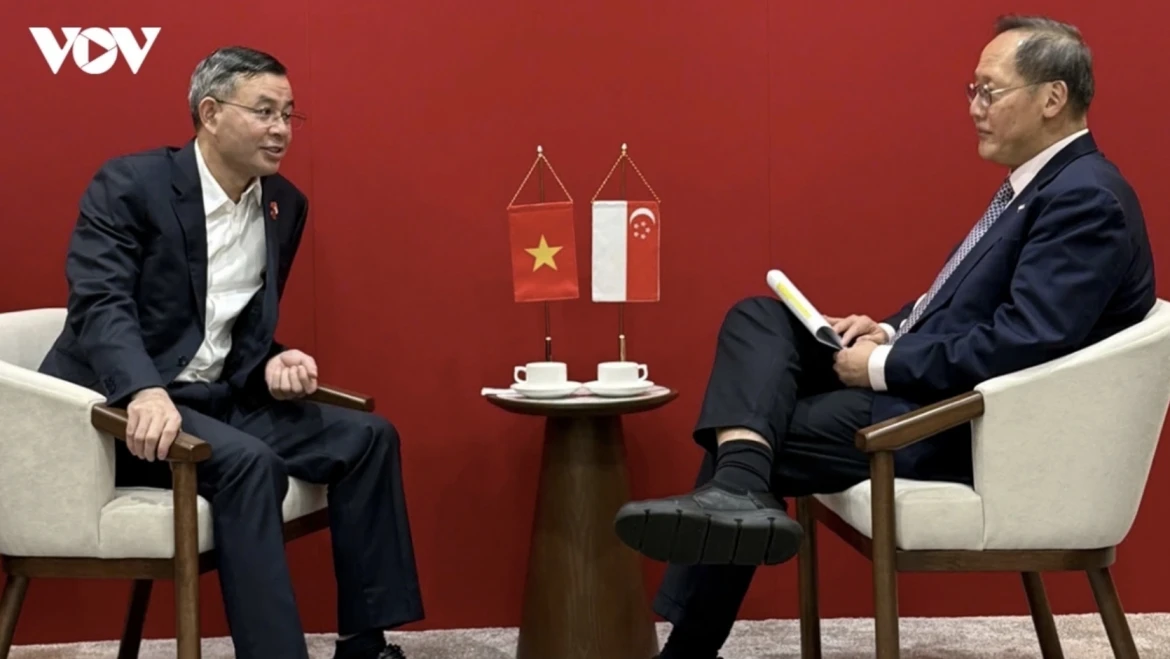
Acknowledging Singapore’s expertise and experience, Minister Tuan emphasised the importance of combining technology transfer with innovative financial support mechanisms to accelerate project implementation. He also called on the Singaporean working group to strengthen coordination with relevant Vietnamese agencies to translate these ideas into concrete initiatives.
Regarding cooperation in the development of the international financial centre in Vietnam, Minister Tan See Leng suggested that Vietnamese startups could leverage Singapore’s ecosystem model to build and support their businesses. By tapping into the established networks within Singapore’s ecosystem, startups would be better positioned to attract international investors, enhance fundraising capabilities, and improve market liquidity.
Concluding the meeting, Tuan reaffirmed that Vietnam’s Ministry of Finance would continue working closely with Singapore’s Ministry of Trade and Industry (MTI) to advance specific areas of cooperation and further deepen the Vietnam-Singapore Comprehensive Strategic Partnership.
Singapore, Vietnam entering new phase in bilateral ties: ambassador
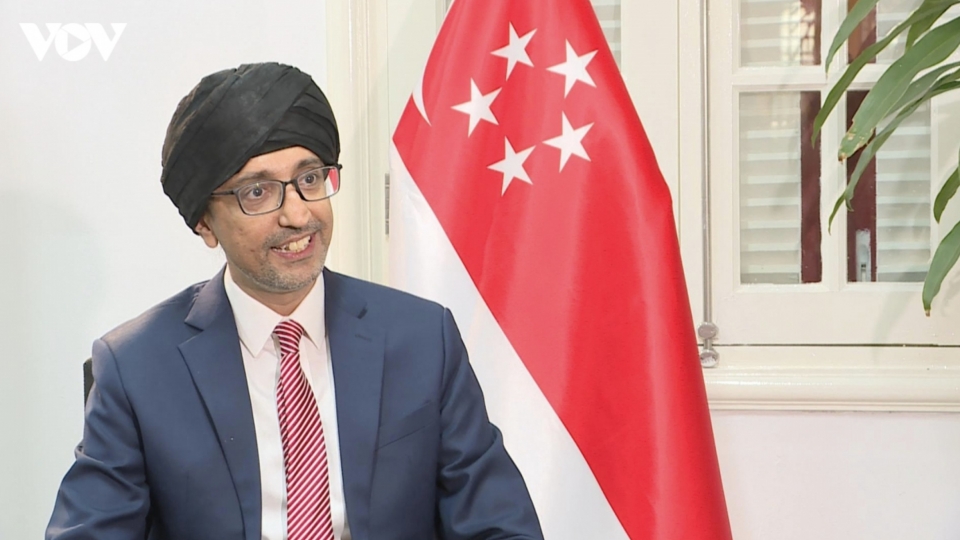
VOV.VN - Singapore is honoured to welcome Party General Secretary and State President To Lam for a State visit from May 29-31 at the invitation of Singaporean President Tharman Shanmugaratnam, Singaporean Ambassador to Vietnam Rajpal Singh has said ahead of the trip.