Vietnam remains among fastest-growing economies in Southeast Asia-6

Vietnam continues to rank among the fastest-growing economies in the Southeast Asia-6 group, alongside Thailand, the Philippines, Indonesia, Malaysia and Singapore, with strong growth expected to continue into 2026.
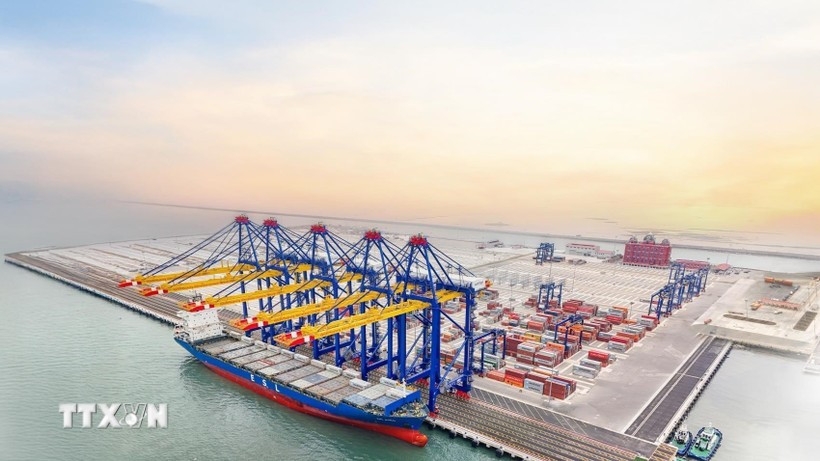
According to the fourth annual Southeast Asia Outlook report by Cushman & Wakefield, Singapore, Malaysia, Thailand and Vietnam benefit from strong trade corridors and well-developed manufacturing ecosystems, while Indonesia and the Philippines are supported by resilient domestic consumption.
In 2025, data centres emerged as the most valuable investment asset class in Southeast Asia’s real estate market. Johor continued to attract spillover demand from Singapore, while Thailand, Indonesia, the Philippines and Vietnam remain supply-constrained markets with significant growth potential. Recent large-scale investment commitments reflect sustained investor confidence in the region’s digital infrastructure development.
Wong Xian Yang, head of Research for Singapore and Southeast Asia and author of the report, said the recovery seen in 2025 reflects not only cyclical factors but also structural shifts in capital allocation.
Investors are increasingly focusing on sectors linked to manufacturing expansion and digitalisation, particularly logistics and data centres. While Singapore continues to serve as the region’s liquidity hub, Southeast Asia is capturing the next wave of growth as global supply chains diversify and institutional-grade assets expand across the region.
Notably, Vietnam recorded the highest real GDP growth among the Southeast Asia-6 economies in 2025, reaching 8%, significantly higher than the pre-pandemic average of 7.1%.
Growth was driven by exports alongside the recovery of the manufacturing and services sectors, reflecting stable global demand and Vietnam’s growing role in regional manufacturing and trade networks.
Domestic consumption has also remained resilient, highlighting the economy’s long-term consumption potential. Manufacturing and trade continue to benefit from supply-chain diversification and foreign investment inflows into export-oriented industries.
Economic growth is expected to moderate slightly in the coming period. Population growth has slowed to 0.6%, while lending rates at commercial banks have shown an upward trend toward the end of the year, potentially placing short-term pressure on housing demand and consumer spending.
Nevertheless, Vietnam’s economy is forecast to expand by 6.3% in 2026, maintaining its position as one of the fastest-growing economies in the Southeast Asia-6 group.
From a real estate perspective, the industrial segment remains a key market driver. Vietnam continues to benefit significantly from the China+1 strategy thanks to its strategic location, improving infrastructure and the emergence of large-scale electronics manufacturing clusters.
Meanwhile, the retail real estate sector is expected to gain momentum in 2026 as retail sales are projected to grow by more than 15%, boosting demand for modern retail space in major urban centres.
Although data centres became the most valuable investment asset class in emerging Southeast Asia excluding Singapore in 2025, Vietnam’s data-centre market remains at an early stage compared with regional peers. This suggests considerable long-term growth potential as demand for digital infrastructure rises alongside the rapid expansion of cloud computing, AI applications and Vietnam’s fast-growing digital economy.
Overall, Southeast Asia’s economy is forecast to grow by 4.3% in 2026, maintaining its status as one of the world’s fastest-growing regions.
Total personal consumption in Southeast Asia, excluding Singapore, is expected to reach 5 trillion USD by 2035, expanding at around 8% annually.
As inflation moderates, policy interest rates decline and unemployment remains generally stable across major economies, improved financial conditions could support broader investment deployment across the region.
Anshul Jain, managing director for India and Southeast Asia and Head of Office and Retail for APAC at Cushman & Wakefield, said Southeast Asia’s growth momentum is driven not only by investment demand but also by expanding consumer markets, a young workforce and ambitious infrastructure development programmes.
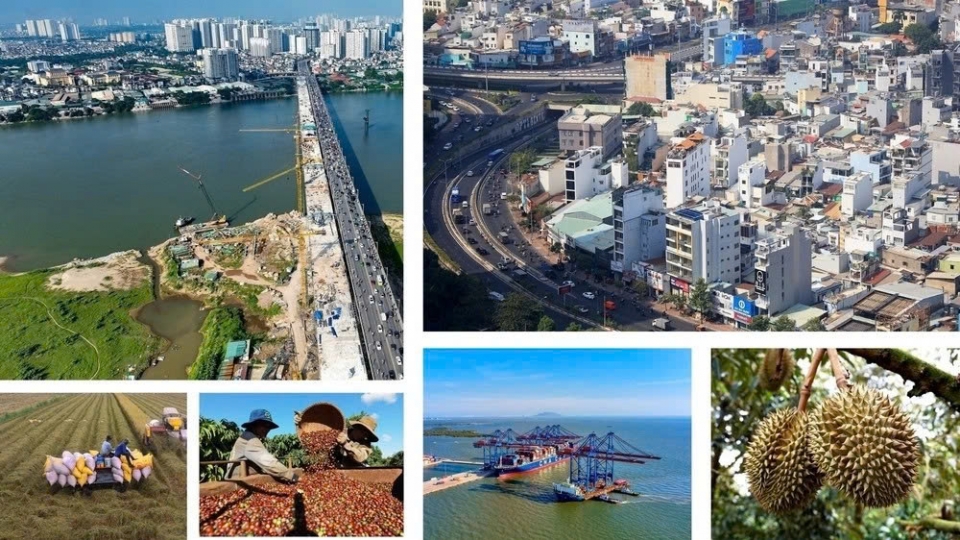
Economy seen entering new growth cycle in 2026
Vietnam continues to attract strong interest from international organisations and global investors, even as the world economy faces ongoing uncertainty related to geopolitics, trade tensions and monetary policy shifts, according to various reports from international organisations and media.