


Vietnam determined to have IUU “yellow card” lifted in 2026

VOV.VN - Vietnam aims to fully address the European Commission’s (EC) recommendations, prevent and ultimately eliminate illegal, unreported and unregulated (IUU) fishing, and prepare comprehensive records, data and enforcement evidence in a determined effort to have the EU’s “yellow card” warning lifted in 2026.
Targeting removal of the “yellow card” in 2026
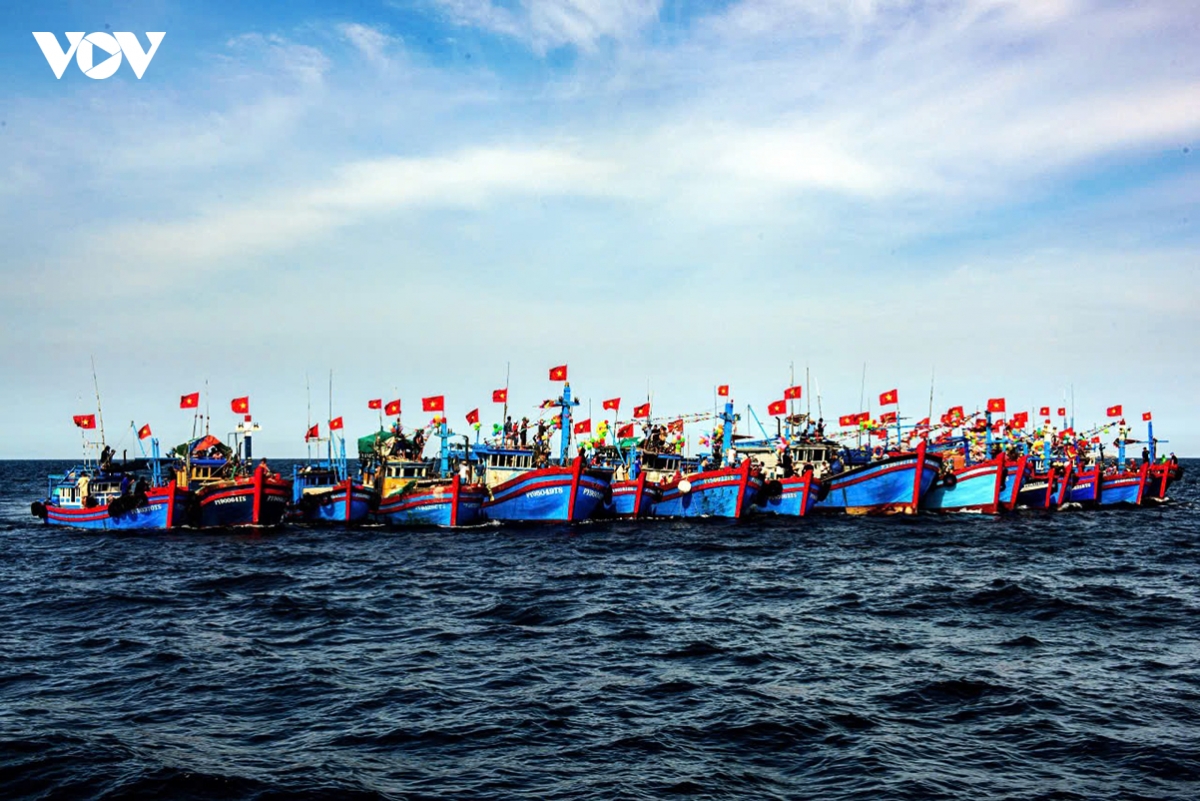
The Government has issued Decision No.1516 signed by Deputy Prime Minister Ho Quoc Dung on behalf of the Prime Minister on August 10, 2026, promulgating an action plan to implement measures in line with recommendations made by the European Commission (EC) following its fifth inspection of Vietnam’s efforts to combat illegal, unreported and unregulated (IUU) fishing.
The plan aims to fully address shortcomings and deficiencies and substantively implement the EC’s recommendations, so as to bring about fundamental improvements in fisheries management, prevent and ultimately eliminate IUU fishing.
Notably, Vietnam seeks to prepare comprehensive records, data and enforcement evidence for discussions with the EC, with a firm determination to have the “yellow card” warning lifted in 2026. Alongside this goal, the plan is to develop Vietnam’s fisheries sector in a transparent, responsible and sustainable manner.
To translate these objectives into concrete action, the plan sets out a wide range of requirements covering vessel fleet management, fishing activity control, vessel monitoring, catch traceability and oversight of seafood processing and export businesses.
Tighter control of every fishing vessel
One of the key requirements is to strengthen the management and control of the fishing fleet.
Under the plan, 100% of registered fishing vessels must have complete, accurate and timely information updated in VNFishbase, the national fisheries database. The information must identify vessel owners, locations, operational status and legal status.
For fishing vessels required to carry vessel monitoring systems (VMS), 100% must have their equipment status checked when leaving and entering ports. Cases involving loss of signal, crossing permitted boundaries or tampering with monitoring equipment must be flagged, verified and handled within the prescribed time limits.
The plan also requires 100% of trips by fishing vessels of 6 meters or more in length entering or leaving ports to be fully recorded in the electronic catch documentation and traceability system (eCDT).
Notably, seafood raw materials caught by vessels with missing or invalid data on eCDT will not be eligible for certification of the origin of harvested seafood.
This approach is designed to strengthen control over product origins from the point of harvest, rather than relying solely on inspections after seafood has entered processing facilities or is being prepared for export.
Traceability of harvested seafood
Traceability is a central component of the action plan. Accordingly, 100% of applications for certificates confirming harvested seafood materials and certificates of origin for harvested seafood intended for export to markets where such documentation is required must be processed through eCDT in accordance with regulations, except in cases of force majeure.
Digitising this process will connect information from fishing vessels, fishing ports and harvested materials with export documentation, thereby enhancing the ability to verify and cross-check seafood origins.
The plan also requires 100% of IUU violations to be received, verified and handled by the competent authorities within the prescribed jurisdiction and time limits. The results must be promptly updated in the violations database, with no cases left unresolved without legitimate reasons.
Another key objective is to prevent, minimise and ultimately eliminate cases of Vietnamese fishing vessels violating foreign waters.
Every violation must be investigated and handled, with responsibility clearly established for vessel owners, captains and other relevant organisations and individuals.
Tighter controls on exporters to the European market
The new plan also strengthens controls over seafood processing and exports, particularly for high-risk products, rather than focusing solely on fishing vessels.
Under the plan, businesses processing swordfish, tuna and other high-risk species for export to the European market will be subject to inter-agency inspections based on a risk assessment approach.
The competent authorities will verify discrepancies involving raw materials, processing yields, production volumes and traceability records, while developing standard operating procedures for monitoring processing plants.
The plan also calls for annual inspection plans based on risk assessments and increased use of unscheduled inspections. For businesses importing and processing high-risk species, competent authorities will conduct inter-agency and unannounced inspections, investigate discrepancies between documentation and actual raw materials, and take appropriate action.
If violations are detected in consignments that have already been exported or are in transit, the plan requires an immediate notification mechanism for the EC and the relevant member state.
This means that IUU controls will no longer focus simply on whether an individual fishing vessel has operated in compliance with regulations. Instead, controls will cover the entire chain, from fishing and port entry to catch traceability, processing and exports.
Accelerating digitalisation and enforcement coordination
To achieve these objectives, the action plan outlines a range of tasks, including completing the legal framework; managing and controlling the fishing fleet; monitoring, inspecting and supervising fishing ports; tracing domestically caught seafood; controlling imported seafood materials; law enforcement; digital transformation, data connectivity and sharing; international cooperation; and information and communications.
One notable measure is the launch of a “peak month” campaign to strengthen the fight against IUU fishing.
During this period, ministries, sectors and localities will concentrate on outstanding tasks, particularly fishing vessel registration, inspection and licensing; installation and maintenance of VMS connectivity; monitoring vessels entering and leaving ports; updating and operating VNFishbase and eCDT; catch traceability; and control of imported seafood materials.
Cases involving VMS signal loss and vessels crossing permitted fishing boundaries will also be subject to focused verification and enforcement, alongside measures to prevent Vietnamese fishing vessels from violating foreign waters.
With specific targets for fleet management, vessel monitoring, catch traceability, enforcement and oversight of seafood exporters, the new action plan seeks to implement the EC’s recommendations in a substantive manner rather than centering on individual stages in isolation.
The ultimate goal is to bring about fundamental improvements in fisheries management, prevent and ultimately eliminate IUU fishing, and complete the records, data and enforcement evidence needed for engagement with the EC, with Vietnam determined to have the EU’s “yellow card” warning lifted in 2026.

Vietnam steps up anti-IUU drive to lift EC yellow card by end-2026
VOV.VN - Vietnam is intensifying nationwide efforts to combat illegal, unreported and unregulated (IUU) fishing, aiming to secure the European Commission's removal of its "yellow card" warning by the end of 2026.


