




Vietnam, Australia work to turn momentum into substantive cooperation

VOV.VN - The Australia Vietnam Policy Institute (AVPI) held its 2026 annual conference in Sydney, New South Wales, on October 15, gathering government, business and academic representatives from both countries to discuss ways to make Vietnam-Australia cooperation deeper, more substantive and more sustainable.
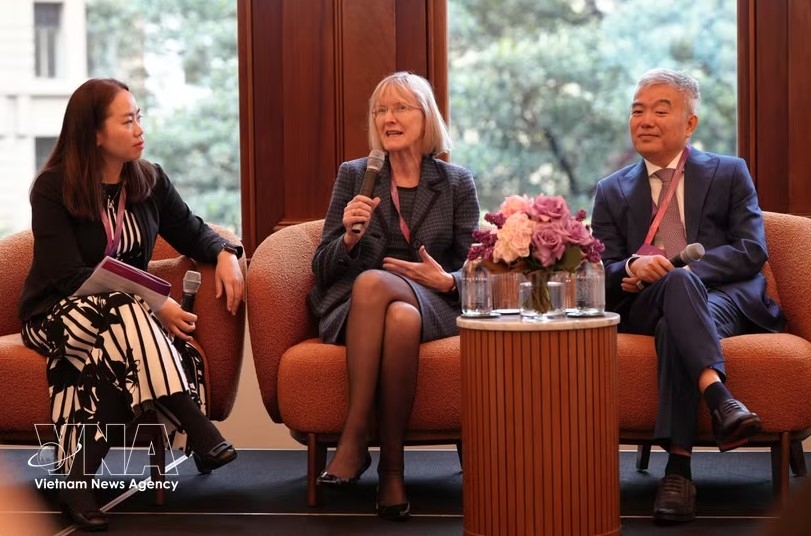
The conference was held as the Vietnam-Australia Comprehensive Strategic Partnership gained fresh momentum following the August 2026 visit to Australia by General Secretary of the Communist Party of Vietnam Central Committee and President To Lam, while Vietnam was preparing to host the Asia-Pacific Economic Cooperation (APEC) forum in 2027.
The conference featured several discussion sessions on issues shaping Vietnam-Australia relations, ranging from diplomacy, trade and investment to digital transformation, human resource development, regional cooperation and Vietnam’s role as host of APEC 2027. The discussions centered on one overarching question: how to turn the current favorable political and strategic foundations into concrete cooperation programmes that deliver practical benefits to businesses and people in both countries.
In her opening remarks, AVPI Advisory Board Chair Dr. Le Thu Huong said the time was right for Australia to take a more active role in Vietnam’s development and economic reform. She noted that Vietnam was stepping up domestic reforms, improving its investment environment, developing an International Financial Centre and preparing for APEC 2027. These steps are creating more opportunities for Australian investors and businesses to explore new areas of cooperation.
Speaking to the press on the sidelines of the conference, Dr. Le Thu Huong said that amid intensifying competition to attract investment, further simplifying administrative procedures, facilitating business operations and advancing reforms across industries and sectors would help Vietnam become more attractive to international investors.
On foreign affairs, she said expanding the network of partners was becoming increasingly important amid global economic and geopolitical uncertainty. “Countries need reliable friends and partners they can count on in difficult times,” she stressed.
According to her, Vietnam and Australia now share many common interests in trade, technology, digital transformation, education, human resource development, clean energy and climate change response. The question is how to capitalize on the current favorable momentum to turn that potential into more concrete cooperation outcomes.
This was also one of the key messages at the conference. RMIT University President Peggy O’Neal, who was recently appointed by the Australian federal government as its new Business Champion for Vietnam, said relations between the two countries had been built over decades through education, migration, trade and investment, and were being further strengthened under the Comprehensive Strategic Partnership. However, she noted that bilateral trade and investment had yet to tap their full potential.
She stated that Australian businesses needed to better understand the opportunities emerging in Vietnam, while Vietnamese businesses should also see Australia as more than just a market, but as a partner in capital, education, technology and expertise. O’Neal stressed the need to move from goodwill to concrete pathways, strengthen connections and continue removing barriers facing the business community.
In her role as the Australian Government’s new Business Champion for Vietnam, O’Neal identified three priorities: promoting two-way investment, bolstering cooperation related to APEC 2027, and making better use of people-to-people ties between the two countries. She pointed out that Vietnam had significant needs for capital, skills, technology, infrastructure and expertise in energy transition, while Australia had considerable strengths that matched these needs.
From the perspective of state government, Anoulack Chanthivong, New South Wales (NSW) Minister for Industry and Trade, said Vietnam was becoming an increasingly important partner for Australia as a whole and NSW in particular. Thevisit to Australia by General Secretary and State President To Lam had given fresh impetus to bilateral relations and opened up new opportunities for cooperation in trade, investment, education, science and technology, and innovation, he added.
One issue that drew particular attention from participants was how to turn high-level commitments into specific programmes and projects. Australian Ambassador to Vietnam Gillian Bird said To Lam’s visit to Australia was an important milestone, particularly with the issuance of three joint statements on deepening the Comprehensive Strategic Partnership, strengthening economic resilience, and augmenting cooperation in science, technology and innovation. She said economic resilience did not mean closing off the economy, but should be built on open trade, diversified partnerships and the use of free trade agreements to which both Vietnam and Australia are parties.
From the Vietnamese side, Consul General of Vietnam in Sydney Nguyen Thanh Tung said diplomatic missions helped connect businesses, universities, research institutes and local partners, thereby turning cooperation frameworks into practical results. He recommended continued priority for trade and investment diversification, energy and the green transition, science and technology, and human resource development.
Looking ahead to 2027, Vietnam’s hosting of APEC was also seen as a new opportunity to advance Vietnam-Australia cooperation. Craig Emerson, President of the Australian APEC Study Centre, said that as the global trading system faced numerous challenges, APEC continued to play an important role in promoting open trade and regional economic cooperation. He noted that Vietnam and Australia could use APEC 2027 to advance specific cooperation initiatives rather than stop at policy statements.
At the conference, participants also stressed that digital transformation, skills development, secure data flows and support for small and medium-sized enterprises would require greater attention in future cooperation. However, alongside policy and market opportunities, trust was still seen as key. Businesses seeking to build long-term relationships needed to take time to understand their partners, adapt to cultural differences and remain committed to long-term investment strategies.
Dr. Le Thu Huong said AVPI would continue to serve as a bridge between policymakers, businesses, academics and social organizations in the two countries, broadening dialogue and enhancing new connections for cooperation.
With activities in Melbourne and Hanoi and a network of more than 40 knowledge partners, AVPI hopes to help turn opportunities in Vietnam-Australia relations into more concrete and practical cooperation programmes.
Vietnamese students in Australia promote innovation, knowledge links
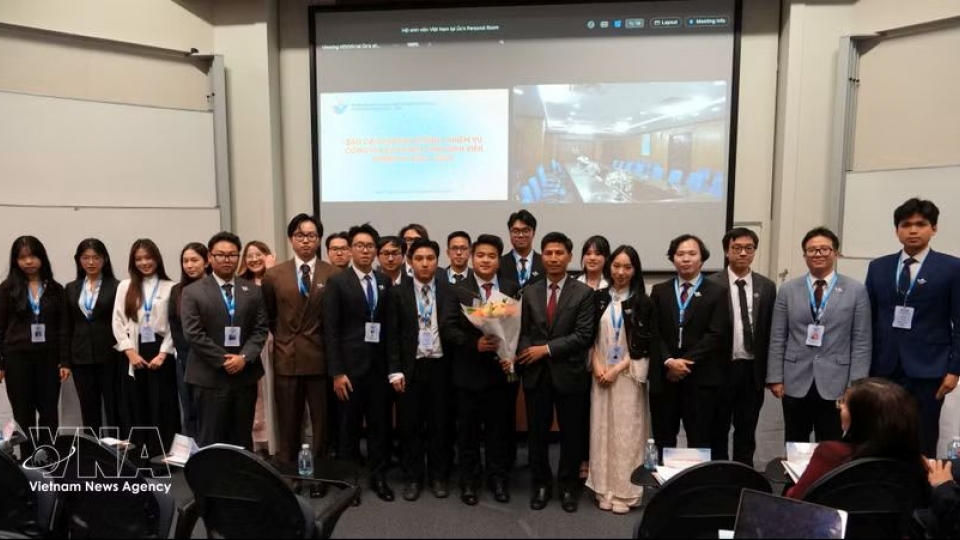
The Vietnamese Students' Association in Australia (SVAU) held its fourth congress for the 2026–2028 tenure in Canberra on October 4, bringing together 93 delegates from seven state-level and 27 university-level associations representing more than 30,000 Vietnamese students across Australia.
Businesses urged to meet Australia’s high standards to expand exports
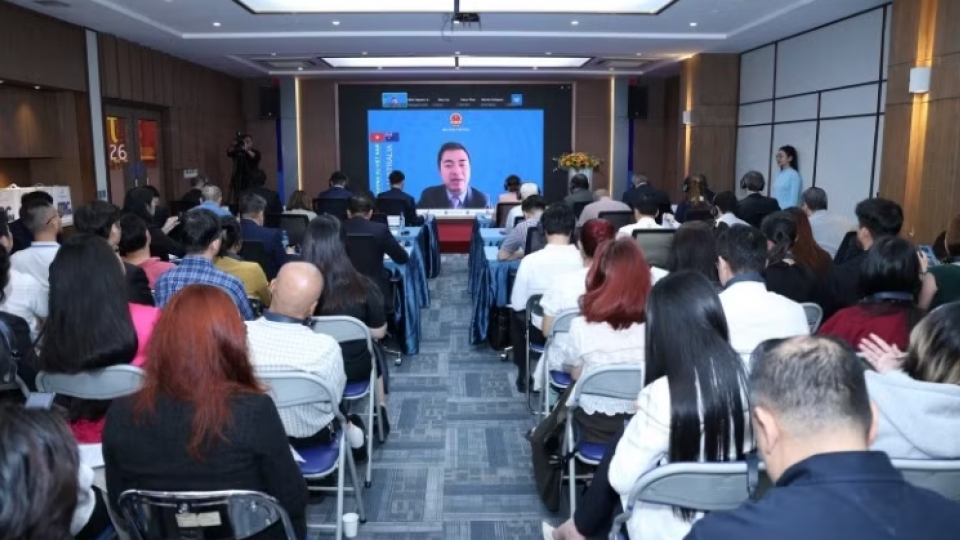
VOV.VN - Vietnamese businesses are being encouraged to strengthen product quality, understand Australian regulations and adapt to local market requirements to expand exports to the high-value market.


