Vietnam and ASEAN emerge as major export markets for RoK

VOV.VN - Over the past five years (2021-2025), exports to the US rose 28.2%, while shipments to the Association of Southeast Asian Nations (ASEAN) and Vietnam increased by 12.5% and 10.8%, respectively, indicating a clear trend of export diversification by the RoK.
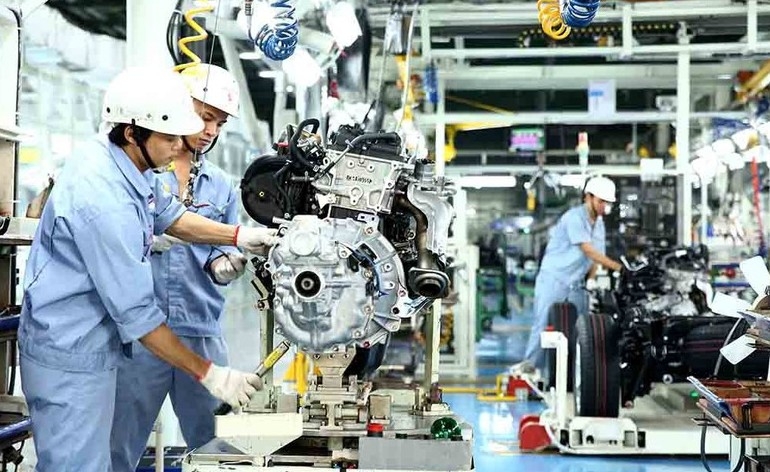
Due to the impact of US policies toward China, the Republic of Korea’s (RoK) exports to China have fallen sharply by nearly 20% over the same period.
An analysis of import–export trends for the 2021-2025 period released by the Ministry of Trade, Industry and Energy indicates that the RoK’s exports to China dropped by 19.7% over the five-year period.
Specifically, exports to China stood at US$162.9 billion in 2021, before dropping to US$155.8 billion in 2022 and falling further to US$124.8 billion in 2023. Although shipments recovered modestly to US$133 billion in 2024 and US$130.8 billion in 2025, they have yet to return to earlier levels.
According to Moon Jong Cheol, a research fellow at the Korea Institute for Industrial Economics and Trade (KIET), the decline in exports to China appears to reflect a shift by companies relocating production facilities from China to the US or Southeast Asia. When examined by product category, changes in the export structure become even more pronounced.
In 2025, the RoK’s exports to China declined year on year across traditional core products, including petrochemicals, which fell 6.6% to US$16.27 billion; wireless equipment, down 6.5% to US$7.33 billion; and machinery, which dropped sharply to US$6.28 billion, a decrease of 62.8%.
This trend reflects China’s rapid expansion of domestic production capacity, intensifying competition for the RoK’s key industries.
Despite the marked fall in exports to China, the downturn did not immediately translate into an overall contraction in the RoK’s exports. In 2025, total exports reached a record high of US$709.7 billion, as the semiconductor industry entered a super-cycle linked to advances in artificial intelligence (AI) technologies and the expansion of data centers.
Exports to the US, ASEAN and Vietnam offset a substantial portion of the decline from the Chinese market. ASEAN markets, particularly Vietnam and Thailand, were notable. The RoK’s exports to ASEAN rose 12.5% over the five-year period, reaching US$122.4 billion in 2025, up from US$108.8 billion in 2021. Over the same period, exports to Vietnam increased 10.8%, climbing from US$56.7 billion to US$62.8 billion.
According to Professor Heo Yoon of Sogang University, regulatory constraints have made it more difficult for Chinese companies to export directly to the US, prompting them to set up factories in Vietnam or other ASEAN member states as alternative routes to access the US and European Union markets.
Rising exports to Vietnam are also linked to manufacturing facilities operated by major RoK corporations, including Samsung Electronics and LG, which have boosted shipments of intermediate goods and key components.
Global economic growth is expected to slow in 2026 due to US tariff policies and excess supply from China. Even so, some analysts believe the RoK’s exports to Southeast Asia will remain competitive.
Moon Jong Cheol noted that despite multiple uncertainties, Southeast Asia’s relatively low labor and production costs continue to make it a promising market, with the region’s share of the RoK’s exports expected to rise further in 2026.
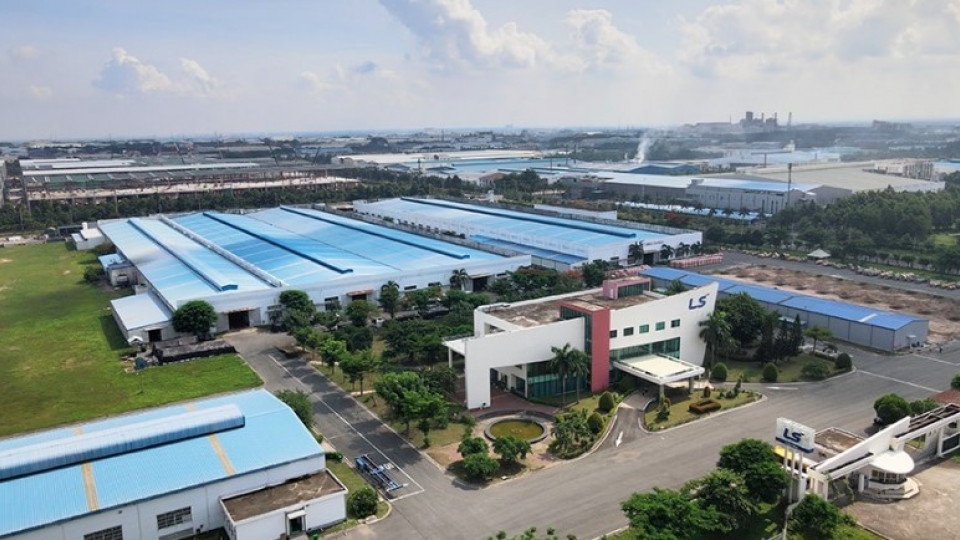
RoK firm LS Eco Energy expands rare earth metal operations in Vietnam
VOV.VN - The Republic of Korea’s LS Eco Energy, a subsidiary of LS Cable & System, has approved a plan to expand its rare earth metals business in Vietnam as part of its long-term growth strategy in the strategic materials sector.