




Vietnam among Asia’s leaders in offshore wind potential

VOV.VN - Vietnam has offshore wind potential of around 600 GW, with investment costs for an offshore wind project expected to range from about US$4 million to US$4.5 million per MW.
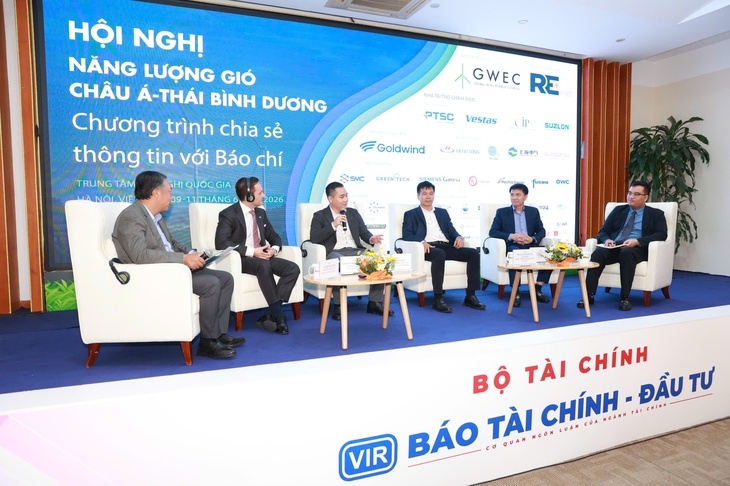
The information was shared at a press conference on May 26 jointly organised by the Global Wind Energy Council (GWEC) and Vietnam Investment Review to provide information on the Asia-Pacific Wind Energy Summit 2026 (APAC Wind Energy Summit 2026).
According to Bui Vinh Thang, GWEC’s Country Director in Vietnam, the revised Power Development Plan VIII targets around 26-38 GW of onshore wind power and about 6 GW of offshore wind power by 2030. Compared with other countries in the region, excluding China and India, Vietnam can be considered among the regional leaders in both onshore and offshore wind power.
Thang said most of Vietnam’s offshore wind potential comes from fixed-bottom offshore wind thanks to the country’s relatively shallow continental shelf, helping lower investment costs compared with countries that rely on floating foundations such as the Republic of Korea (RoK) and Japan.
For onshore wind power, the 26-38 GW target is highly ambitious if supported by consistent policies, mechanisms to promote domestic supply chains and cooperation with the FDI sector. With Vietnam’s electricity demand growing at double-digit rates, wind power plays an extremely important role in the country’s energy mix.
However, Thang pointed out that the offshore wind supply chain is currently quite strained as turbine prices and service costs continue to rise.
He added that Vietnam remains a new market, meaning investors view it as carrying higher risks than more mature markets. Therefore, an offshore wind strategy needs to take into account multiple objectives, including electricity supply, industrial development, energy strategy and the ability of the economy and society to bear the costs.
Alessandro Antonioli, Vietnam Country Director at Danish renewable energy investment group Copenhagen Infrastructure Partners (CIP), said Vietnam is in a strong position to promote mechanisms such as direct power purchase agreements. However, accelerating projects will require greater clarity for investors regarding licensing timelines, electricity pricing frameworks and, most importantly, the power purchase agreement (PPA) template.
According to Antonioli, the current PPA template still lacks the basic requirements needed for international financing. Investors cannot commit additional capital without clarity on electricity sale conditions.
Meanwhile, Nguyen Tuan, Head of Commercial Division at Petrovietnam Technical Services Corporation (PTSC), stated that the company is focusing on an offshore wind power export project to Singapore through a cross-border project. PTSC is also expanding its fabrication yard in Vung Tau while investing in specialised vessels and heavy-lift equipment.
PTSC is also speeding up plans to establish an “inter-regional renewable energy industrial and service centre” in northern and southern Vietnam. The centre will include not only renewable energy but also green hydrogen and green ammonia.
Vietnam needs to quickly carry out offshore wind projects and promote domestic supply chains linked to appropriate pricing mechanisms in order to optimise costs and lower prices.
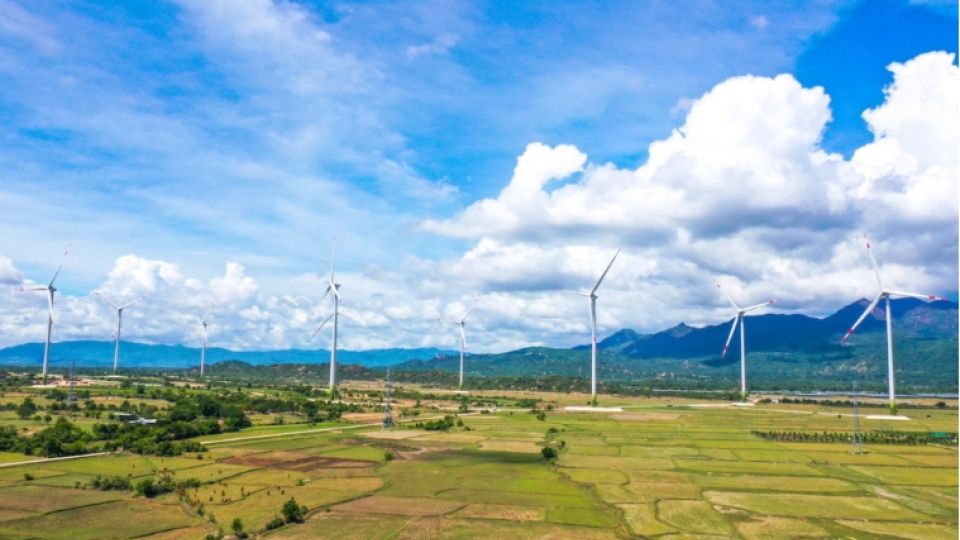
Vietnam unlocks offshore wind power potential for green future
With 300,000 km² of sea and over 1,000 GW potential, Vietnam targets major offshore wind power (OSW) growth.

