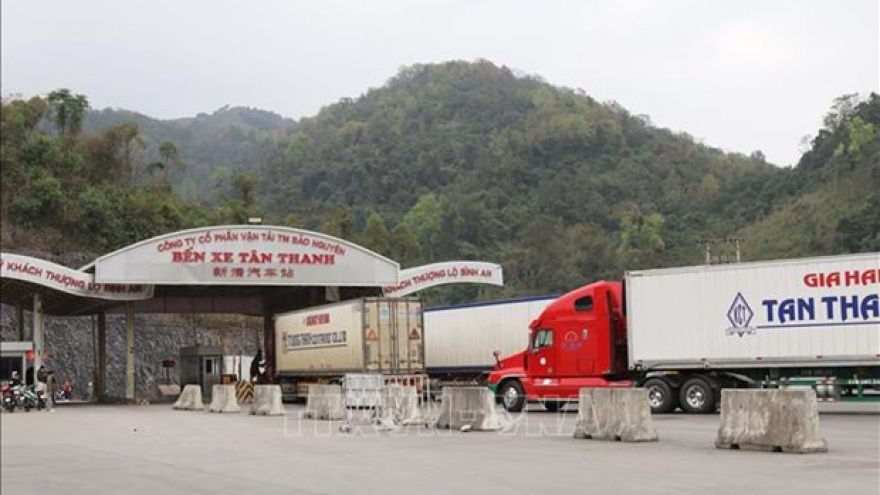
US$900 billion trade marks new growth momentum for Vietnam

VOV.VN - Vietnam’s total export-import turnover is projected to reach US$900-920 billion in 2025, bringing the country closer to the world’s top 15 nations by overall trade scale.
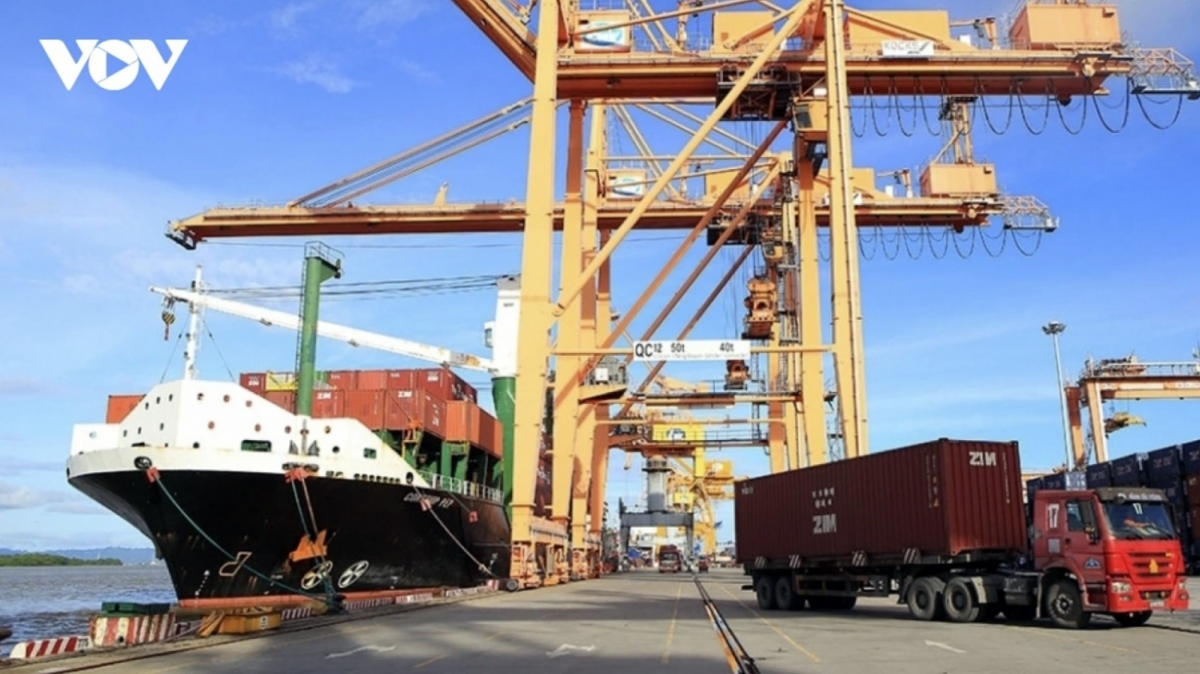
This milestone is expected to usher in a new growth cycle built on supply-chain renewal, value upgrading of goods, and sustainable market expansion.
Steady momentum and transformation of key industries
According to recently released data from the National Statistics Office under the Ministry of Finance, Vietnam’s trade turnover in 2025 is forecast at around US$900–920 billion, underscoring the economy’s recovery momentum and marking a new level of trade openness.
The growth comes amid ongoing global uncertainties, including geopolitical volatility and increasingly strict green standards in the European Union, the United States and other major economies. Despite these challenges, Vietnamese goods have maintained growth, demonstrating stronger resilience and adaptability.
In export structure, key sectors are entering a phase of “repositioning.” The electronics and components industry continues to lead growth, supported by expanded operations of major investors and rising global demand for digitalization. Export turnover of the sector is expected to reach US$100 billion this year.
The textile and footwear industry, after a period of declining orders, is showing clear recovery thanks to a shift toward green product lines, traceability compliance, and emission reduction in manufacturing. Machinery, equipment and transport vehicles have also posted strong gains as global supply chains gradually shift toward Asia, with Vietnam emerging as an important link in the network. Each of these sectors maintains export turnover at tens of billions of US dollars.
In agriculture, the growing presence of deep-processed products is helping elevate Vietnam’s export image and increase added value. Rice, coffee, processed fruits, rubber and cashew nuts are demonstrating a transition from exporting raw commodities to exporting higher-quality goods. This shift enables Vietnamese agricultural products to move beyond price-based competition and gain access to higher-end markets.
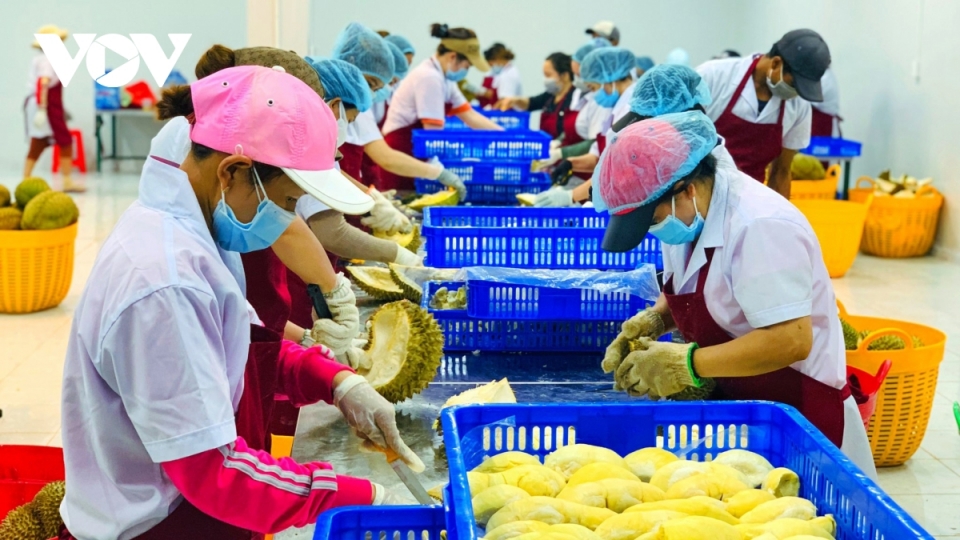
Secretary-General of the Vietnam Fruit and Vegetable Association Dang Phuc Nguyen said Vietnamese durian continues to grow thanks to improved quality and price competitiveness. The average export price reaches US$3,696 per tonne, about 15% lower than Thai durian, while shorter transport routes provide additional logistical advantages. These factors have helped Vietnam maintain its position as the second-largest supplier of durian to the Chinese market. On the current trajectory, Nguyen forecast durian export turnover could reach US$4 billion in 2025, with exports over the 11-month period estimated at roughly US$3.7 billion.
On the import side, rising purchases of raw materials and machinery for production indicate businesses’ confidence in the recovery of international orders. The NSO reported that in the 11-month period of 2025, production materials totalled US$383.96 billion, accounting for 93.7 percent of total import value. This dynamic cycle sees businesses increase inputs to secure output, while the economy benefits from stable trade flows.
The shift of foreign direct investment into high-tech industries is also strengthening export prospects. As major corporations expand production, domestic supply chains are activated, enabling Vietnamese enterprises to integrate more deeply into global value chains, reduce import dependence and raise local value-added content.
Impetus from integration, logistics and new green standards
Vietnam’s participation in new-generation free trade agreements, including the EU-Vietnam Free Trade Agreement (EVFTA), the Comprehensive and Progressive Agreement for Trans-Pacific Partnership (CPTPP), and the Regional Comprehensive Economic Partnership (RCEP), is now delivering practical results. Utilization of tariff preferences among businesses is increasing, particularly in agriculture, textiles and processing industries. This advantage becomes more valuable as major economies tighten trade standards and implement new trade-remedy measures.
To ensure that the US$900 billion milestone becomes a sustainable launchpad, experts say Vietnam must confront new challenges, most notably the requirements of green transition, circular production, and carbon-emission control. The European Union’s CBAM mechanism and U.S. emission standards compel businesses to overhaul production processes, enhance transparency, and invest heavily in clean technologies. Delays could erode competitive advantages that would take years to restore.
Logistics systems are also facing growing pressure as trade accelerates. Volatile freight costs, coupled with port, warehousing and multimodal transport infrastructure that, despite improvements, has not fully kept pace with demand, remain constraints. The push for logistics digitalization and the application of big data and AI in supply-chain management are becoming inevitable trends. Only when storage, transportation and customs clearance costs are substantially reduced can Vietnamese goods further improve their competitiveness in global markets.
Another pressing issue is national branding. While many Vietnamese products are widely favored, few brands have secured strong positions in the mid- to high-end segments. The US$900 billion trade target presents an opportunity for enterprises to restructure international marketing strategies, placing greater emphasis on quality, packaging, traceability and brand storytelling. The deeper Vietnamese goods move into global markets, the more essential clear brand identities become.
The coordination of support policies, domestic market development, trade promotion and institutional reform acts as an “invisible hand” expanding Vietnam’s growth space. As the Government continues to streamline administrative procedures, advance digital governance, develop logistics infrastructure and enhance national branding, enterprises will gain a firmer platform for stronger breakthroughs.
Reaching US$900 billion in total trade is not only a commercial milestone but also confirmation of the rising global standing of Vietnamese goods. Amid intensifying international competition, sustaining export growth will require businesses to move faster in technological transformation, emission reduction, supply-chain upgrading and the development of higher-quality products.
Export-import turnover of agro-forestry-aquatic products down 5.9%
Vietnam's total export and import turnover of agro-forestry-aquatic products is estimated at US$85.13 billion in the January-November period, down 5.9% from the same period last year, the Ministry of Agriculture and Rural Development (MARD) reported.