Trade exchange opens global pathways for Central Highlands’ farm produce

VOV.VN - The Dak Lak provincial Department of Industry and Trade, in coordination with the Vietnam Trade Promotion Agency recently hosted a trade exchange programme for a delegation of foreign enterprises to the Central Highlands to explore sourcing and purchasing opportunities for local agricultural products.
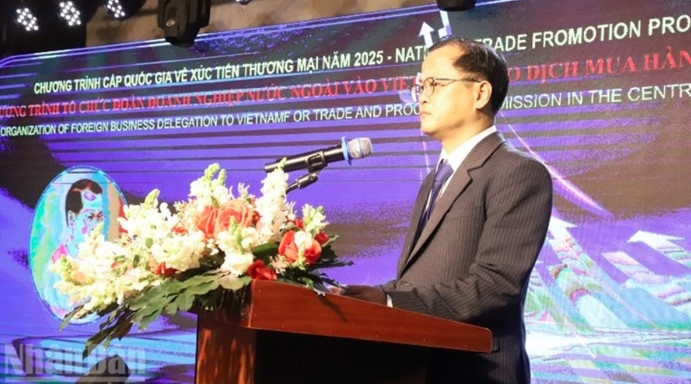
The programme brought together more than 20 international businesses specialised in purchasing, distribution, and import–export from China, Singapore, the Republic of Korea, Australia, and other countries, alongside over 80 local agricultural producers and suppliers.
Addressing the exchange, Nguyen Hai Trieu, Deputy Director of the Dak Lak provincial Department of Industry and Trade emphasised that the Central Highlands possesses strong advantages for developing high-value industrial and agricultural crops such as coffee, rubber, pepper, cocoa, cashew nuts, macadamia nuts, durian, passion fruit, and other fruit trees. Coffee is the flagship crop, earning Dak Lak the title of Vietnam’s “coffee capital” and securing its crucial role in the global coffee market.
Beyond agriculture, Dak Lak also holds strong potential in medicinal herbs, forestry-based economy, agro-forestry processing, mineral resources, and eco-cultural tourism. In recent years, increased investment in socio-economic infrastructure, particularly transport infrastructure, has significantly improved connectivity, facilitating the circulation of goods and enhancing the region’s attractiveness to investors.
At present, Dak Lak has developed several large-scale key agricultural production zones that make substantial contributions to Vietnam’s export turnover. Products such as coffee, pepper, cashew nuts, rubber, passion fruit and durian have consistently ranked among the world’s leading producers by output.
Nevertheless, export turnover across the Central Highlands remains modest relative to its potential. Last year, the region’s agricultural export value stood at around US$7 billion, just over 1% of Vietnam’s total export turnover, with Dak Lak accounting for nearly US$1.7 billion.
A key constraint lies in the export structure, which is still dominated by raw or semi-processed products with low added value. Inconsistent quality, stringent technical requirements from importing markets, and heavy reliance on a limited number of traditional markets further hinder growth, increasing vulnerability to global demand fluctuations.
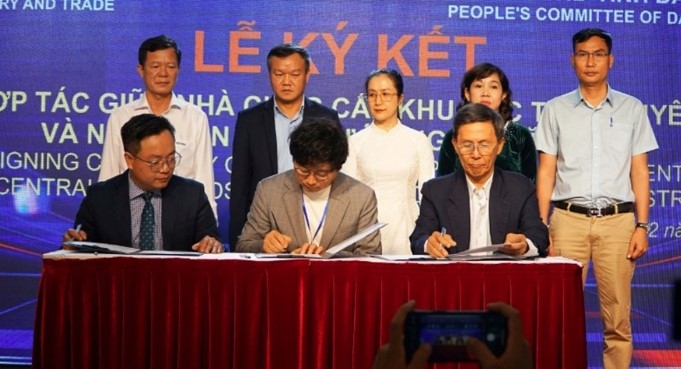
In this context, trade exchange and export promotion events are seen as critical drivers for breakthrough development. During the programme, 67 Memorandums of Understanding (MoUs) were signed, including those between the Buon Ma Thuot Coffee Association and the Asian Coffee Association, as well as with numerous international partners. These MoUs signal promising prospects for coffee and agricultural exports from the Central Highlands in the coming years.
Tao Jian, a representative from a Chinese enterprise, said that coffee consumption in China is growing rapidly at an estimated annual rate of 15%, and that Vietnam, particularly Dak Lak, is regarded as a reliable source of high-quality coffee. Direct engagement with raw material regions allows importers to better understand product quality and production practices, fostering long-term cooperation, he noted.
Trinh Duc Minh, chairman of the Buon Ma Thuot Coffee Association, noted that trade promotion activities go beyond opening new export markets, as they also drive improvements in product quality and encourage more sustainable farming practices, helping elevate the global profile of agricultural products from Dak Lak and the Central Highlands.
Vietnam and Bulgaria expand business links and trade exchanges
VOV.VN - The Embassy of Vietnam in Bulgaria, in coordination with the Chamber of Commerce and Industry of Burgas city, recently organised a Vietnam–Bulgaria business seminar, aiming to strengthen business links and trade exchanges.