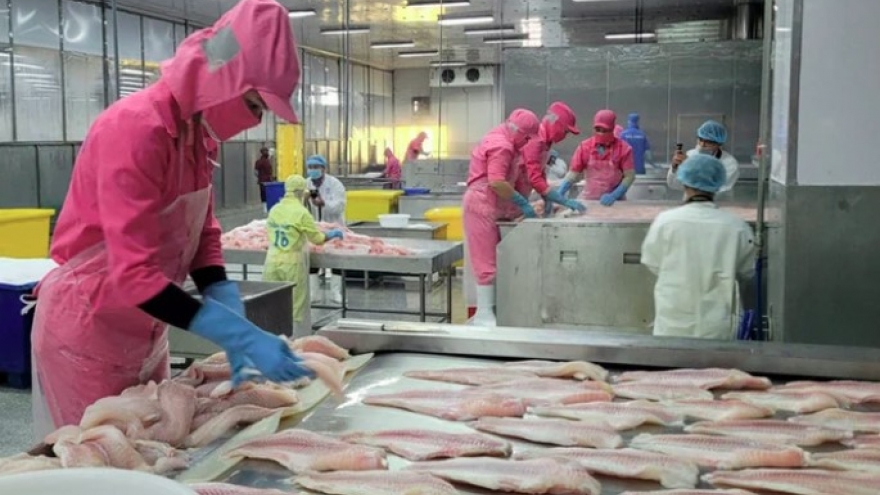
Tilapia exports surge despite global market turbulence

VOV.VN - Amid a volatile global market shaped by geopolitical tensions, rising fuel and logistics costs, the triple-digit growth of tilapia exports in several new markets during the first months of the year is an encouraging signal for Vietnam.

Behind the headline figures, however, lie structural challenges the industry must address, ranging from market risks and the need for rapid adaptability to the formulation of effective long-term strategies.
A new bright spot
Vietnam’s tilapia exports are entering a phase of rapid expansion, with export turnover reaching US$99 million in 2025, an increase of more than 140% compared to 2024. In the first quarter of 2026 alone, exports totaled US$35 million, up nearly 190% year on year.
Notably, growth is no longer limited to traditional markets but is expanding across multiple regions. According to the Vietnam Association of Seafood Exporters and Producers (VASEP), exports to the Dominican Republic surged by over 600%, while shipments to the Netherlands rose by more than 200% in the first two months of the year.
The Middle East emerged as a particularly high-growth market, with exports increasing more than 2,300%, while ASEAN markets grew nearly 400%, reflecting shifting global demand toward alternative whitefish products.
Despite the positive momentum, Vietnam’s tilapia exports remain heavily concentrated in a few key markets, particularly the United States and Brazil. Brazil alone accounts for nearly half of export turnover in early 2026, posing potential risks amid policy or demand fluctuations.
External factors, including US tariff policies, geopolitical instability in the Middle East, and rising logistics costs, continue to weigh on the sector.
Toward a third pillar of seafood exports
To rebalance market structure and ensure sustainable growth, tilapia exporters are pivoting toward markets with logistical advantages, leveraging benefits from free trade agreements, and focusing on product segments aligned with real consumer demand. At the same time, the domestic market of more than 100 million consumers is emerging as a key growth driver.
Nguyen Dang Ngoc, deputy CEO of Viet Nhat Group, that specialises in the production of animal feed, including livestock, poultry, and aquaculture feed, noted that alongside export strategies, the company places strong emphasis on domestic consumption. Tilapia, he said, is a familiar, healthy, and palate-friendly food for Vietnamese consumers. Developing both domestic and international markets in parallel is a key strategy to enhance value and elevate the Vietnamese tilapia brand, ensuring sustainable long-term growth.
Under the fisheries development strategy to 2030, the Ministry of Agriculture and Environment (MoAE) has identified tilapia as a high-potential species alongside shrimp and pangasius. Ongoing sector restructuring programmes are encouraging the expansion of tilapia farming on an industrial scale, with the application of high technology and adherence to sustainability standards.
According to the MoAE, with favourable natural conditions, a suitable climate, and abundant water surface area, estimated at 1.3 million hectares nationwide, tilapia farming has strong growth prospects and significant room for expansion. Global tilapia consumption is projected to grow by around 13% annually, reaching US$20 billion by 2030.
The MoAE has instructed localities to strengthen farm management, control the quality of tilapia fingerlings, and promote farming models that meet standards such as VietGAP, GlobalGAP, and other international certifications. Building stable raw material zones is identified as a critical factor for export development.
Once a familiar staple on Vietnamese dining tables, tilapia is steadily integrating into the global value chain and is increasingly seen as having the potential to become the “third pillar” of the seafood industry, alongside shrimp and pangasius.
If natural advantages are effectively leveraged, technology upgraded, and export value enhanced, tilapia could play a major role in helping Vietnam’s seafood industry achieve its 2030 export target of US$14–16 billion.
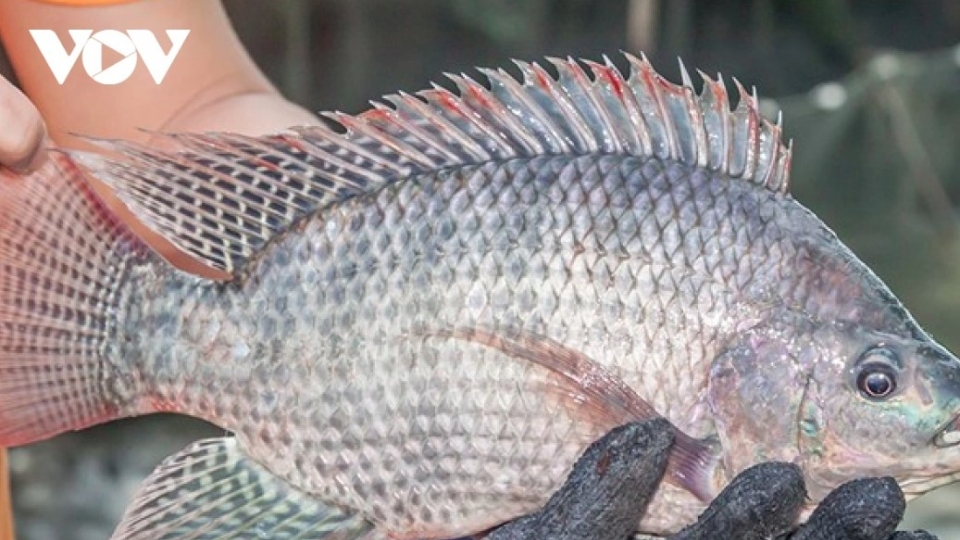
Nearly 200% rise in tilapia exports, demand concentrated in mid-range segment
VOV.VN - Vietnam’s tilapia exports recorded strong growth over the past 11 months of 2025, up198% year on year, pointing to steady demand in the global market, particularly for mid-range products.