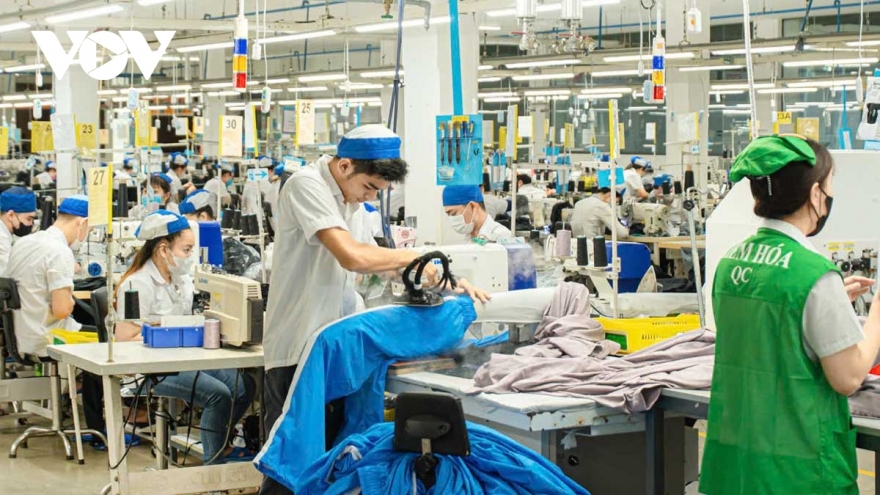
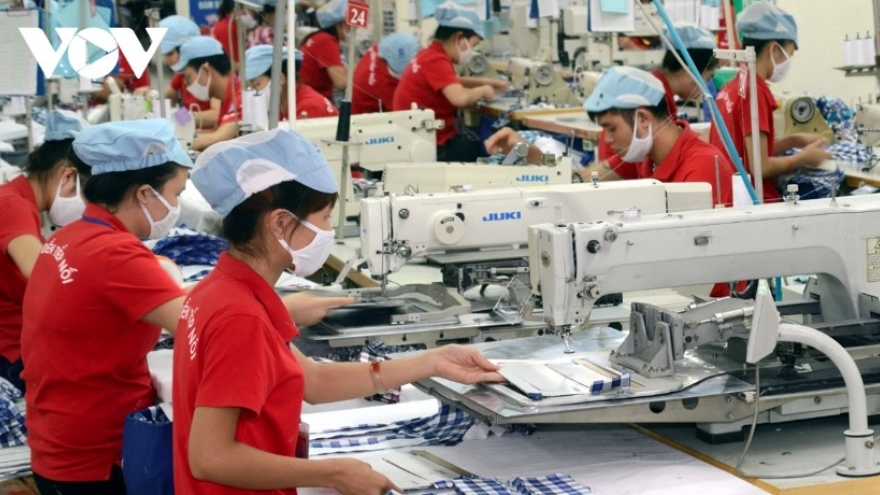
Technology investment opens new prospects for textile and garment industry

VOV.VN - Vietnam’s textile and garment industry still boasts huge potential to increase product value in 2026 as the sector moves beyond large-scale contract manufacturing toward higher-value segments supported by automation and customer data.
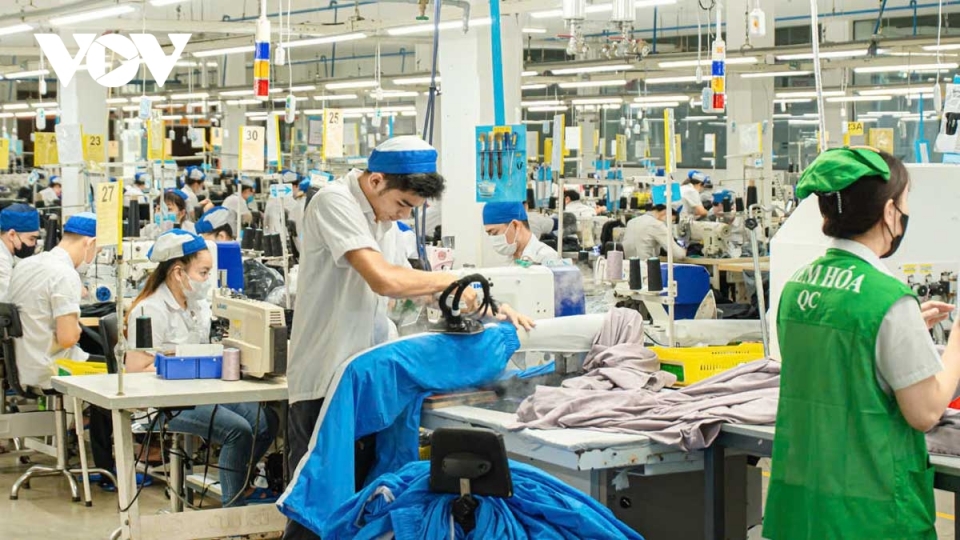
Amid rapid global changes in recent years, Vietnamese textile companies are adapting to new requirements in technology, management and market expansion. Many firms have adopted long-term strategies that place digital transformation, automation and advanced technology at the centre of efforts to raise productivity, cut costs and increase product value.
Even small improvements in technology can generate large efficiency gains. Reducing a single production step by five to ten seconds can bring substantial benefits over the course of a day, a month or a year.
Productivity likely to rise by 20-30%
Nguyen Van Tiep, Deputy General Director of Phon Thinh–Tae Gwang Co., Ltd., said many textile factories in Vietnam are entering a new cycle of equipment renewal after years of using earlier technologies.
The trend is not limited to Vietnamese companies. Foreign-invested firms in Vietnam, along with manufacturers across Southeast Asia and other regions, are also upgrading equipment to meet faster production cycles and shorter delivery times.
Factories are increasingly modernising equipment as part of a “dual transition” in manufacturing that combines digitalisation with greener production processes.
According to Nguyen Van Tiep, some automated production systems can streamline four to five stages in the manufacturing process. Labour productivity could therefore increase by at least 20-30%. The gains largely result from the application of new technologies, particularly automation and digital production solutions.

As global textile technologies continue to advance, Vietnam’s textile industry faces greater pressure to upgrade in order to maintain competitiveness. Alongside the development of smart factories, a company’s competitiveness is no longer determined solely by production volume but increasingly by how efficiently and intelligently its production systems operate.
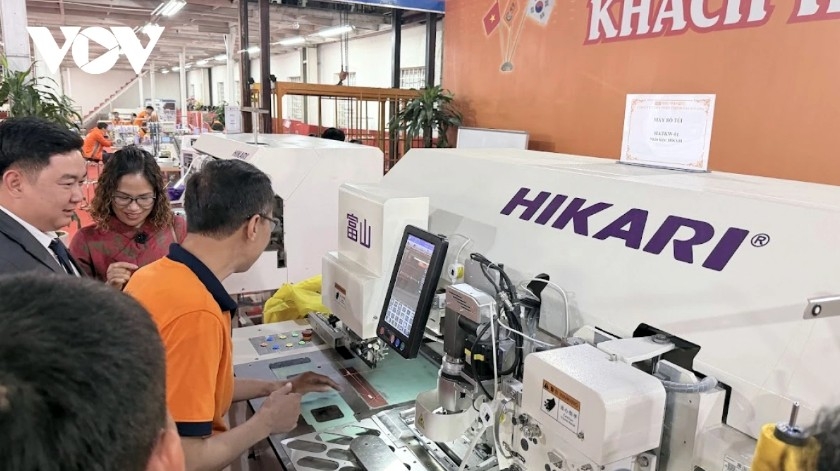
Wu Liang Jie, Chairman of HIKARI (Shanghai) Precise Machinery Science & Technology Co., Ltd., said new technologies can help Vietnamese manufacturers meet stricter requirements from international brands while easing pressure on labour recruitment and improving profitability.
He noted that new generations of AI-enabled industrial sewing machines can significantly reduce operation time, save labour and improve factory efficiency. Early adoption of such technologies could help Vietnamese factories improve product quality, shorten production cycles and improve their position in global supply chains.
Wu Liang Jie said advanced equipment such as the HIKARI 9VIII, one of the most modern single-needle sewing machines currently available, can help deal with key challenges facing Vietnam’s textile sector, including rising quality standards from global brands and the emergence of new fabric materials.
Technology adoption strengthens competitiveness
Vu Duc Giang, Chairman of the Vietnam Textile and Apparel Association (VITAS), said Vietnamese textile companies have made strong efforts in recent years to adapt to rapid changes in the global textile industry, maintain growth and keep Vietnam among the world’s three largest textile exporters.
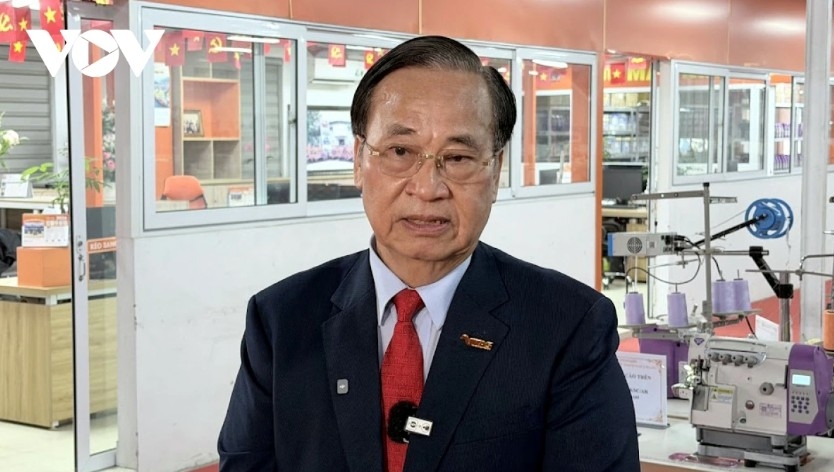
However, improving competitiveness will require further upgrades in production methods and stronger investment in automation and green manufacturing as the industry moves toward sustainable fashion.
Vietnamese textile manufacturers are entering a new phase as delivery times shorten, price competition intensifies and product quality requirements increase.
Vu Duc Giang said businesses need to closely monitor global developments and identify development paths suited to their own capabilities, with greater emphasis on applying new technologies in production.
Many companies are increasing investment in internationally certified factory infrastructure, automation systems, robotics and artificial intelligence. These investments help cut costs, improve competitiveness and expand the presence of Vietnamese textile products in the global market.
Textile and garment industry shifts toward high-value orders
VOV.VN - In 2026, Vietnam’s textile and garment industry is set to undergo a significant strategic change, shifting its focus from large-scale outsourcing to smaller, higher-value orders that require advanced technical standards, targeting key markets such as the United States and Japan.