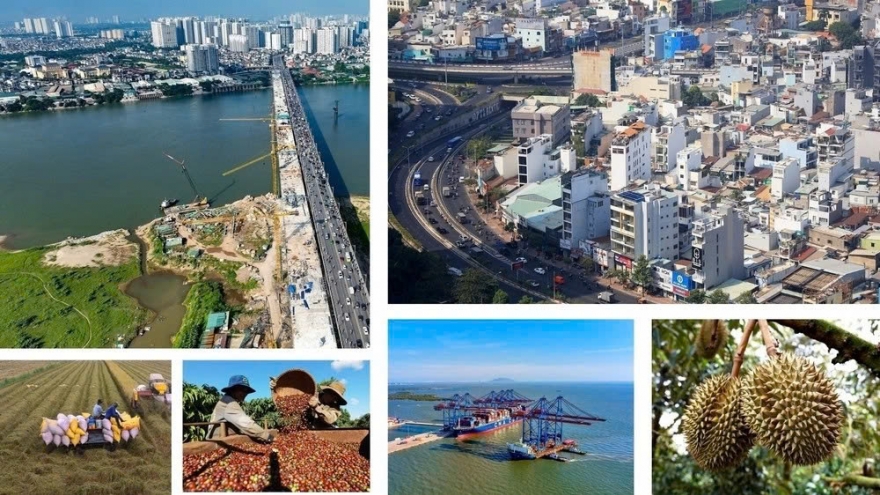
Strong performance in 2025 sets stage for Vietnam’s new growth cycle

Buoyed by strong economic performance in 2025, Vietnam is poised to embark on a new growth cycle from 2026, with regional prospects viewed more favourably, recent international assessments show.
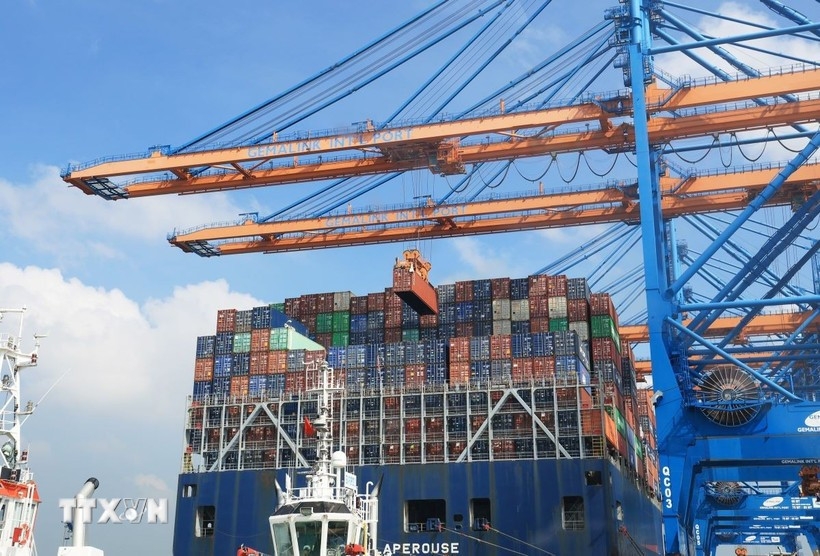
In 2025, Vietnam ranked among Asia’s fastest-growing economies, recording GDP growth of 8.02%, the second highest in the 2011–2025 period, which is seen as a key foundation for the country to enter 2026.
According to a quarterly update released on January 21 by the ASEAN+3 Macroeconomic Research Office (AMRO), Vietnam’s GDP growth is forecast to reach 7.6% in 2026 - among the highest within the ASEAN+3, which comprises 10 ASEAN member states together with China, Japan, and the Republic of Korea.
Other institutions have also issued upbeat forecasts, with United Overseas Bank (UOB) projecting 7.5%, HSBC 6.7%, and the World Bank 6.3%.
AMRO said the upbeat outlook reflects Vietnam’s growing role in regional supply chains, particularly in hi-tech manufacturing and exports, alongside steady domestic demand and a relatively resilient macroeconomic environment.
Confidence among foreign businesses remains a bright spot. The European Chamber of Commerce in Vietnam (EuroCham) reported that Vietnam’s Business Confidence Index (BCI) surged by 13.5 points to reach 80.0 in the fourth quarter of 2025 — the highest level in seven years. About 88% of surveyed European firms expressed optimism about Vietnam’s economic prospects for 2026–2030.
Investors shared the view that Vietnam’s attractiveness extends beyond competitive costs to include a rapidly expanding industrial and supporting-services ecosystem, stronger integration into higher value-added segments, and ongoing improvements to the business environment.
Global economic watchdogs have highlighted three interlinked drivers supporting Vietnam’s growth outlook. At the forefront is foreign direct investment (FDI), which continues to play a pivotal role, particularly in electronics, technology, green production and digital transformation. They also underscore the country’s rising prominence in multinational corporations’ manufacturing diversification strategies.
Complementing external capital inflows, domestic consumption — which expanded by around 8% in 2025 — has become a key stabilising force, with consumer spending and local investment helping the economy better absorb external shocks.
Meanwhile, a strong rebound in tourism, with more than 21 million international arrivals in 2025, has provided an additional boost, fueling services-sector growth, job creation and household income, thereby reinforcing economic momentum.
AMRO also noted that rising global demand for technology — including advanced electronics, semiconductors, digital services and artificial intelligence applications — is generating significant momentum for highly open Asian economies like Vietnam. Deeper integration into regional technology value chains is viewed as a long-term advantage.
However, international institutions cautioned that sustaining growth will require prudent policy management. In its late-January 2026 update, Fitch Ratings observed that stability and continuity in senior leadership can help support policy implementation and reform efforts.
Fitch Ratings also warned that ambitious growth targets can put pressure on maintaining rapid credit expansion, increasing leverage risks in a highly trade-open economy. The credit-to-GDP ratio has risen quickly in recent years, underscoring the key role of credit in promoting growth. The State Bank of Vietnam’s credit growth target of around 15% for 2026 is viewed as an effort to balance growth support with risk control.
Risks stemming from the global trade environment remain. Fitch Ratings cautioned that Vietnam’s increasingly complex role in global supply chains could result in tighter scrutiny over rules of origin and goods transshipment. AMRO also pointed to uncertainties surrounding trade policies and international financial conditions.
Taken together, international assessments indicate that sustained macroeconomic stability, continued reforms to the business environment, higher-quality capital inflows and productivity gains will be crucial for Vietnam to embark on a more resilient and sustainable growth cycle from 2026 onward.

Russian paper hails Vietnam’s robust economic growth, social progress
Russia's Pravda newspaper has published an article highlighting Vietnam’s remarkable transformation and sustained socio-economic achievements under the leadership of the Communist Party of Vietnam.