Standing Deputy PM underscores three infrastructure pillars for VIFC

Standing Deputy Prime Minister Nguyen Hoa Binh has underscored three key pillars for the Vietnam International Financial Centre (VIFC), including legal, digital, governance and workforce infrastructure.
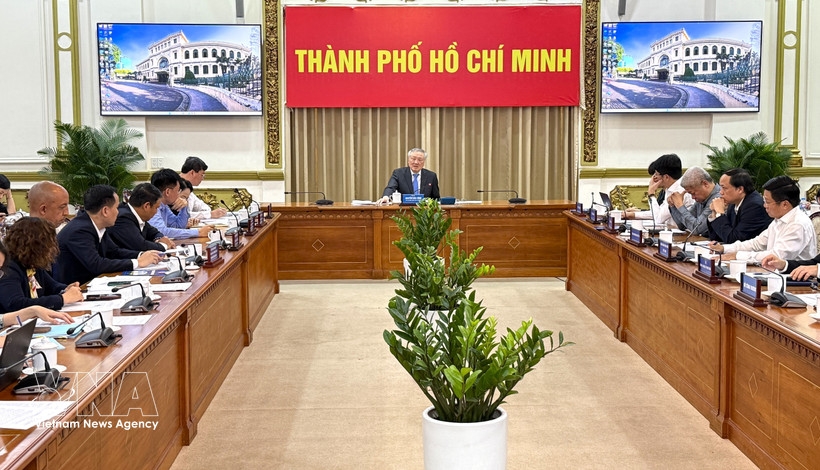
During a working session with leaders of Ho Chi Minh City and Da Nang on February 11 following the VIFC’s official launch in HCM City, Binh, who also serves as Chairman of the VIFC Executive Council praised the proactive contributions from ministries, agencies and local authorities, particularly Ho Chi Minh City. He stressed the importance of pursuing a systematic, prudent strategy backed by an appropriate roadmap.
According to him, a legal framework is taking shape, including a National Assembly resolution, Government regulations, and operational rules for the centre.
He described the VIFC as a long-haul endeavor that could take five years or longer to fully gauge its outcomes. Under the current strategy, he expressed optimism that Vietnam is on the right track as ministries and localities press ahead with preparations for physical headquarters, staffing, legal mechanisms and resource mobilisation.
Binh directed both cities to continue refining their development strategies, complete with clear roadmaps, goals and specific steps.
They were urged to examine the best practices from leading global financial hubs such as Singapore, Hong Kong (China), and Dubai (the UAE), while proposing tailored mechanisms and policies suited to Vietnam’s realities.
Reporting on the VIFC Da Nang, Standing Vice Chairman of the municipal People's Committee and Chairman of the local IFC executive agency Ho Ky Minh said a 20-storey building at Da Nang Software Park No. 2 will begin operations in the second quarter to host VIFC functions. The facility will incorporate computing resources for semiconductor chip design research, artificial intelligence (AI), digital and cloud computing, all designed to enable modern financial services down the line.
Looking ahead, Da Nang plans to explore establishing two or three specialised exchanges, including a digital asset and tokenisation platform under a regulatory sandbox to raise capital for major infrastructure projects in the city, central region and nationwide. The city is also weighing a pilot carbon credit exchange to direct investments toward sustainability-focused projects, along with a centralised commodity exchange for base metals linked to global markets and aligned with the Da Nang Free Trade Zone, he added.
Meanwhile, Chairman of the VIFC Ho Chi Minh City Truong Minh Huy Vu said the overall strategy to 2030 envisions establishing VIFC-HCMC as a platform connecting Vietnam with global entities and capital flows, competing on the strength of institutional excellence, innovative edge, and seamless connectivity rather than volume alone.
Accordingly, VIFC-HCMC’s strategy will embrace a “think differently, act differently” mindset, powered by regulatory sandboxes, advanced technologies like blockchain, AI and tokenisation, and a multi-layer open market model. At its core will be four strategic pillars: aviation finance, digital finance and FinTech, maritime finance, and an international interbank system linked with global players. These are expected to generate strong spillover effects on the broader economy and boost regional competitiveness.
On IT infrastructure, Vu noted that the executive agency is focusing on five core infrastructure areas, physical and soft, to make the whole ecosystem modern, transparent, and investor-friendly.
Ho Chi Minh City has ramped up efforts to draw capital into the VIFC, hosting promotion forums in Davos from January 18-23 and in Singapore from February 3-4, while collaborating with partners to advance proposals for a maritime financial centre and venture capital funds, he added.
Vietnam launches International Financial Centre to tap shifting global capital flows
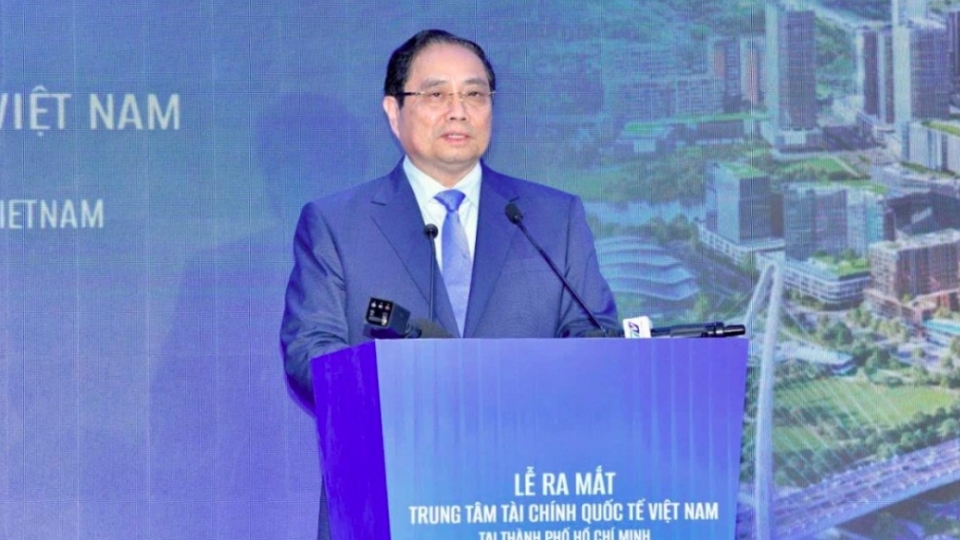
VOV.VN - Vietnam on February 11 launched its international financial centre in Ho Chi Minh City (VIFC-HCMC), a move Prime Minister Pham Minh Chinh described as a strategic step to help the country move from a capital recipient to a market shaper amid shifting global investment flows.