Spring Fair 2026: Vietnamese trade offices abroad serve as vital connectors

Moving beyond a conventional Tet shopping venue, the first Glorious Spring Fair 2026 is increasingly emerging as an important “gateway” for international businesses seeking access to the Vietnamese market.
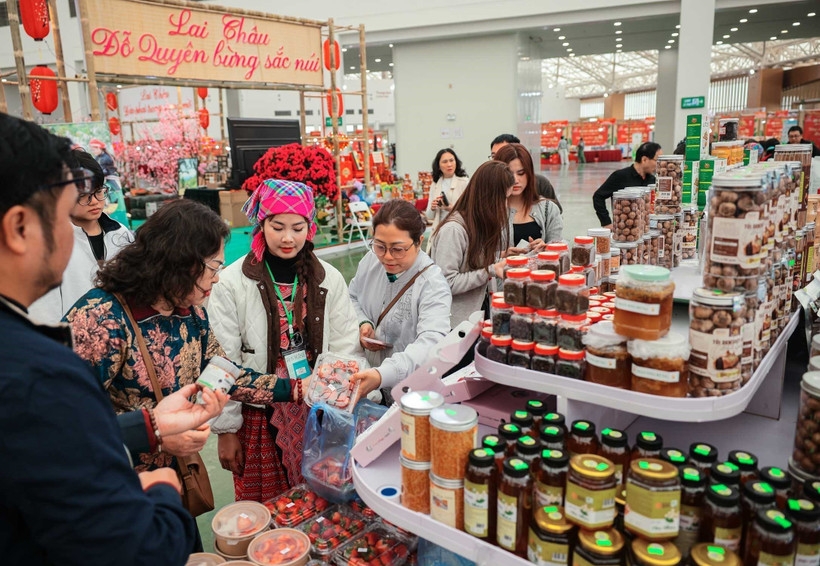
The presence of numerous foreign delegations, trade promotion agencies and overseas enterprises in early February was no coincidence, but reflected systematic outreach and matchmaking efforts by Vietnam’s network of trade offices abroad.
On February 6, a delegation from the Japan External Trade Organization (JETRO) visited and surveyed local booths at the fair. A wide range of agricultural products meeting VietGAP and organic standards, along with high-tech processed agricultural goods, attracted particular attention. Earlier, a delegation from the China International Import Expo Bureau also toured the exhibition areas, focusing on processed agricultural products and high-tech items, while commending the fair’s scale and vibrant atmosphere.
From a business perspective, the fair’s greatest advantage lies in its role as a “direct contact point”. Instead of prolonged document exchanges, potential partners can directly assess product designs, specifications, sourcing stories and booth organisation, helping shorten preliminary evaluations of suppliers’ capacity and standardisation readiness. This is a notable advantage as many international buyers increasingly prioritise on-site assessments to mitigate supply-chain risks.
Notably, the fair’s duration of 12 days (February 2–13), uncommon for traditional trade fairs, provided foreign delegations with ample time to conduct in-depth surveys, increase engagement and broaden partner searches across product categories.
A key highlight is that international business participation was not spontaneous, but closely linked to the proactive and well-structured promotion efforts of Vietnam’s overseas trade office system.
Ta Duc Minh, Trade Counsellor of the Vietnam Trade Office in Japan, stressed that fairs and exhibitions such as the Spring Fair are vital channels for businesses to promote products, grasp consumer preferences and expand markets. As Vietnam–Japan economic ties continue to deepen, supported by agreements such as the Vietnam–Japan Economic Partnership Agreement (VJEPA) and the Comprehensive and Progressive Agreement for Trans-Pacific Partnership (CPTPP), trade offices play a crucial role in “bridging the gap” between policy incentives and actual transactions by connecting the right businesses, needs and suppliers.
Similar approaches have been observed across Vietnamese trade offices in ASEAN countries. In Malaysia, representatives of trade promotion agencies and business communities noted that a fair’s effectiveness should be measured by the volume of post-event B2B connections, while underscoring the importance of maintaining digital engagement to sustain buyer–seller relations after the event.
Meanwhile, the Vietnam Trade Office in the Philippines has adopted a more demand-driven approach, organising business delegations to directly inspect agricultural product groups. According to Commercial Counsellor Le Phu Cuong, allowing partners to “see and touch” products at the fair enables a more realistic assessment of quality, production capacity and order fulfilment capability.
These efforts show that trade offices are not merely facilitating visits, but also acting as “market interpreters” - identifying product groups with growth potential in host markets and conveying specific requirements on standards, packaging, traceability and labelling to help domestic enterprises better prepare.
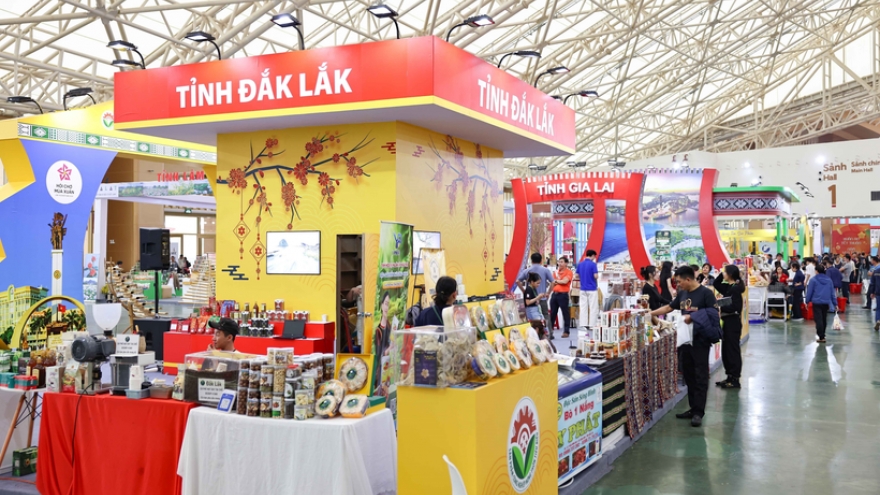
With its multi-zone, theme-based layout, Spring Fair 2026 offers a comprehensive picture of Vietnam’s supply capacity by region, sector and level of processing. This is particularly valuable for international partners seeking stable supply sources, scalable production or region-based supply chain development.
Another noteworthy aspect is that the fair supports not only goods transactions but also broader value-chain linkages — from agricultural production and processing to logistics, distribution and standards compliance. Recommendations from Chinese partners on diversifying product presentation languages, including Chinese and English, illustrate how “integration readiness” is increasingly being translated into concrete operational standards rather than remaining a slogan.
The strong interest from international trade promotion organisations and business delegations underscores the appeal of the Vietnamese market, while also reflecting the proactive role of Vietnam’s overseas trade office network in bringing global partners directly to production hubs.
Events such as the Spring Fair can therefore serve as sustainable bridges, helping foreign businesses better understand and enter the Vietnamese market, while creating additional pathways for Vietnamese products to integrate more deeply into global distribution chains.
Spring Fair a strategic catalyst for local firms to boost global competitiveness
Events like the Spring Fair are emerging as strategic catalysts, helping Vietnamese enterprises enhance technological capacity, meet stringent international standards and strengthen their global competitiveness beyond mere export turnover.