Spring Fair 2026: E-commerce poised for a green transition

The E-commerce Forum 2026, scheduled for February 2 as part of the First Glorious Spring Fair 2026, will convene regulators, local authorities, businesses and digital platforms to advance coordinated action towards safe, transparent and sustainable e-commerce development.

According to the Ministry of Industry and Trade (MoIT), the forum will centre on three core priorities. These include improving State management of e-commerce in a modern, transparent, competitive environment while protecting consumer rights, and reinforcing a spirit of partnership through support and problem-solving for enterprises, household businesses, and citizens in the digital market, and guiding e-commerce towards green, sustainable growth linked to stronger supply-chain competitiveness.
Key orientations include optimising logistics and operations, standardising product data and traceability, reducing transaction costs, and expanding into stable, long-term markets. The forum also emphasises closer coordination among central agencies, local authorities, businesses and platforms through information sharing, implementation support and regular dialogue mechanisms to address challenges in planning and deploying safe, efficient e-commerce activities.
The MoIT said the forum will highlight new developments in e-commerce governance under the forthcoming E-commerce Law, which establishes a comprehensive legal framework covering all market participants and emerging business models. Compared with the previous decree-based regulatory approach, the law more clearly defines e-commerce models and strengthens platform responsibilities in compliance monitoring and consumer protection.
Notably, the law expands obligations for social networks and integrated platforms engaged in e-commerce, alongside measures to prevent abuse of market dominance and ensure fair competition. It also introduces stricter requirements for seller identification, strengthens accountability for violations, and adds regulations on livestream commerce and affiliate marketing, with a focus on transparency and consumer protection.
In the area of cross-border e-commerce, the law clarifies the responsibilities of foreign platforms, including requirements to establish or authorise legal entities in Vietnam. Additional provisions cover minimum obligations for e-commerce support services, rapid-response mechanisms for violations, and refined regulations on electronic ordering and automated contracts. These measures are designed to enhance State management through a unified e-commerce management system and database, while enabling targeted support for disadvantaged areas, vulnerable groups, small businesses and household enterprises.
The MoIT stressed that, in line with Party and Government orientations, e-commerce is positioned as a pioneering pillar of the digital economy, developing along green, circular and sustainable pathways that optimise the entire value chain from production and logistics to consumer experience, while balancing economic growth, social equity and environmental protection.
The forum will also provide practical guidance for localities in formulating or updating provincial e-commerce development plans for 2026–2030 and annual plans for 2026, aligned with national strategies and clearly defining objectives, tasks, outputs, responsibilities and resource allocation.
Participants will be invited to register and propose projects under the National E-commerce Development Programme for 2027, while localities and household business representatives will share on-the-ground experiences.
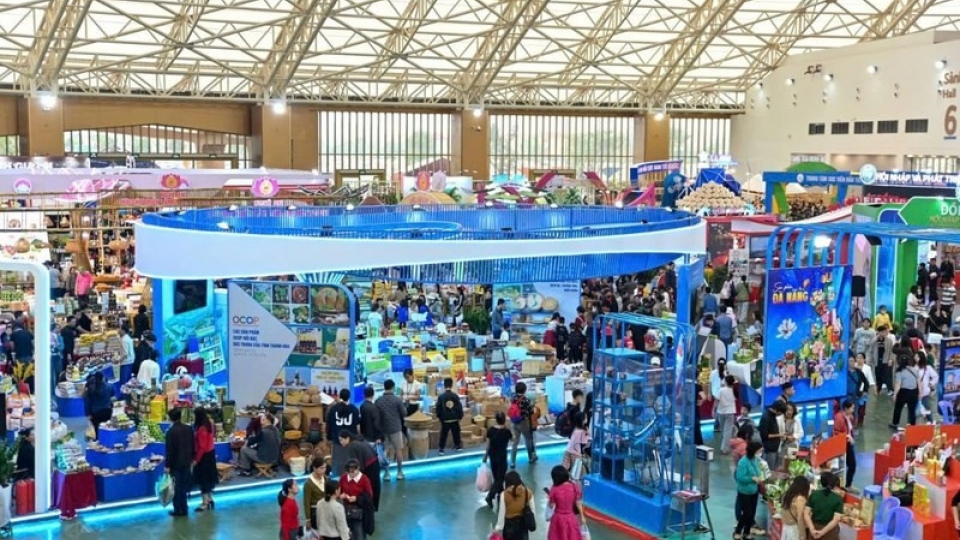
Spring Fair 2026: trade gathering to spur consumer spending
The first Glorious Spring Fair 2026 is expected to be a large-scale trade and service event, stimulating consumer demand and projecting the image of a dynamic and internationally integrated Vietnam at the start of the year.