


Sci-tech, digital transformation drive breakthrough growth at Petrovietnam

Facing challenges from declining natural resources and the global energy transition, the Vietnam National Industry - Energy Group (Petrovietnam) has identified science – technology, innovation and digital transformation as one of its three foundations, alongside governance and corporate culture.

These are expected to create new growth drivers, improve competitiveness and strengthen the group’s position as a national industrial and energy corporation.
From finite resources to infinite source of knowledge
As conventional oil and gas fields naturally decline and natural resources are limited while requirements for efficiency, safety and environmental protection grow, Petrovietnam has made science – technology, innovation and digital transformation strategic pillars.
These are no longer merely tools to support production; they are also drivers of the firm’s transformation into a modern industrial and energy corporation with strong competitiveness at home and abroad.
The group has set long-term targets for this strategy. It plans to allocate at least around 2% of its consolidated revenue or 10% of its consolidated profit each year to science – technology, innovation and digital transformation. It also aims for at least 25% of consolidated revenue to come from new and improved products and services developed through these activities. The economic benefits generated are expected to be twice the total investment.

These targets reflect a new approach: investment in technology is not simply an expense, but an investment in future growth capacity, the ability to master value chains and the group’s long-term position.
One of Petrovietnam’s greatest strengths is its knowledge and experience accumulated over more than 50 years of development. In its early years, the group gained access to international technologies and expertise through Vietsovpetro. Vietnamese oil and gas officials and engineers have since developed their capabilities, building up research and innovation capacity and the ability to solve specialised technical challenges.
A major achievement was the research and application of technology to extract oil from fractured basement rock formations at the Bach Ho oil field. This was once considered an exceptionally difficult challenge for the global oil and gas industry. Thanks to innovative thinking and practical research capacity, Vietnamese engineers developed an appropriate solution, making an important contribution to the domestic sector and earning international recognition.
Petrovietnam has also gradually mastered technologies for equipment manufacturing, offshore construction and the development of production systems. The research and manufacturing of the portable TBM-02 integrated logging instrument generated nearly VND3 trillion (US$116.58 million) in economic benefits. Its capacity to independently design and build large-scale drilling rigs and offshore structures has increased domestic content and reduced reliance on foreign contractors. Technologies for collecting associated gas and transporting it ashore have also marked an important step in the group’s technical development.
In the processing sector, more than 30 initiatives to improve and optimise the operation of the Dung Quat Oil Refinery have generated over VND4 trillion in economic benefits. These achievements have delivered direct economic returns while demonstrating the creativity and technological capabilities of Petrovietnam’s scientists and engineers.
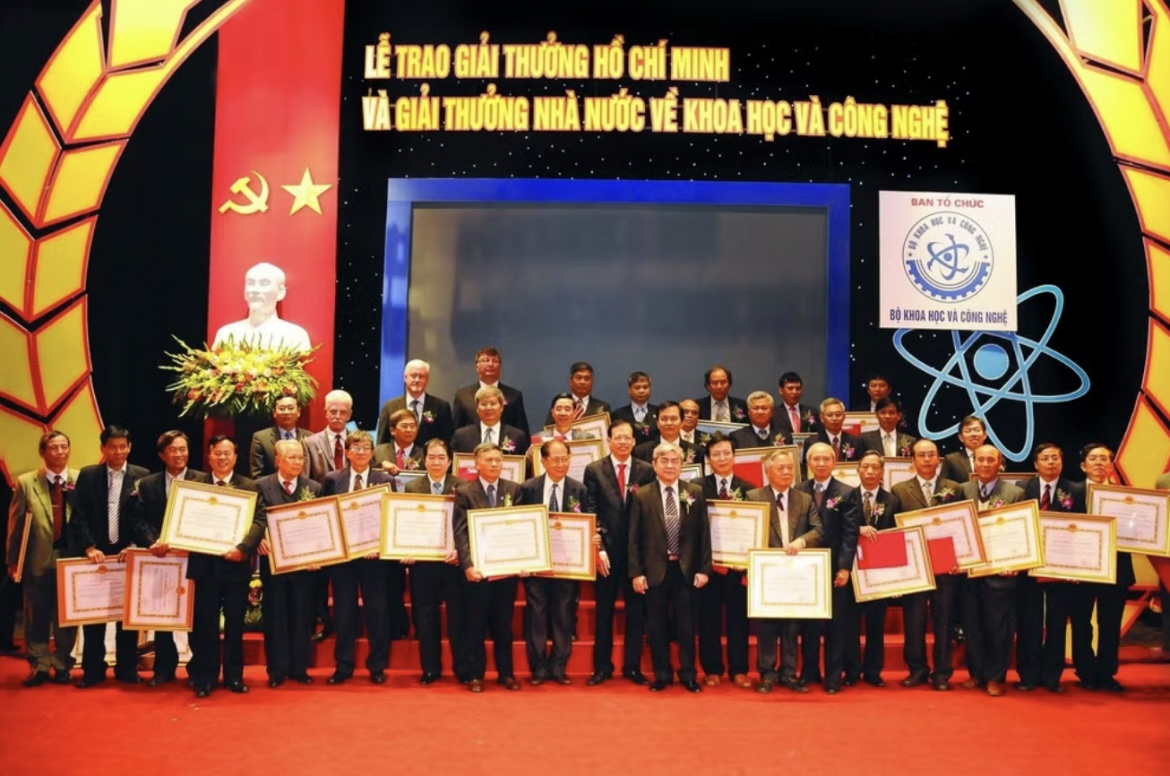
The group’s six Ho Chi Minh Prizes and four State Prizes for Science and Technology recognise its outstanding contributions to the country’s scientific and technological development. From mainly receiving and operating imported technologies, Petrovietnam has gradually moved towards mastering, improving and developing technologies suited to Vietnam’s conditions.
Mastering strategic technologies
To make science and technology a genuine driver of development, Petrovietnam considers reforms to governance mechanisms and incentive policies essential. Research involves risks and requires considerable time and resources. Flexible mechanisms are therefore needed to encourage innovation and protect those willing to take initiative and pursue new ideas.
The firm plans to introduce breakthrough mechanisms in three areas: providing rewards commensurate with contributions to attract and retain talent; accepting controlled risks in research and recognising failure as part of the innovation process; and ensuring fair benefit-sharing by properly recognising the value of inventions and solutions when they are commercialised.
Alongside institutional improvements, it is developing its research and innovation ecosystem. The Vietnam Petroleum Institute (VPI) serves as a key strategic research centre, linking scientific knowledge with practical production and business needs.

In the coming period, Petrovietnam will need not only to optimise its traditional operations but also to participate proactively in emerging industrial and energy value chains. It plans to develop a portfolio of around 34–35 strategic technology products, focusing on areas with application and commercialisation potential. These include sustainable aviation fuel (SAF), green methanol produced from agricultural by-products, advanced graphene materials and autonomous underwater vehicles (AUVs).
Carbon capture, utilisation and storage (CCS/CCUS), green hydrogen, green ammonia and offshore wind power have also been identified as important areas for research and development. These fields require specialised research capabilities, technology integration and the ability to master different stages of the value chain.
With its energy infrastructure, experience in operating offshore facilities, technical capabilities and skilled workforce, Petrovietnam is well positioned to expand its development space and gradually transform from a traditional oil and gas group into an industrial and energy corporation with international competitiveness.
Petrovietnam urged to take leading role in Vietnam’s growth
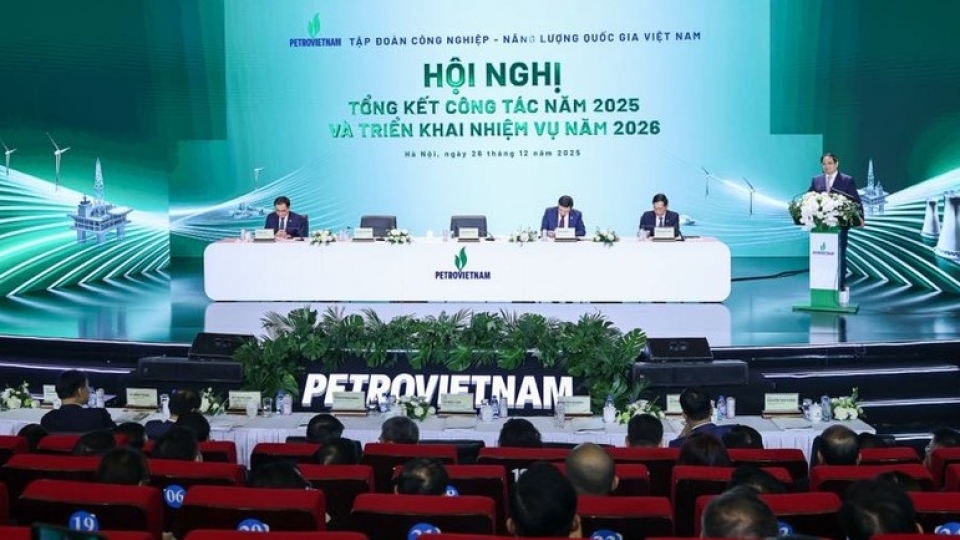
VOV.VN - Prime Minister Pham Minh Chinh has called on the Vietnam National Oil and Energy Group (Petrovietnam) to carry forward the spirit of “oil and gas warriors” and play a leading role in supporting the country’s push for double-digit growth.

