Rising ASEAN demand lifts Vietnam exports amid global logistics risks

VOV.VN - Southeast Asian markets are becoming a key pillar for Vietnam’s agricultural exports such as fruits and vegetables, rubber, and seafood, as rising logistics costs and global shipping risks push exporters to prioritise nearby destinations with steady demand.
Data from Vietnam’s Ministry of Industry and Trade show that imports of agricultural products across ASEAN have steadily increased in recent years, particularly for fruits, seafood, rubber and pepper.
In Malaysia, fruit and vegetable imports grew at an average annual rate of 6.03% between 2021 and 2025, reaching US$2.95 billion in 2025. The country relies heavily on external supply, with staple vegetables such as onions, garlic and potatoes accounting for 40–45% of total imports.
Vietnam is currently Malaysia’s seventh-largest fruit and vegetable supplier, holding a 3.52% market share. Key export items include dragon fruit, frozen durian, mango and longan, with Vietnam’s Ri6 durian gaining traction as a raw material for Halal food processing.
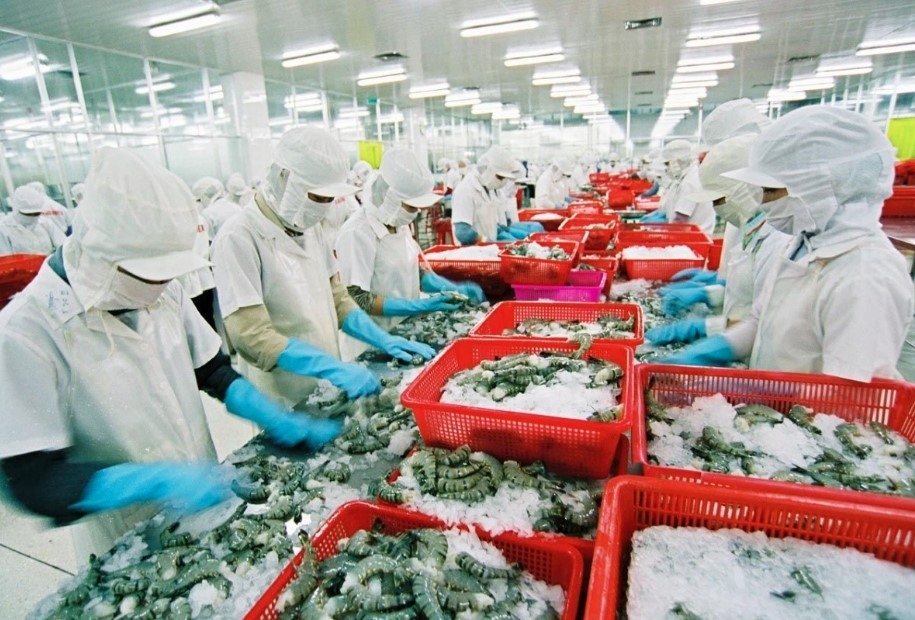
Other export categories are also seeing strong demand within ASEAN. In Singapore, Vietnam ranked as the third-largest seafood supplier in 2025, with export turnover reaching SGD125.5 million (US$93 million), accounting for 10.3% of the market. Filleted and frozen fish products were the main export category.
In Indonesia, rubber imports averaged 492,521 tonnes annually during 2021–2025, up 21.3% from the previous period. Vietnam rose to become the fourth-largest supplier in 2025, with shipments more than doubling year on year to 48,710 tonnes and market share increasing to 10.5%. The upward trend is expected to persist as Indonesia’s domestic rubber output continues to decline.
Pepper exports have also gained ground. Thailand’s pepper imports rose from 5,990 tonnes in 2020 to 9,652 tonnes in 2025. In January 2026 alone, imports surged 121.2% year on year, with Vietnam accounting for nearly all shipments.
Rice remains a cornerstone of Vietnam’s exports to the region, according to Do Ha Nam, chairman of the Vietnam Food Association. In January 2026, shipments to the Philippines reached 331,770 tonnes worth US$147.4 million, representing more than half of Vietnam’s total rice export volume.
Le Phu Cuong, trade counselor at the Vietnam Trade Office in the Philippines, said that despite strong demand and broadly similar consumer preferences, challenges persist. Key exports such as rice are subject to policy shifts and trade defence measures, requiring businesses to stay agile and well-informed. At the same time, Vietnamese products face growing competition from rivals such as China, Thailand, and Indonesia in an increasingly open Philippine market.
Meanwhile, many Vietnamese firms have yet to invest adequately in distribution networks, product sampling, trade promotion, or direct customer engagement. Limited product innovation tailored to local tastes has further constrained their ability to differentiate.
Moreover, high costs associated with entering retail systems, building brand presence, and complying with lengthy food safety registration procedures continue to pose significant barriers.
“To address these challenges, the Vietnam Trade Office in the Philippines is stepping up efforts to connect domestic exporters with local importers and distributors, facilitate product showcases, and support participation in trade fairs such as WorldBex, scheduled for March 2026 in Manila,” Cuong said.
From Thailand’s perspective, Le Huu Phuc, trade counselor at the Vietnam Trade Office in Thailand, noted that disruptions in energy supply chains and restrictions on flights over the Middle East are weighing on Thai consumption and tourism. These factors are having short-term implications for Vietnam’s exports, requiring businesses to closely track market developments and adjust product strategies with greater flexibility.

Vietnam emerges as ASEAN growth standout on open-door, integration strategy
VOV.VN - Over the past decade, Vietnam has emerged as one of Southeast Asia’s fastest-growing and most resilient economies, underpinned by an outward-looking policy framework and deep global integration, according to a Thai regional trade economist.