Resolution 68: International lessons for private sector development

The issuance of Resolution No. 68-NQ/TW by the Politburo on the private economic sector's development marked an important shift in Vietnam’s development mindset, identifying the private sector as a key driver of the economy. Experiences from other economies offer useful insights for Vietnam as it pursues this policy direction.
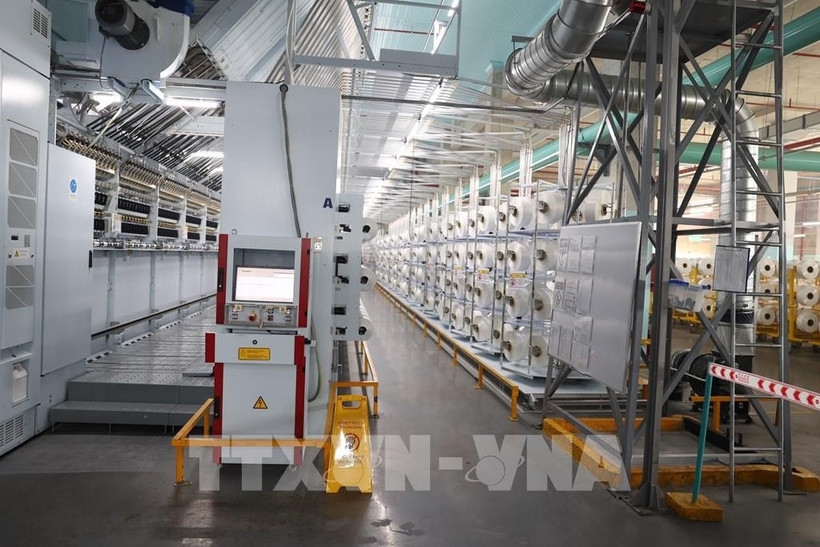
A common feature in many successful economies is a fundamental shift in the perception of private enterprises. In countries such as Singapore, Germany, Republic of Korea (RoK) and China, private firms are viewed not mainly as entities requiring strict control but as development partners and key forces generating growth, jobs and innovation.
Singapore provides a typical example. Despite lacking a large domestic market and abundant natural resources, the city-state has built a transparent, stable and globally-connected business environment. Business establishment and operations are simplified, legal frameworks are clear and consistent, and property and intellectual property rights are well protected. This business-centred approach has enabled Singapore’s private sector to expand into regional and global markets, becoming a pillar of the national economy.
While Singapore highlights the importance of a strong institutional environment, Germany offers another lesson - the strength of small and medium-sized enterprises (SMEs) in sustainable growth. The country’s “Mittelstand” companies – mostly family-owned medium-sized firms – form the backbone of the German economy, contributing strongly to exports, innovation and high-quality employment.
Rather than imposing administrative directives, the German Government focuses on strengthening enterprises’ internal capacity. Financial support and investment access programmes, such as the 30-billion-Euro Deutschland Fonds, help mobilise private capital for high-tech industries, green transition, digital transformation, workforce training and supply-chain connectivity. Over decades, this approach has enabled many SMEs to become global “hidden champions” in specialised industries.
In recent years, China has also stepped up efforts to reinforce the role of the private sector amid slower economic growth and global uncertainties. The Private Economy Promotion Law adopted in April 2025 strengthens legal commitments to protect private enterprises and ensure fair competition.
According to Zheng Bei, Vice Chair of the National Development and Reform Commission of China, China plans to reduce investment barriers, review market-access restrictions and expand openness in infrastructure and science and technology sectors while improving access to financing.
Meanwhile, the People's Bank of China and other state financial institutions have pledged to expand lending, diversify financing channels through equities and bonds, and reduce capital costs for private firms, reinforcing the message that business confidence is essential for growth.
The RoK and Thailand demonstrate complementary approaches to supporting private enterprises.
The RoK concentrates resources on strategic industries such as high technology, semiconductors, energy and automobiles, including through a US$34-billion policy fund providing preferential loans and investment for strategic firms.
Thailand, by contrast, focuses on strengthening SMEs through preferential credit programmes and loan guarantees, helping maintain economic resilience.
International experiences show that developing the private sector requires sustained institutional reform and policy consistency. The Politburo’s Resolution 68 provides a sound strategic framework. The key challenge now is effective and coordinated implementation so that the private sector can grow and become a major driving force of Vietnam’s economy in the new development stage.

Resolution 68 expected to spur growth model renewal
As Vietnam strives to become a developing country with modern industry and upper-middle income by 2030 and a high-income, developed nation by 2045, Resolution No. 68-NQ/TW dated May 4, 2025 of the Politburo on private sector development is expected to provide fresh momentum for growth model renewal.