Opportunities for export breakthroughs through cross-border e-commerce

VOV.VN - Rapid growth in digital platforms and ample room for export growth are opening fresh opportunities for Vietnamese businesses to break through via e-commerce.

Strong growth foundations
Vietnam is operating in one of the world’s most dynamic e-commerce regions, the Asia-Pacific. The country has built a “solid foundation” to enter a more advanced stage of development, with e-commerce growth among the fastest in Southeast Asia, while the value of the online retail market has reached US$16.4 billion.
Speaking at a recent online seminar on enhancing Vietnamese enterprises’ export capacity through e-commerce to the US market and beyond in the new context, Lai Viet Anh, Deputy Director General of the Department of E-commerce and Digital Economy under the Ministry of Industry and Trade, said development potential remains substantial thanks to the business community, “especially small and medium-sized enterprises (SMEs), which are highly adaptable, willing to pilot new technologies, and driven by strong aspirations for expansion.”
She added that international organizations now rank Vietnam among the regional leaders in e-commerce application skills among SMEs.
Beyond digital infrastructure advantages, Vietnam also retains its traditional export strengths. Lai Viet Anh noted that Vietnam ranks among the world’s leading exporters across key categories including agricultural products, seafood, textiles and garments, footwear, and electronic components. However, only around 20% of businesses currently use e-commerce channels for export activities. This indicates vast untapped potential to expand overseas sales through online platforms, which now serve as an increasingly important complement to conventional export methods.
Cross-border e-commerce enables enterprises to reach global consumers directly, particularly in non-traditional markets. It also offers a pathway for reducing reliance on conventional distribution channels, which have been vulnerable to fluctuations amid the ongoing challenges in global trade.
Policy support under the new framework
Despite the promising outlook, many enterprises, particularly small and micro firms, continue to face multiple obstacles in exporting via digital platforms.
According to the Deputy Director General, the main challenge lies in meeting technical standards, inspection requirements, safety regulations and legal compliance obligations in importing markets.
“The United States is a typical example, with some of the world’s most stringent requirements,” she said.
Enterprises also struggle with practical skills in applying digital tools to optimize operating costs. Although global e-commerce platforms provide extensive support toolkits, mastering these tools and translating platform access into actual orders requires considerable time and resources. The cost of participation, including store setup, marketing and daily operation, remains a financial hurdle for many smaller firms.
Additional barriers include language limitations, payment processes and, in particular, logistics. In direct-to-consumer exports, individual orders tend to be small in value and volume, pushing up logistics costs on a per-unit basis. “Cost optimization remains a major challenge for small businesses seeking to scale international sales through e-commerce,” Lai Viet Anh said.
She emphasized, however, that these difficulties do not amount to a dead end. Over recent years, a series of government policies has established an enabling framework to support digital transformation and more effective engagement in cross-border e-commerce.
The national master plan on e-commerce development for 2021-2025, approved under Decision 645 in 2020, provides strategic direction for training, skills upgrading and digital solution deployment among enterprises, while promoting market expansion via both domestic and international e-commerce channels.
Complementing this, Decree 80/2021 guiding implementation of the Law on Assistance for Small and Medium-Sized Enterprises sets out concrete financial support mechanisms. Notably, businesses can receive support covering up to 50% of the costs of opening and maintaining storefronts on domestic and international digital platforms. Lai Viet Anh described this as a “highly practical support channel,” encouraging enterprises to become more proactive in adopting digital exports.
Further reinforcing these efforts, Decision 1415 issued in 2021 facilitates enterprises’ access to overseas distribution networks, targeting 5,000 companies to participate in cross-border e-commerce exports. Associated programs ranging from training and market linkage to regulatory consultancy have helped businesses approach new markets with greater confidence and preparedness.
Cross-border e-commerce is increasingly becoming a key gateway for Vietnamese enterprises to expand export markets. As digital capacity strengthens, participation costs receive targeted support, and market barriers are gradually eased, this channel is set to emerge as a highly promising growth engine, helping Vietnam strengthen its position within the global commercial value chain.
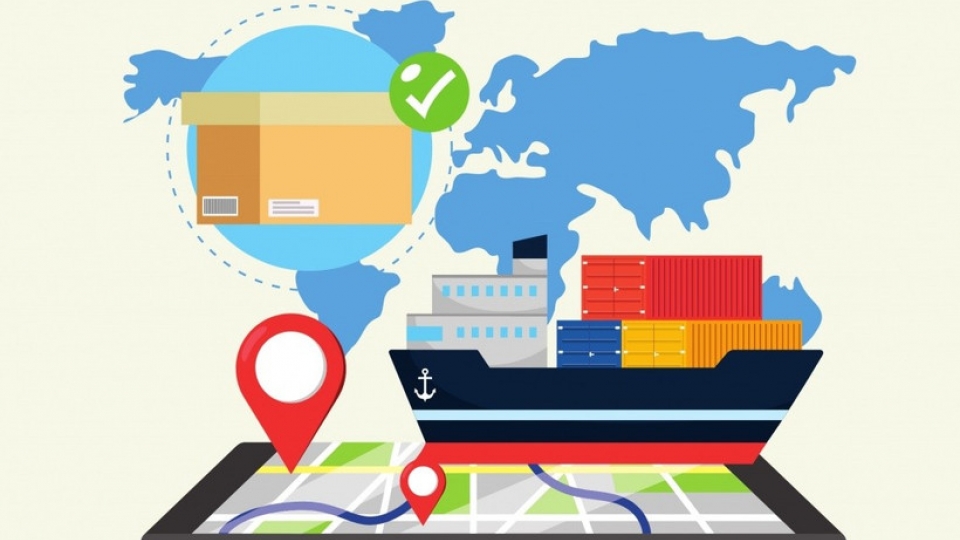
Ample room for Vietnam's cross-border e-commerce exports
With Vietnam’s e-commerce revenue reaching US$3.5 billion in 2022 and projected to hit US$13 billion by 2027, cross-border e-commerce is no longer a future trend but a dynamic and rapidly evolving reality.