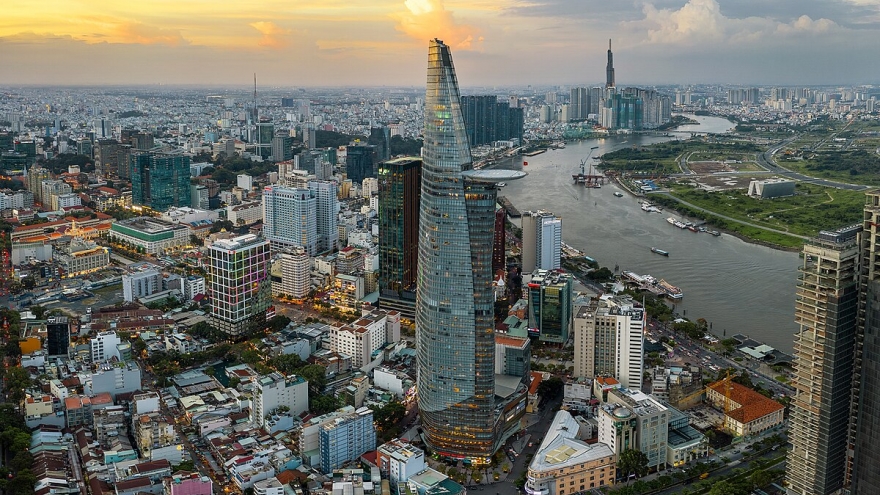
New growth model key for Ho Chi Minh City’s double-digit growth

VOV.VN - Ho Chi Minh City needs a major transformation in its growth model to sustain double-digit economic growth, with institutional reform and a stronger investment climate seen as more decisive than the amount of capital available.

Economists shared this view while discussing the city’s growth prospects in the context of maintaining energy stability.
Economist Tran Du Lich said the city’s growth over many years has largely relied on expanding capital investment and labour. In the coming period, Ho Chi Minh City needs to move toward growth driven by productivity, innovation, science and technology.
Traditional industries and services can maintain stable expansion, while emerging sectors such as high technology, the digital economy, international finance and innovation should grow faster.
Tran Du Lich said that if the city maintains average growth of around 10% over a prolonged period, its economic scale could expand rapidly. Ho Chi Minh City’s gross regional domestic product (GRDP) reached about US$123.5 billion in 2025. With that growth rate, the city’s economy could hit roughly US$310 billion by 2035 and about US$830 billion by 2045.
To achieve this target, the southern metropolis needs to improve the investment climate, refine economic institutions and increase investment in strategic infrastructure, digital infrastructure and clean energy.
Associate Professor Dr. Tran Hoang Ngan said the core pillar of the growth transformation lies not in capital but in institutions and the investment environment. In addition to macro policies, the city already has policy tools such as Resolution 260 governing the establishment and operation of the Ho Chi Minh City Free Trade Zone. He said the city should introduce regulatory sandbox mechanisms-controlled testing frameworks- for specific sectors and industries.
Regarding energy supply challenges, Tran Hoang Ngan said lessons from previous energy crises highlight the need for fiscal measures to stabilise fuel prices, protect social welfare and strengthen controls against cross-border fuel smuggling. Authorities should also prevent speculation and unjustified price increases.
He said the city should encourage greater use of public transport. Expanding metro lines and electric bus systems would support the energy transition, while Resolution 98 on special mechanisms for Ho Chi Minh City could help accelerate this process.
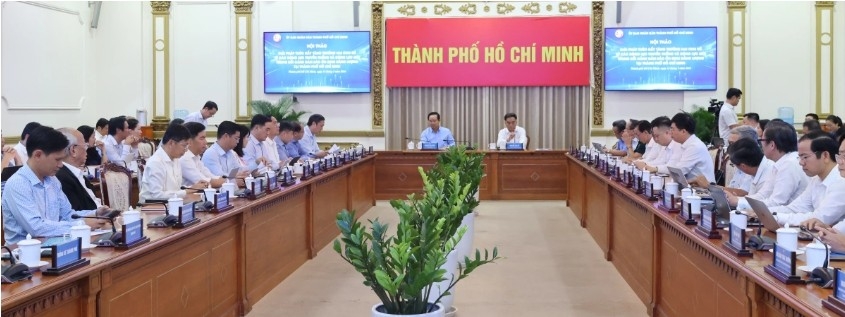
Removing infrastructure bottlenecks and speeding up public investment in key projects would reduce logistics costs and ease pressure on businesses, he added. Once a comprehensive metro network is completed, more residents are likely to shift from private vehicles to public transport, especially during periods of energy supply disruption.
Businesses have also stressed the need for strategies to ensure stable supplies of production materials. Tran Viet Anh, General Director of Nam Thai Son Company and Vice Chairman of the Ho Chi Minh City Business Association (HUBA), said double-digit economic growth must begin with strong growth at the enterprise level.
Many businesses are facing rising costs as fuel prices, shipping fees and input materials increase. In the plastics and rubber processing industry, the price of plastic resin has risen from about US$860 per tonne to roughly US$1,600 per tonne within two weeks, significantly increasing production costs.
Enterprises in the sector typically maintain raw-material reserves for only about three months. If supply disruptions persist, some companies could run out of materials by around June.
Tran Viet Anh said Vietnam currently lacks a national database on raw-material reserves by industry, making it difficult for businesses to anticipate supply risks. He suggested developing raw-material strategies for key sectors, particularly those heavily dependent on imports.
Nguyen Van Duoc, Chairman of the Ho Chi Minh City People’s Committee, said achieving double-digit growth will require a comprehensive set of solutions rather than purely economic measures.
The city plans to accelerate the transformation of its growth model toward a knowledge-based economy built on science, technology and innovation. Alongside traditional drivers, Ho Chi Minh City will promote new engines such as an international financial centre, port systems, high technology industries, semiconductor production, data centres and artificial intelligence.
These sectors are expected to attract significant investment while helping Vietnamese companies move deeper into global value chains and support the development of a highly skilled workforce.
Nguyen Van Duoc said rapid growth must go hand in hand with sustainability and resilience to external shocks. Energy security remains a vital pillar of the economy. The city will develop contingency plans to ensure stable supplies of electricity, fuel and liquefied natural gas (LNG), while departments are tasked with finalising an overall action plan to support the goal of double-digit growth.
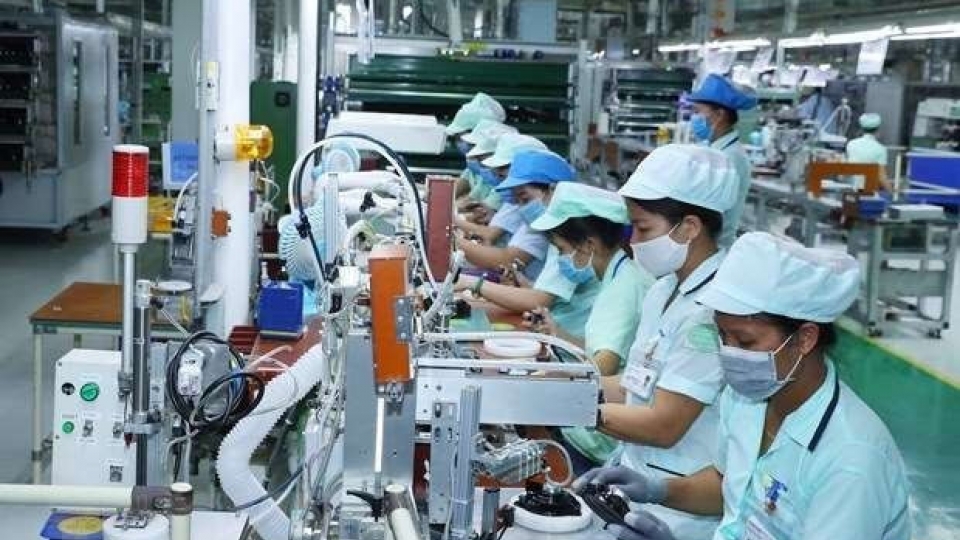
Ho Chi Minh City targets high-quality FDI inflows
Ho Chi Minh City has set a target of attracting US$11 billion in foreign direct investment (FDI) in 2026, prioritising high technology, logistics, and financial – commercial centre projects.