Lunar New Year demand pushes February CPI up 1.14%

VOV.VN - Vietnam’s Consumer Price Index (CPI) in February 2026 rose 1.14% compared with January, mainly driven by higher food prices, dining-out services and transportation costs as consumer demand increased during the Lunar New Year holiday.

According to the latest socio-economic report released by the National Statistics Office, the CPI in February increased 1.14% month on month, 1.19% compared with December 2025 and 3.35% year on year.
On average, the CPI in the first two months of 2026 edged up by 2.94% from the same period last year, reported the statistics agency.
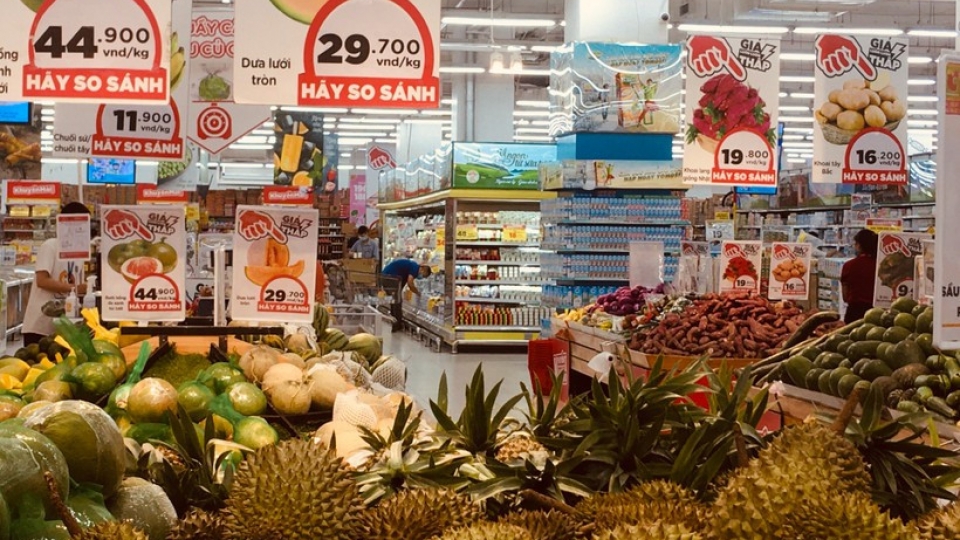
Most major groups of consumer goods and services recorded price increases in February. The rise was largely attributed to stronger consumption demand during the Lunar New Year, which led to higher prices for food, dining services and transportation.
Core inflation in February expanded 0.82% compared with the previous month and rose 3.74% year on year. In the first two months of 2026, core inflation grew by 3.47% from a year earlier, higher than the overall CPI increase of 2.94%.
In February, 11,300 new businesses were established nationwide, down 53.2% from January but up 11.6% from February 2025. The month also saw nearly 6,200 businesses resume operations, while 4,257 businesses temporarily suspended operations, 3,492 ceased operations pending dissolution, and 3,290 completed dissolution procedures.
During the first two months of 2026, nearly 64,500 businesses were newly established or resumed operations, a 29.4% increase compared with the same period last year, averaging 32,200 businesses per month. However, 77,000 businesses withdrew from the market, averaging 38,500 per month.
Regarding trade, Vietnam’s import-export turnover reached US$67.16 billion in February, bringing two-month trade value to US$155.7 billion, up 22.2% year on year. Exports increased by 18.3% while imports rose by 26.3%, resulting in a trade deficit of US$2.98 billion.
The United States was Vietnam’s largest export market in the first two months of 2026 with turnover hitting US$23.8 billion. Meanwhile, China continued to be Vietnam’s largest import market with a turnover of US$31.9 billion.
2025 CPI rises 3.31%, within National Assembly’s target
Vietnam’s Consumer Price Index (CPI) rose an average of 3.31% in 2025, meeting the target set by the National Assembly, Director of the Finance Ministry’s National Statistics Office (NSO) Nguyen Thi Huong told a press conference in Hanoi on January 5.