


Japanese businesses pledge long-standing partnership with Vietnam

VOV.VN - The visit to Japan by General Secretary of the Communist Party of Vietnam Central Committee and President To Lam is expected to open up a new vision for the next 50 years of cooperation while further deepening the Vietnam-Japan comprehensive strategic partnership.
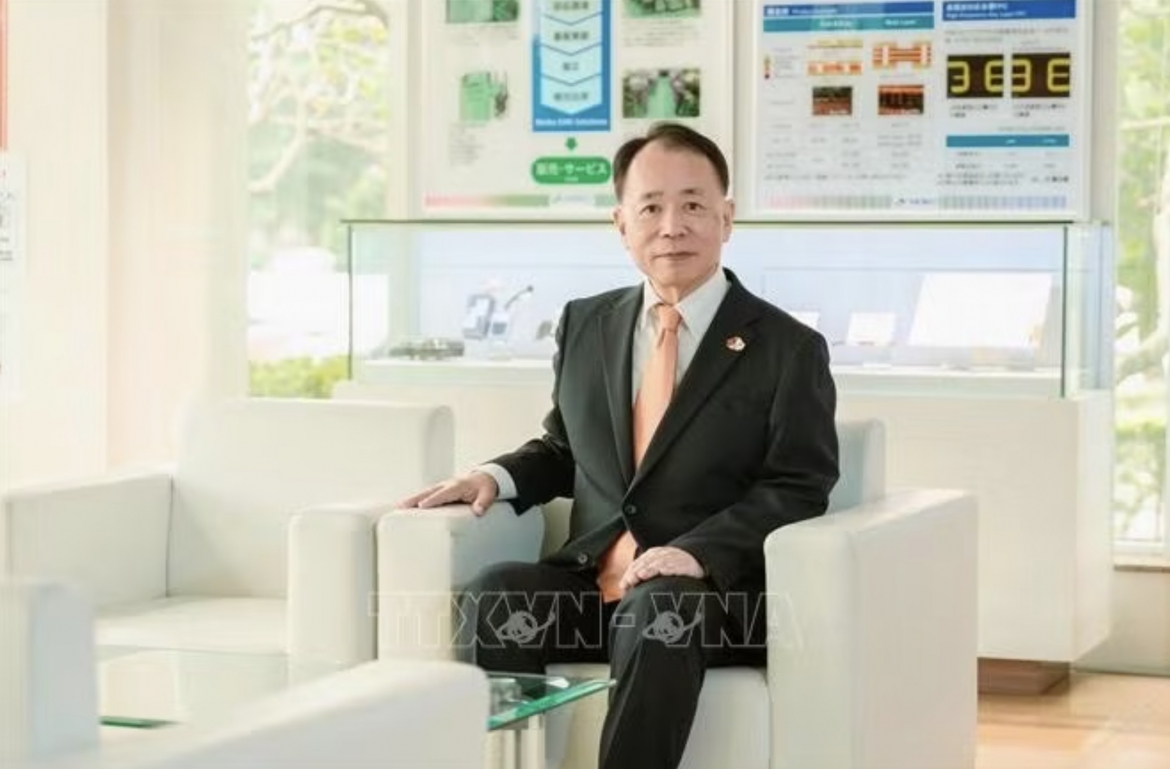
In a recent interview with the press ahead of the Japan visit by the top Vietnamese leader, Tsuchibashi Akito, Chairman of the Japanese Business Association in Vietnam (JCCI), emphasized the desire to turn political trust into practical cooperation in human resource development, green transition, and the improvement of the investment environment, while affirming the Japanese business community's commitment to standing side by side with Vietnam for the long term.
Assessing bilateral relations, Tsuchibashi Akito noted that Vietnam and Japan share one of the most strong and trusted relationships in the history of diplomatic ties between the two countries. Since Vietnam initiated the Doi Moi (Renewal) process and opened its economy, Japan has been among the first countries to invest in Vietnam, while steadfastly supporting the country's industrialization and modernization efforts.
Japan has so far remained Vietnam’s largest Official Development Assistance (ODA) provider, one of its vital labor cooperation partners, a leading foreign direct investment (FDI) source, and a major trade partner. The upgrade of bilateral relations to a comprehensive strategic partnership for peace and prosperity in Asia and the world in 2023, on the occasion of the 50th anniversary of diplomatic ties, marks a milestone reflecting decades of cultivated trust and mutual understanding.
The JCCI Chairman also praised the Vietnamese Government for stepping up dialogue with the Japanese business community. During the 2025-2026 period, then Prime Minister Pham Minh Chinh held three meetings with Japanese businesses, while incumbent Prime Minister Le Minh Hung has also chaired direct dialogues. In his view, this demonstrates the trust placed by Vietnam's leadership in Japanese businesses as long-term partners in the country's development process.
According to Tsuchibashi Akito, Japanese businesses are contributing to Vietnam's economy through investment, job creation, tax contributions, technology transfer, workforce training, and supply chain upgrading. As Vietnam targets higher-value-added industries and enhanced international competitiveness, the involvement of Japanese businesses can continue to play a vital role.
Regarding future cooperation orientations, Tsuchibashi Akito laid stress on three priority areas. First is the development of high-quality human resources. In his opinion, this is a decisive factor for Vietnam's goal of becoming a developed industrial nation. Over the years, Japanese businesses have engaged in employee training, skills upgrading, management development, and technology transfer. Moving forward, the business community hopes to augment closer cooperation among universities, research institutes, and enterprises of the two countries, particularly in training personnel for high-tech manufacturing, digital transformation, and green growth.
He also appreciated the increasing number of Vietnamese people studying and working in Japan, accumulating professional skills and international experience before returning home to take on key positions in enterprises. This is not only a labor rotation activity but also creates a cycle of knowledge, technology, and experience transfer from Japan back to Vietnam. He expressed hope that the two governments will continue to support and replicate this model.
The second area is green transition and energy development. According to Tsuchibashi Akito, Vietnam faces the requirement of both ensuring energy security to serve growth and achieving the net-zero carbon target by 2050. Meanwhile, Japanese businesses possess experience and strengths in energy infrastructure, efficient and energy-saving utilization, environmental technologies, liquefied natural gas (LNG), renewable energy, and industrial carbon emission reduction.
He specifically mentioned the "Asia Zero Emission Community" (AZEC) initiative launched by the Japanese Government to promote emission reduction and energy projects in Asia, including Vietnam. Amid rising electricity demand, implementing projects that both ensure energy security and support the net-zero carbon target is of urgent significance. The JCCI Chairman expressed hope that the two governments will continue to support and expand cooperation within the framework of this initiative.
The third area is improving the investment environment. Tsuchibashi Akito noted that Japanese businesses invest in Vietnam with a long-term vision, aiming to stand alongside and grow together over decades. Therefore, the business community hopes that Vietnam will continue to enhance the transparency of its legal system, increase policy predictability, and streamline administrative procedures. A stable and transparent business environment will facilitate the attraction of new investment flows, promote technology transfer and workforce development, and benefit both countries.
Affirming the commitment to long-standing partnership, the JCCI Chairman emphasized that Japanese businesses view Vietnam not only as a consumption market or an investment destination, but as a co-development partner. As Vietnam strives toward its goal of becoming a developed, high-income nation by 2045, Japanese businesses will continue to contribute through human resource training, technology transfer, green transition, digital innovation, and enhancing the capacity of Vietnamese enterprises to participate in industrial value chains.
Tsuchibashi Akito expressed hope that General Secretary and President To Lam's upcoming visit to Japan will become an important milestone, shaping a new vision for the next 50 years of cooperation and further deepening the comprehensive strategic partnership between the two countries.
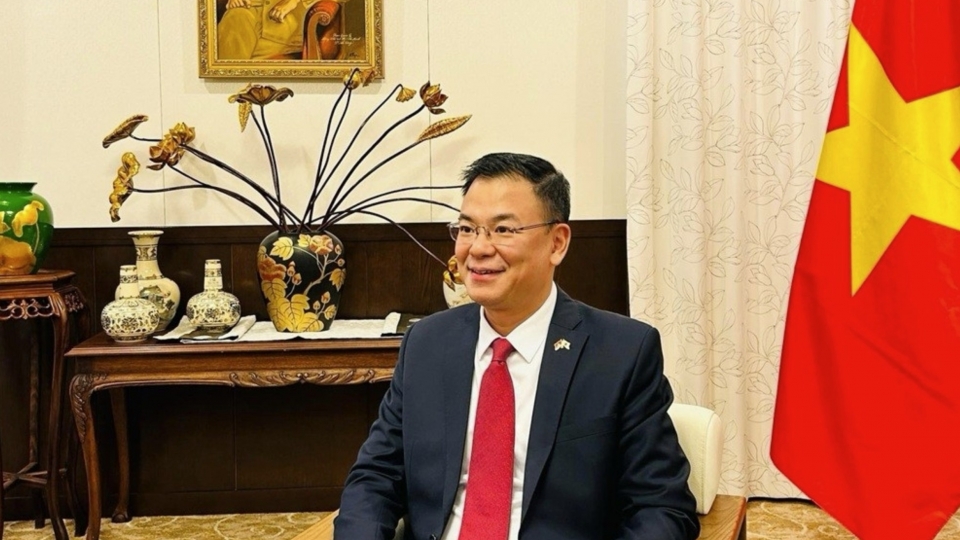
Top leader To Lam’s Japan visit to bring strategic cooperation to new heights
VOV.VN - Vietnamese Ambassador to Japan Pham Quang Hieu has expressed expectations that the upcoming visit to Japan by General Secretary of the Communist Party of Vietnam Central Committee and President To Lam will create fresh impetus for comprehensive bilateral cooperation.


