International Financial Centre in HCM City set for launch on February 11

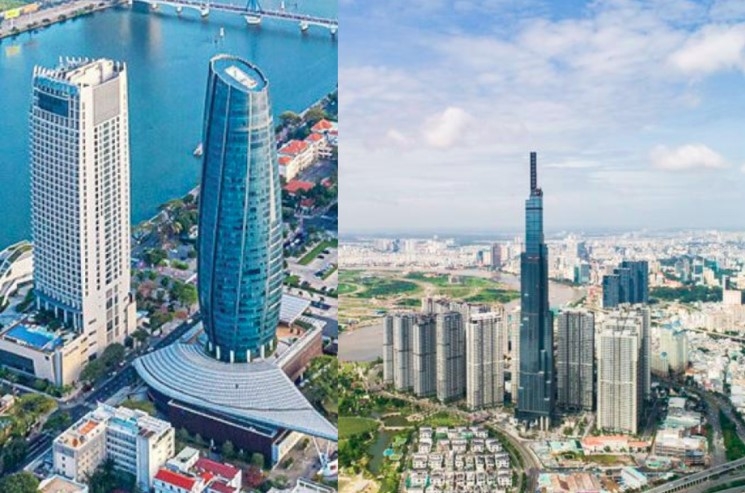
VOV.VN - The launch ceremony of the Vietnam International Financial Centre in Ho Chi Minh City (VIFC-HCMC) is scheduled to take place on February 11 at the Vietnam International Financial Centre building, located at 8 Nguyen Hue Street, Sai Gon Ward, according to a plan recently issued by the municipal People’s Committee.
Under the plan, the launch aims to affirm the position and long-term development vision of VIFC-HCMC, while introducing its institutional and administrative framework in line with global standards, ensuring transparency, safety and dispute-resolution capacity, thereby strengthening confidence among international investors and financial institutions.
The event will also serve as a platform to present key financial initiatives and facilitate cross-border capital flows, contributing to the positioning of VIFC-HCMC as a new growth pole within the regional financial network.
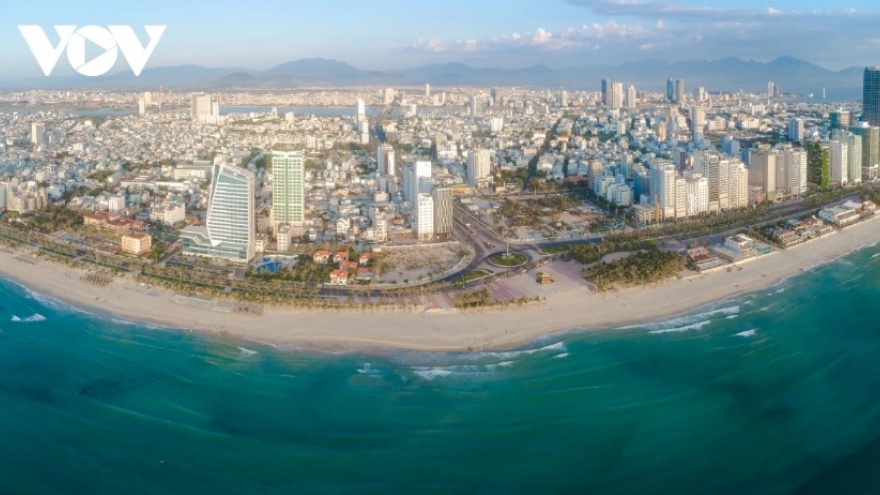
According to the approved master plan, VIFC-HCMC will cover an area of approximately 898 hectares, spanning Sai Gon Ward, Ben Thanh Ward, and the Thu Thiem New Urban Area (An Khanh Ward).
The development space is organised along a ring-shaped corridor running along the Sai Gon River, forming a concentrated financial-services complex that links the existing central business district with the eastern new urban area.
A draft development strategy for VIFC-HCMC identifies four core product pillars, covering an international capital market; financial services supporting international trade and foreign direct investment (FDI); digital banking and fintech; and new financial products and services for niche markets.
The selection of these pillars is based on Government policy orientation, assessments of Ho Chi Minh City’s comparative advantages and capabilities, and the needs of potential client groups.
In the initial phase, VIFC-HCMC will prioritise the development of a commodities trading market, starting with agricultural commodities, to provide risk-management tools and profit-optimisation mechanisms for agricultural producers and traders.
On this basis, the Centre will gradually expand into derivative products to manage exchange-rate, interest-rate and commodity-price risks, while responding to rising hedging demand amid global market fluctuations.
Executive Council for Vietnam International Financial Center set up
VOV.VN - Prime Minister Pham Minh Chinh has signed a decision to establish the Executive Council of the Vietnam International Financial Centre, appointing Deputy Prime Minister Nguyen Hoa Binh as its chairman.