




Hanoi prepares to launch US$1.5-billion Metro 2A extension project

Hanoi is preparing to launch the Metro Line 2A extension project, with a preliminary investment estimate exceeding US$1.5 billion, as part of efforts to expand the capital city’s urban railway network and ease traffic congestion in its southwestern gateway areas.
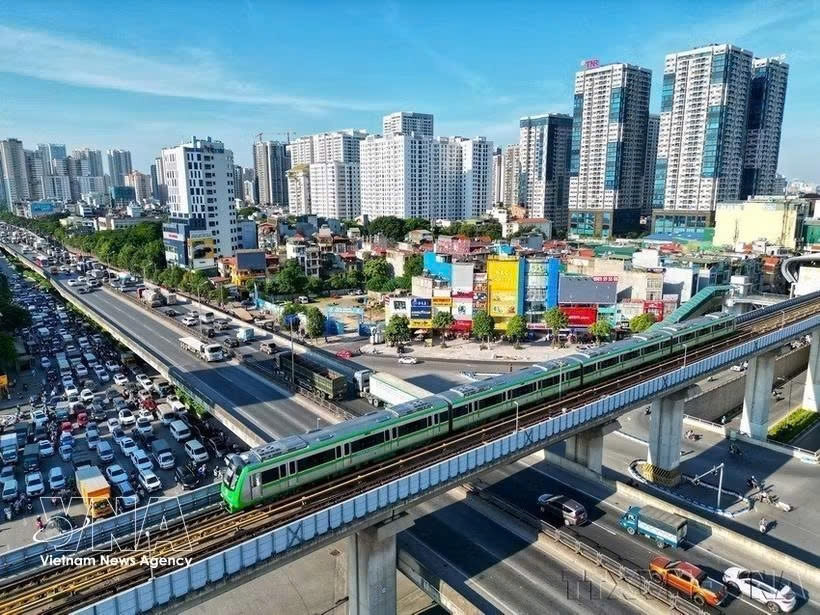
The Hanoi Metropolitan Railway Management Board (MRB) announced that it will organise an Early Market Engagement (EME) event for the project on June 18-19 in Hanoi to collect feedback from domestic and international businesses and consultants before the official bidding process begins.
The event will be held with the support of the Asian Infrastructure Investment Bank (AIIB) and is open to contractors, suppliers, consultants and potential partners with experience in urban railway projects.
According to the MRB, the project is expected to be financed through loans from the AIIB and counterpart funding from the Vietnamese Government.
The feasibility study (FS), including the Front-End Engineering Design (FEED), began in February 2026 and is scheduled for completion in October this year. The study also covers environmental and social impact assessments, resettlement plans, project implementation strategy and procurement plans.
The MRB said the market consultation process aims to gather opinions on design options, contract packaging strategies, risk allocation mechanisms and technical and organisational solutions suitable for actual conditions.
The Metro 2A extension project is considered a key component of the first phase of Hanoi’s three-stage urban railway development master plan. The route is expected to improve connectivity between the city centre and southwestern urban areas, particularly Xuan Mai satellite urban area, which is being developed as a western gateway urban zone of Hanoi.
Under the preliminary plan, the line will stretch around 20km and run entirely on elevated tracks along National Highway 6, which is currently being expanded. The project is expected to include 12 elevated stations, 13 new four-car trains and a new 8.3ha depot near Xuan Mai station.
The line will use the standard 1,435mm gauge with a maximum design speed of 80-100kph and a third-rail 750V DC power supply system. Its signalling system will apply Communications-Based Train Control (CBTC) technology integrated with Automatic Train Protection (ATP) and Computer-Based Interlocking (CBI) systems.
A key technical requirement is ensuring full operational and technical compatibility with the existing Cat Linh-Ha Dong Metro Line 2A.
Once completed, the project is expected to directly serve around 500,000 residents along the corridor, reduce traffic pressure on National Highway 6 and ease congestion around Mai Linh bridge, one of Hanoi’s busiest southwestern gateways.
The metro extension is also expected to promote urban development along the route, increase land values around stations, create jobs during construction and operation, and encourage a shift from road transport to mass public transit.
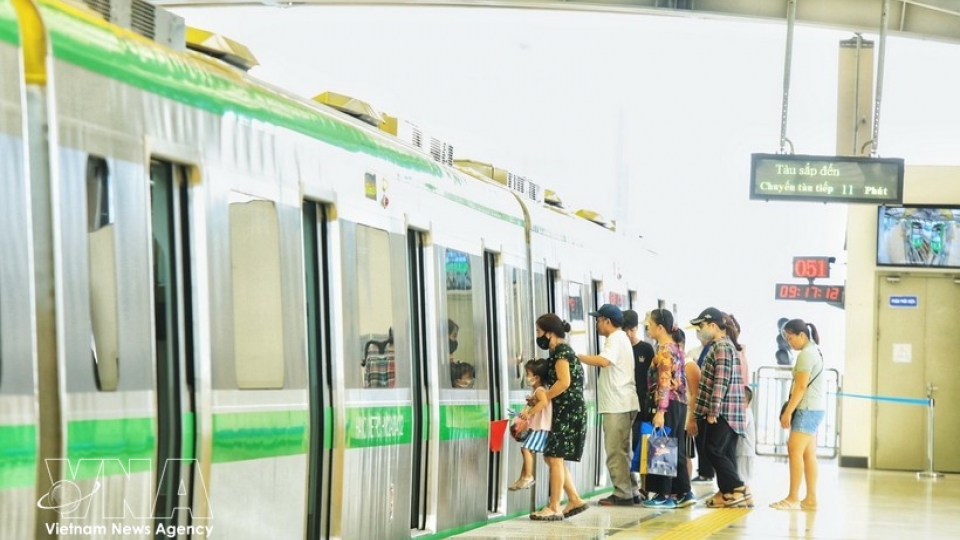
Hanoi Metro adjusts peak hours, train schedules on two urban railway lines
Hanoi Railway Company Limited (Hanoi Metro) has announced that to better meet rising passenger travel demand, especially during peak hours, it will adjust peak-hour time frames and apply new train schedules on both urban railway Line 2A Cat Linh–Ha Dong and Line 3.1 Nhon–Hanoi Station from February 9.

