


Hanoi, HCM City lead in 10-month public investment disbursement

VOV.VN - Hanoi and Ho Chi Minh City have led in disbursement value, while Dien Bien province recorded the highest score in the assessment of 2026 capital-plan implementation.
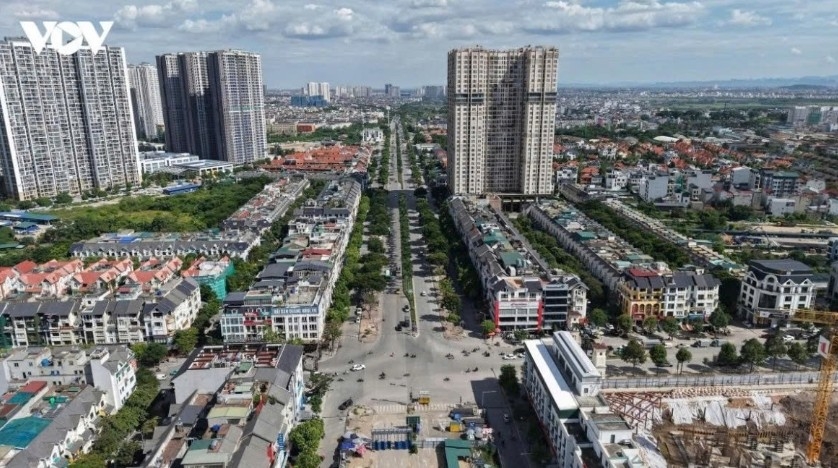
As of the end of October 2026, Vietnam had disbursed VND708,567.4 billion (about US$27.30 billion) in public investment funds, equivalent to 74.1% of the plan assigned by the Prime Minister.
According to Report No. 908 dated November 3, 2026, issued by the Ministry of Finance, the National Assembly approved a total state-budget-funded public investment plan of VND1,105,823.4 billion (US$42.60 billion) for 2026. The plan assigned by the Prime Minister, after deducting amounts not yet allocated in detail, stood at VND955,867.4 billion (US$36.82 billion).
Hanoi led the country in disbursement value at VND125.4 trillion (US$4.83 billion), followed by Ho Chi Minh City with VND 11 trillion ( US$4.28 billion). Together, the two cities disbursed more than VND 236 trillion (US$9.09 billion).
However, a large disbursement value does not necessarily mean a higher rate of plan fulfillment or the highest performance score. According to the Ministry of Finance, Dien Bien province recorded the highest score nationwide in the assessment of 2026 capital-plan implementation.
More than VND7.8 trillion yet to be allocated in detail
The total public investment capital allocated in detail by ministries, central agencies and localities reached VND1,004,348.6 billion (US$38.69 billion). Excluding additional capital plans assigned by localities, the amount allocated in detail was VND948,056.2 billion (US$36.52 billion), equivalent to 99.2% of the plan assigned by the Prime Minister.
Nevertheless, VND7,811.2 billion in central budget funds (US$301 million) had yet to be allocated in detail, accounting for 0.8% of the plan. The amount involved five ministries and central agencies and 20 localities.
The report cited difficulties with investment procedures, the incomplete assignment of medium-term capital plans, and issues related to national target programmes, school construction in border areas and supplementary funding as the main reasons.
Disbursement rates varied across ministries, central agencies and localities. Eight ministries and central agencies and 16 localities recorded rates above the national average, while 25 ministries and central agencies and 18 localities were below it.
The Ministry of Science and Technology and the Vietnam Cooperative Alliance were among those with disbursement rates below 15% and no disbursement volume recorded in the report’s progress assessment.
For capital plans from the previous year that were permitted to continue into 2026, implementation results also varied among agencies and localities.
Overall, public investment disbursement in the first 10 months of 2026 increased from the same period last year, but progress remained uneven among ministries, sectors and localities. In the final months of the year, completing the allocation of the remaining funds, resolving investment-procedure difficulties and strengthening the accountability of units with slow disbursement will be important to fulfilling the 2026 public investment plan.
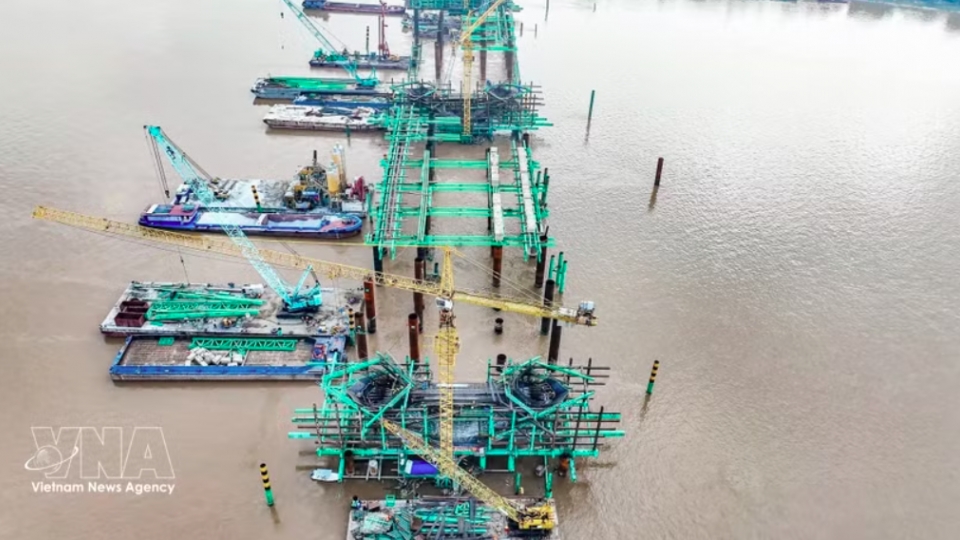
Public investment disbursement reaches 55.5% of 2026 target
Vietnam disbursed VND567.77 trillion (US$21.85 billion) in public investment capital as of September 24, equivalent to 55.5% of the plan assigned by the Prime Minister, according to a report by the Ministry of Finance.

Ho Chi Minh City races to accelerate public investment disbursement
VOV.VN - Ho Chi Minh City has disbursed 43.2% of its 2026 public investment allocation by the end of July, leaving the city with a steep acceleration ahead to meet its 70% target by the end of September and fully disburse the nearly VND147.6 trillion (US$5.6 billion) earmarked for the year.

Vietnam faces year-end push as public investment disbursement reaches 42%
VOV.VN - Vietnam disbursed nearly 42% of its 2026 public investment plan in the first seven months of the year, an improvement from the same period last year, although bottlenecks in land clearance, construction materials and investment procedures continue to weigh on project implementation.


