


Green supply chains expand export opportunities for Vietnamese goods

VOV.VN - Green exports are becoming an increasingly important factor in international trade, requiring businesses to strengthen supply-chain links, improve environmental performance and adapt to changing buyer expectations.
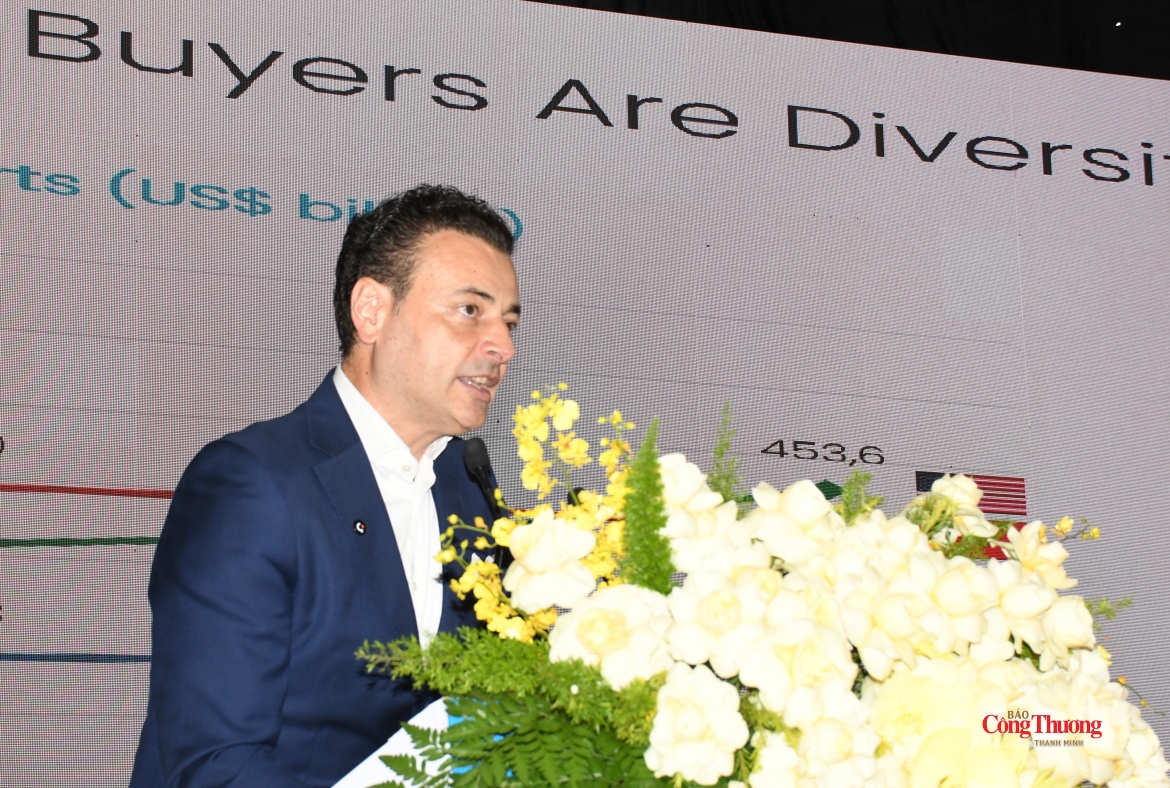
These challenges and opportunities were discussed at the forum Strengthening Collaboration Towards Green Exports, held on October 22 as part of HCMC Export 2026 at WTC EXPO in Ho Chi Minh City.
Organised by the Ho Chi Minh City Department of Industry and Trade in coordination with WTC Becamex, the forum brought together representatives of management agencies, international experts and business leaders to discuss global trade trends, supply-chain diversification and practical ways to expand export markets.
Speaking at the forum, Le Van Danh, Deputy Director of the Ho Chi Minh City Department of Industry and Trade, noted that global trade is undergoing significant changes. The European Union’s Carbon Border Adjustment Mechanism (CBAM) and environmental, social and governance (ESG) standards are creating new challenges for exporters, while encouraging businesses to review production processes, innovate and pursue more sustainable development.
To strengthen their position in supply chains, Danh suggested that businesses should foster closer links with management agencies, industry associations, manufacturers and international partners. Priorities include diversifying supply sources, accessing green finance, developing cross-border e-commerce and adopting smart logistics. He voiced the department’s commitment to supporting businesses in their green transition and efforts to expand exports.
Supply-chain shifts create opportunities for Vietnamese exporters
Global supply chains are being reconfigured as businesses and investors reassess manufacturing locations and diversify suppliers to reduce dependence and manage risks. Alberto Vettoretti, CEO of Ascentium ASEAN, highlighted the growing interest in nearshoring — moving production closer to consumer markets — amid continued market volatility.
The “China+1” strategy also presents opportunities for Vietnam to attract investment, integrate more deeply into global production networks and expand exports. To capitalise on these shifts, however, Vietnamese businesses must meet buyers’ expectations on product quality, delivery schedules, management and market-specific standards. Familiarity with free trade agreements and stronger partnerships with international buyers are also essential, Vettoretti noted.
Logistics and cross-border e-commerce offer another route to international markets. Scott Humanek, Walmart’s Senior Director of Global Inbound, outlined ways to help sellers access overseas customers. Walmart established an office in Ho Chi Minh City in 2013 and has supported sellers through e-commerce initiatives and procurement activities in Vietnam.
He also discussed logistics solutions designed to help Vietnamese businesses ship goods to the United States and reach customers across North America. In August 2025, Walmart announced shipping services in Ho Chi Minh City and Hai Phong. Options include full container load (FCL) and less than container load (LCL) shipments, giving businesses alternatives suited to different cargo volumes. Walmart’s current cross-border import programme also lists Vietnam among its supported sourcing origins.
Humanek emphasised that service quality, processing speed and reliability are key to building trust. Businesses need to select logistics arrangements that match their products and shipping requirements.
Green finance and AI strengthen export readiness
Beyond supply capacity, access to finance remains important to the green transition. Ma Thanh Loan, vice chairwoman of the Ho Chi Minh City Consultancy Association (HOCA) and CEO of Auxesia Holdings, identified green credit, green bonds and equity investment as potential sources of funding for businesses seeking to modernise production, meet environmental standards and strengthen export capacity.
In her view, small and medium-sized enterprises can face particular difficulties in securing green finance because of gaps in awareness, data and management capacity, as well as the costs of transitioning to more sustainable operations. Better-prepared financial records, clear green-transition plans, ESG integration and emissions-reduction roadmaps can help businesses demonstrate their needs and engage more effectively with financial institutions. Transparent data and clearly defined investment requirements are also important.
Technology can further support businesses seeking international partners. Jimmy Nguyen, director of Strategic Partnerships at Arobid, highlighted the role of artificial intelligence (AI) in processing data, connecting businesses and identifying commercial opportunities.
To make effective use of digital platforms, companies need standardised product profiles, transparent information and relevant certifications. An offline-to-online (O2O) approach can complement face-to-face engagement by widening businesses’ networks through digital channels.
These issues were explored further in a panel discussion, with speakers examining buyer requirements, supply-chain transparency, green financing and strategies for accessing international markets.
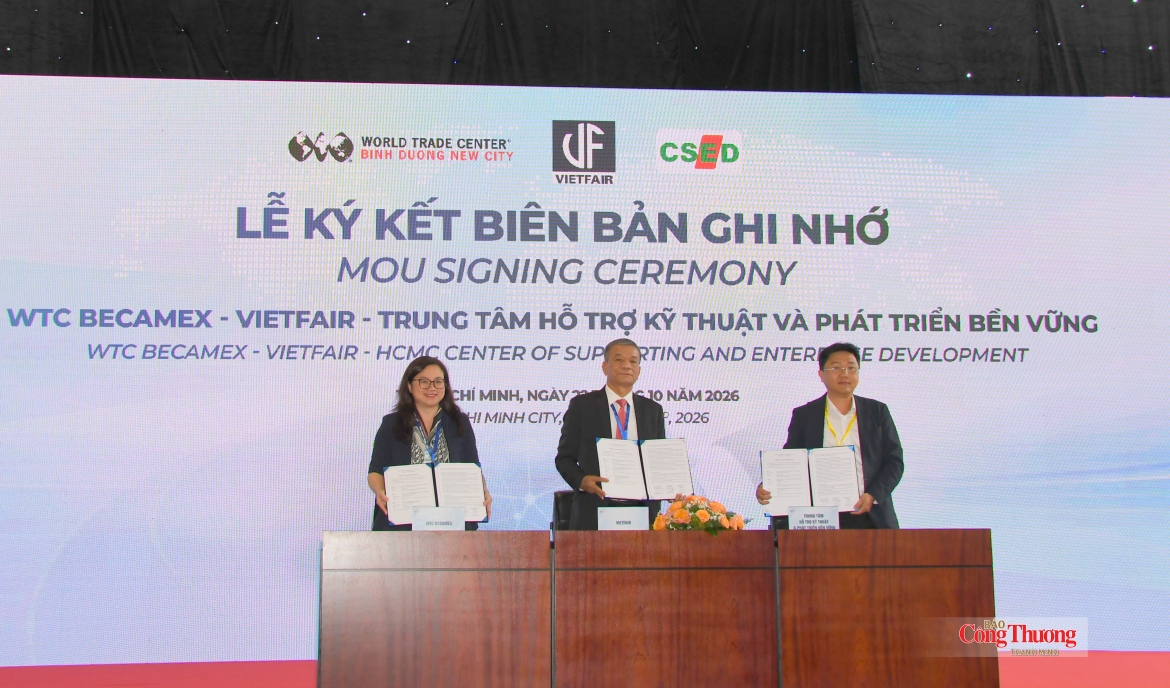
The forum also translated discussion into a framework for cooperation. WTC Becamex, the Centre for Technical Support and Sustainable Development (CSED), the Ho Chi Minh City Handicraft and Wood Industry Association (HAWA), and Vietnam Advertisement and Fair Exhibition JSC (VIETFAIR) signed memoranda of understanding (MoUs).
The MoUs aim to develop platforms for specialised trade fairs and exhibitions and strengthen business-to-business (B2B) connections. The partners will work together to help businesses improve competitiveness, enter international markets, accelerate the green transition and pursue sustainable development.

From FDI attraction to connecting Vietnamese enterprises with global supply chains
VOV.VN -The Finance and Investment Newspaper organized a seminar on October 8 in Hanoi under the auspices of the Ministry of Finance to discuss strategies for connecting domestic companies with global supply chains.

