FTAs and expanding opportunities for export businesses

VOV.VN - Vietnam’s network of 17 free trade agreements (FTAs) has created plenty of room for export growth. However, the benefits of economic integration have yet to spread widely across the business community.
FTA opportunities need to reach small businesses
Over more than a decade of deeper integration, FTAs have become an important foundation for Vietnam’s exports to expand markets and maintain growth momentum.
From the first bilateral agreements to new-generation FTAs such as the Comprehensive and Progressive Agreement for Trans-Pacific Partnership (CPTPP), the EU–Vietnam Free Trade Agreement (EVFTA), and the Regional Comprehensive Economic Partnership (RCEP), Vietnam’s trade network has steadily broadened, creating an extensive market map for domestic goods.
As the FTA system has become relatively comprehensive, the focus of integration policy is no longer limited to signing new agreements. A more important task is how to effectively implement existing commitments so that the benefits of integration can reach more parts of the economy.
Phan Duc Hieu, standing member of the National Assembly Committee for Economic Affairs, said Vietnam possesses considerable advantages in economic integration, though ample room remains to make better use of its FTAs.
“Vietnam has 17 free trade agreements, but the key question is how effectively we have made use of them,” he said.
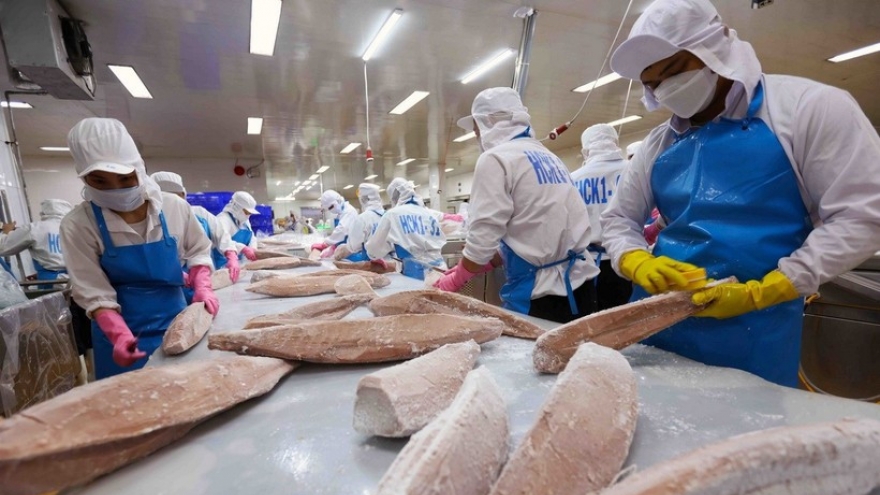
In practice, many large enterprises have taken advantage of FTA preferences to expand exports to major markets. By meeting strict standards and maintaining large production capacity and supply chain management capability, these companies have been able to enter demanding markets and make effective use of tariff preferences.
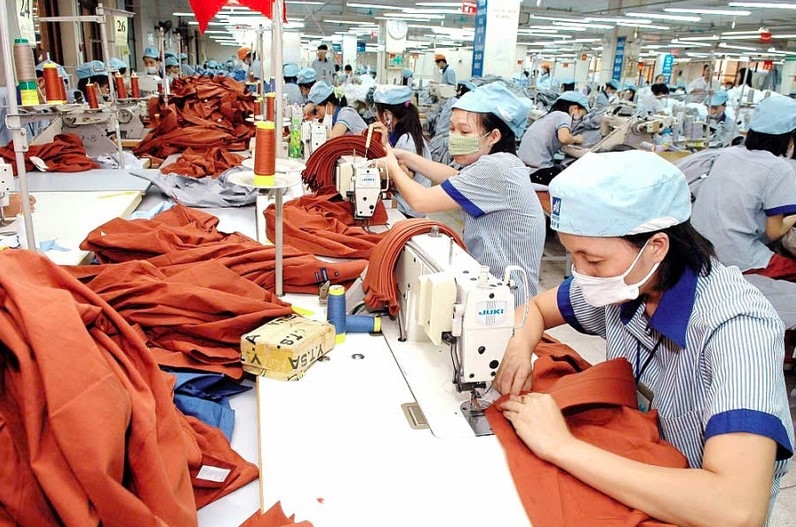
However, many small and medium-sized enterprises (SMEs), which account for a big share of the economy, still face difficulties in accessing opportunities created by FTAs.
Common barriers include limited market information, constraints in management capacity, small production scale and difficulties in meeting technical standards in importing markets.
According to Phan Duc Hieu, this issue should be seriously considered in the process of designing export development policies.
“We need to ask whether small and medium-sized enterprises have truly benefited from free trade agreements,” he said.
If FTA opportunities remain concentrated among a limited group of large enterprises, the benefits of integration will not be fully realized. Expanding access to FTAs for small businesses would not only increase the number of exporters but also create additional momentum for domestic production.
New models needed for export growth
One of the main constraints facing small enterprises is production scale. Many products have export potential, but the output of individual companies is often insufficient to meet large orders or the stable supply requirements of international markets.
From a practical perspective, Phan Duc Hieu suggested exploring appropriate organizational models to deal with this challenge.
“There are cases where a single enterprise cannot meet volume requirements, but several companies working together could create sufficient scale for exports,” he said.
Production linkages, supply chain cooperation or lead enterprises organizing export activities could offer suitable solutions. When small businesses are connected within a coordinated production and quality control system, production resources can be consolidated to meet international market requirements.
Phan Duc Hieu also noted the possibility for Vietnamese companies to develop their own commercial networks overseas. Lead enterprises or trade organizations established abroad could serve as bridges linking domestic supply sources with international distribution systems.
In the context of increasingly competitive global trade, effectively utilizing existing FTAs will play an important role in sustaining export growth. For these agreements to fully deliver their potential, support policies for businesses need to be implemented more effectively, including providing market information, strengthening the capacity to meet standards, and developing appropriate production and export models.
In the longer term, effective use of FTAs will expand market access, improve production capacity, enhance product quality and strengthen the position of Vietnamese goods in global value chains.
Vietnam joins 20 FTAs and seeks new trade deals
VOV.VN - Vietnam has joined 20 free trade agreements (FTAs), including 16 FTAs that have already been implemented, heard a conference held on January 6 in Hanoi to review activities and devise orientations for the year ahead by the Ministry of Foreign Affairs.
Utilization rate of preferential C/O under FTAs increases sharply
VOV.VN - The rate of using preferential Certificates of Origin (C/O) under Free Trade Agreements (FTAs) issued since 2020 has surged by about 20% annually, with the figure expected to rise by 18% this year, according to details given by the Ministry of Industry and Trade.