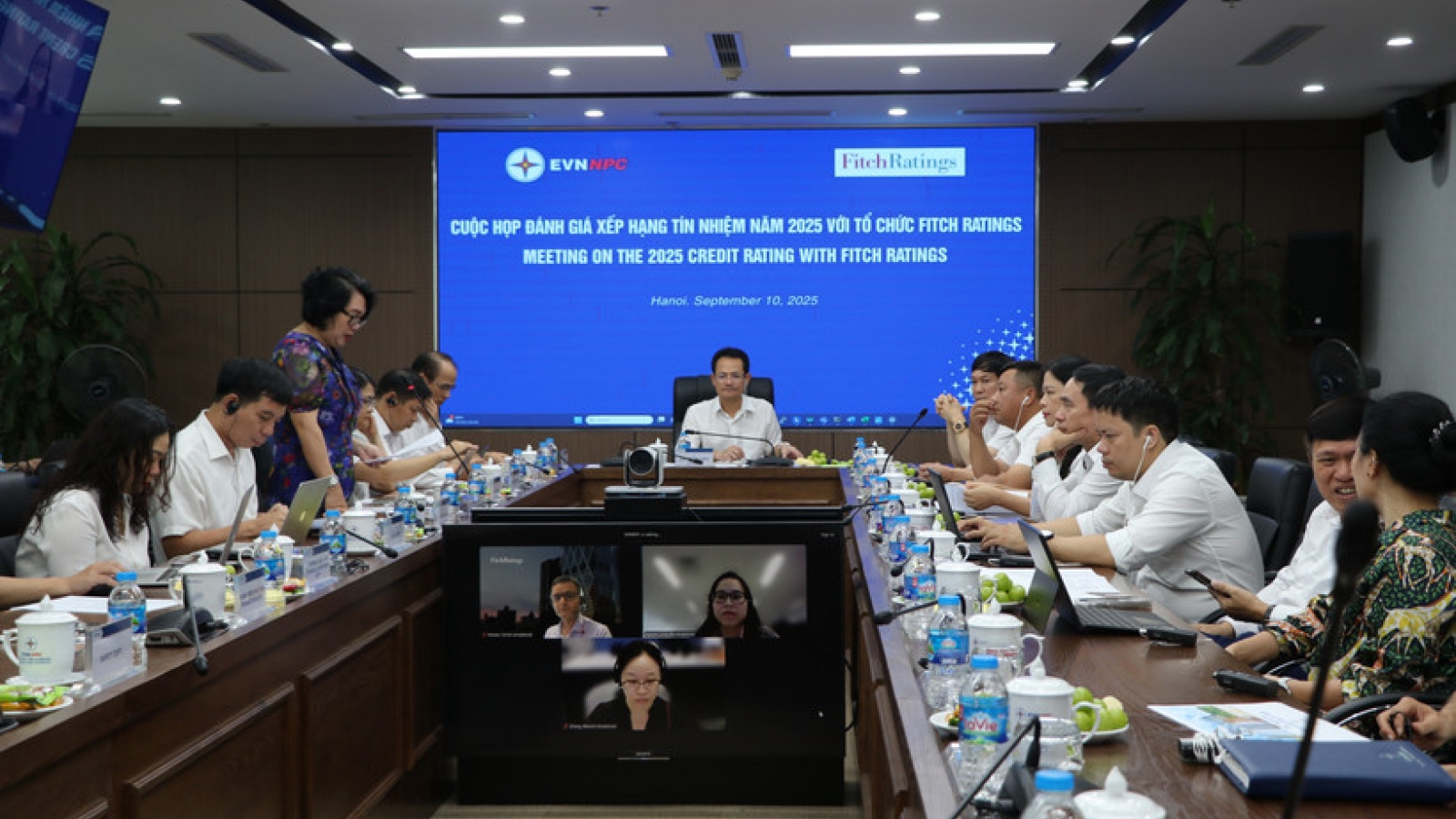
Fitch Ratings gives positive assessment of Vietnam’s economic fundamentals

Fitch Ratings has given a positive assessment of Vietnam’s economic fundamentals, highlighting the country’s macroeconomic stability and resilience amid continuing global uncertainty.
According to the Ministry of Finance, Deputy Minister Tran Quoc Phuong recently held a working session with a delegation of Fitch Ratings experts as part of the agency’s 2026 sovereign credit rating assessment programme for Vietnam.
At the meeting, Phuong acknowledged Fitch Ratings’ long-standing support through its independent and objective analyses of Vietnam’s economy over the years.
He stressed that Fitch’s credit assessments have enhanced Vietnam’s image and credibility in international financial markets, and provided additional motivation for the country to continue improving institutions, strengthening policy management efficiency and increasing economic transparency.
The Vietnamese Government remains steadfast in its goal of maintaining macroeconomic stability, reinforcing major economic balances and enhancing resilience against external shock, the deputy minister said.
According to him, despite ongoing volatility in the global economy, Vietnam continues to pursue proactive and flexible policy management, with close coordination between fiscal and monetary policies to support growth and ensure macroeconomic stability and inflation control.
George Xu, director of Asia-Pacific Sovereign Ratings at Fitch Ratings, appreciated Vietnam’s macroeconomic management efforts amid mounting international economic risks and uncertainties. He noted that Vietnam has maintained positive growth momentum, macroeconomic stability and relatively effective inflation control despite increasing external pressures.
The Fitch Ratings delegation also expressed interest in Vietnam’s measures to control inflation, ensure energy security, sustain economic growth and accelerate institutional reforms and improvements to the investment climate. In addition, they sought updates on Vietnam’s medium-term growth outlook, fiscal policy, public debt management, foreign investment attraction and the restructuring of state-owned enterprises.
Phuong said that in response to energy price fluctuations and geopolitical tensions in the Middle East, Vietnam has implemented a range of concerted measures, including market stabilisation tools, tax policy adjustments, enhanced market supervision and diversification of fuel supply sources.
He affirmed that his ministry will monitor global economic and financial developments to formulate appropriate policy scenarios should international conditions become more complicated.
Vietnam is currently reviewing and updating its growth scenarios to ensure the achievement of its 2026 economic development targets, with the Government focusing on removing investment bottlenecks, improving the business environment, accelerating public investment disbursement and attracting more foreign and private investment capital, he added.
Despite global economic headwinds, Foreign Direct Investment (FDI) inflows into Vietnam have remained positive in recent months. Vietnam is also continuing efforts to reform State-owned enterprises through restructuring and divestment to improve efficiency, transparency and governance capacity.
Fitch Ratings representatives also commended Vietnam’s policy orientation, particularly its efforts to maintain macroeconomic stability amid global economic turbulence. According to Fitch, Vietnam’s continued commitment to institutional reform, investment climate improvement and enhanced fiscal governance will remain key factors supporting the country’s sovereign credit outlook in the coming period.
The Ministry of Finance said both sides agreed to maintain regular exchanges and strengthen information sharing to support the sovereign credit rating assessment process, improving Vietnam’s reputation and access to international capital markets.
Fitch Ratings upgrades Vietnam’s senior secured long-term debt rating to BBB-
Fitch Ratings has upgraded Vietnam’s senior secured long-term debt instruments from BB+ to BBB-, according to the Ministry of Finance.