


Digital economy reshapes consumer habits: Opportunities and challenges

VOV.VN - The digital economy is gradually reshaping consumer habits in Vietnam, bringing unprecedented convenience. Yet behind the ease lie pressing concerns over data security, product quality, and consumer rights.
Shifting consumer landscape and financial ecosystem
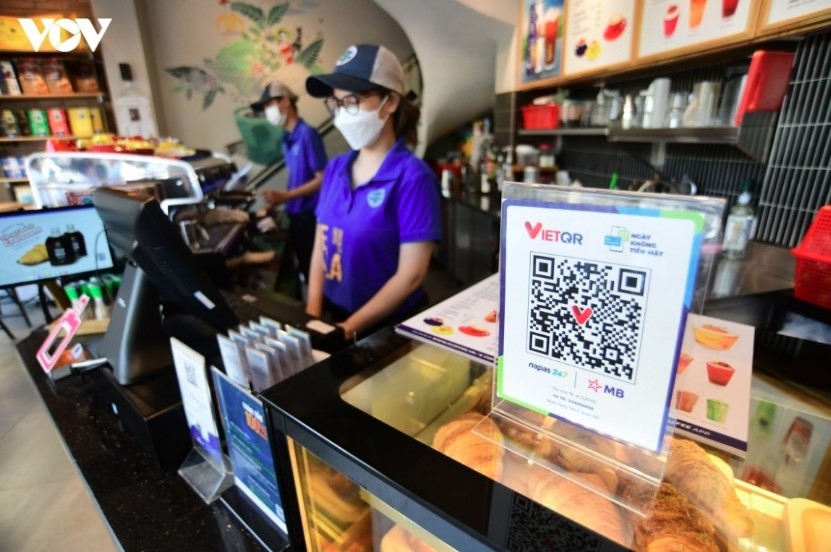
From traditional wet markets to modern malls, cashless payments and QR codes have become second nature for everyone from youths to the elderly. Armed with just a smartphone and mobile data, shoppers can buy goods, pay bills, receive pension payouts directly into bank accounts, or access thousands of domestic and foreign products without carrying cash or leaving home.
This tech-driven shift has fostered an omnichannel model, allowing buyers to research products online, test them in stores, and complete transactions through apps or cross-border platforms.
According to Nguyen Quoc Hung, Vice Chairman and General Secretary of the Vietnam Banks Association, the integration between banks and commercial platforms heavily boost retail activity and cashless payments, with retail loans accounting for 40% to 50% of portfolios at mid-sized lenders and reaching up to 60% at others. This trend also opens up wider market access for small businesses and local household enterprises.
Mobile commerce and AI as growth drivers
Alongside e-commerce, mobile commerce has emerged as a dominant force as platforms like Shopee, TikTok Shop, and Lazada focus heavily on mobile devices, blending entertainment with retail through "shoppertainment."
Crucially, artificial intelligence (AI) and big data are fueling the next wave of growth. Technologies such as live-streaming, video shopping, AR/VR tools, and gamification are driving vivid, personalized shopping experiences.
According to Nguyen Huu Tuan, Director of the E-Commerce and Digital Technology Development Center, more than 60% of Vietnamese businesses have already integrated AI into customer service, marketing optimization, product recommendations, and automated operations.
Strategic vision under Resolution 57
This trajectory is guided by Resolution No. 57, issued on December 22, 2024, by the Politburo, which sets out national digital transformation as a top breakthrough for socio-economic development. The resolution targets a digital economy accounting for at least 30% of GDP by 2030.
According to the State Bank of Vietnam, the total value of cashless transactions in 2025 was equivalent to roughly 28 times the GDP, with average annual growth in transaction volume and value increasing correspondingly.
Still, Resolution 57 underscores a core principle: technology only truly adds value when consumers do not have to sacrifice safety, privacy, or freedom of choice for convenience, paving the way for a modern, transparent, and efficient market.

HCM City targets 15-16% Q4 industrial growth to secure double-digit expansion
VOV.VN - Ho Chi Minh City’s industrial production index (IIP) grew 10.9% during the January-September period of 2026, marking the highest rate for the period in three years.


