Da Nang invests efforts in developing sea-based economy
Tuesday, 09:25, 09/10/2018

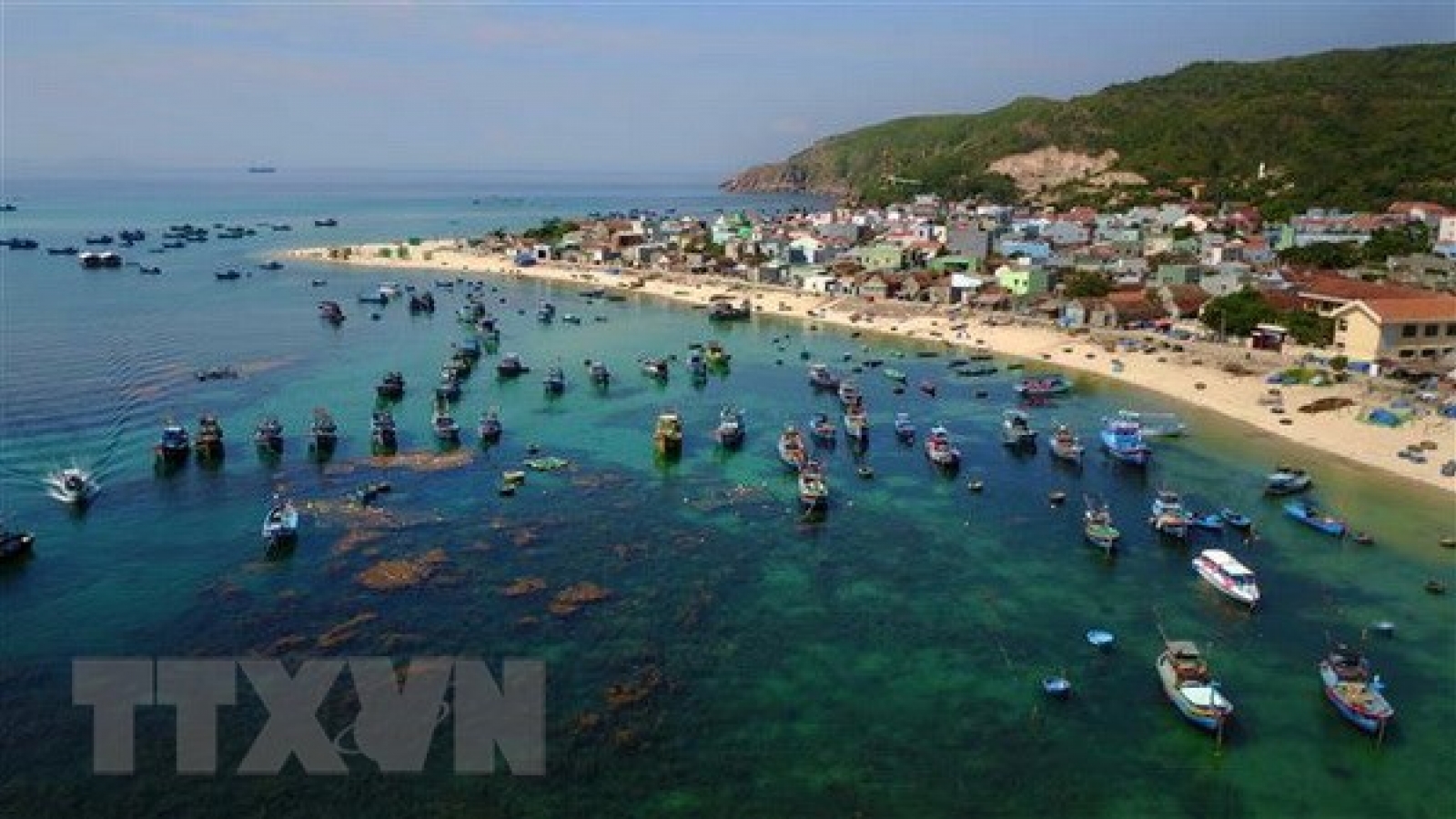
As a coastal city with considerable sea-related advantages, Da Nang has created breakthrough policies to boost its blue economy development associated with marine sovereignty safeguarding.
 |
| Da Nang has made efforts to boost its blue economy development in recent years |
Deputy Director of the municipal Department of Agriculture and Rural Development Nguyen Do Tam said that over the 10 years of realising Vietnam’s Maritime Strategy, Da Nang has successfully summoned resources to develop its sea-based economy with a focus on support policies for the fishing community.
Aside from the Government’s support, Da Nang has issued its own “breakthrough” policies to support fishermen over the past few years, including those on managing inshore fishing activities, developing offshore fishing fleets, and protecting and developing fishery resources.
These policies have encouraged fishermen to upgrade and build boats for offshore fishing, thus helping to improve the quality and value of local seafood, he noted.
In 2012, the municipal administration issued Decision No.7068/QD-UBND on policies assisting the industry with building new fishing supply boats. This was considered a “breakthrough” decision and a “revolution”, helping to change the structure of the local offshore fishing fleet.
Under this decision, fishermen received VND500 million (US$21,400) in cash to support them in building a new boat with the capacity of between 400CV and under 600CV; VND600 million (US$25,700) for building a boat with a capacity ranging from 600CV to under 800CV; and VND800 million (US$34,200) for building a boat of over 800CV.
There have been 84 boats built under this decision so far, with total financial aid of more than VND66 billion (US$2.8 million), raising the number of boats with the capacity of over 90CV to 583 – a three-fold rise from 2010.
Tam added that to capitalise on local advantages and opportunities in the market, the city’s fishing sector is working to improve the fishing community’s access to capital, while improving their offshore fishing skills and the competiveness of processed seafood. Between 2016 and 2020, the sector has been focusing on restructuring the fishing fleet and keeping the catch stable.
Da Nang is also developing vessels supplying fisheries logistic services so as to raise the number of logistics vehicles to 15 by 2020 and 50 by 2030.
It looks to increase the caught seafood volume to 38,000 tonnes by 2020 and 45,000 tonnes by 2030, the official said.
Apart from the aforementioned support policies, the city plans to press on with others to protect and ease the fishing pressure on inshore aquatic resources. It will also further assist fishermen in seafood storage to minimise losses after catching.
In September 2017, the city approved a plan on developing its sea-based economy towards 2025, with a vision to 2030. Accordingly, it has set a target for the tourist number growth rate at about 13% between 2016 and 2030, and the volume of cargo handled at local seaports at 12%-13% by 2025. It also looks to have the output of processed seafood for export rising by 12%-13% by 2025 and 8%-10% by 2030.
Concrete activities are being carried out to create new tourism products relating to marine sports and the yacht industry, to perfect coastal tourism infrastructure, and to enhance knowledge amongst tour guides on marine sovereignty.
Meanwhile, the city is also working to turn Da Nang Port into an international gateway with the Tien Sa and Lien Chieu terminals. Tien Sa terminal will specialise in serving passenger ships and cruises, while Lien Chieu terminal will serve cargo transportation.
Resources are being spent on raising the capacity of the local fishery surveillance force, improving the information system for the management of fisheries, and promoting contact with fishing boats to ensure safety for vehicles and workers at sea.
Seafood processing companies have also been encouraged to apply cleaner production technologies to reduce waste, save materials and energy, and effectively treat sources of pollution.
Total capital needed for developing sea-based economy is estimated at over VND19 trillion (US$813 million) for 2017-2020, VND13 trillion (US$556.3 million) for 2021-2025, and VND17 trillion (US$727.4 million) for 2026-2030.