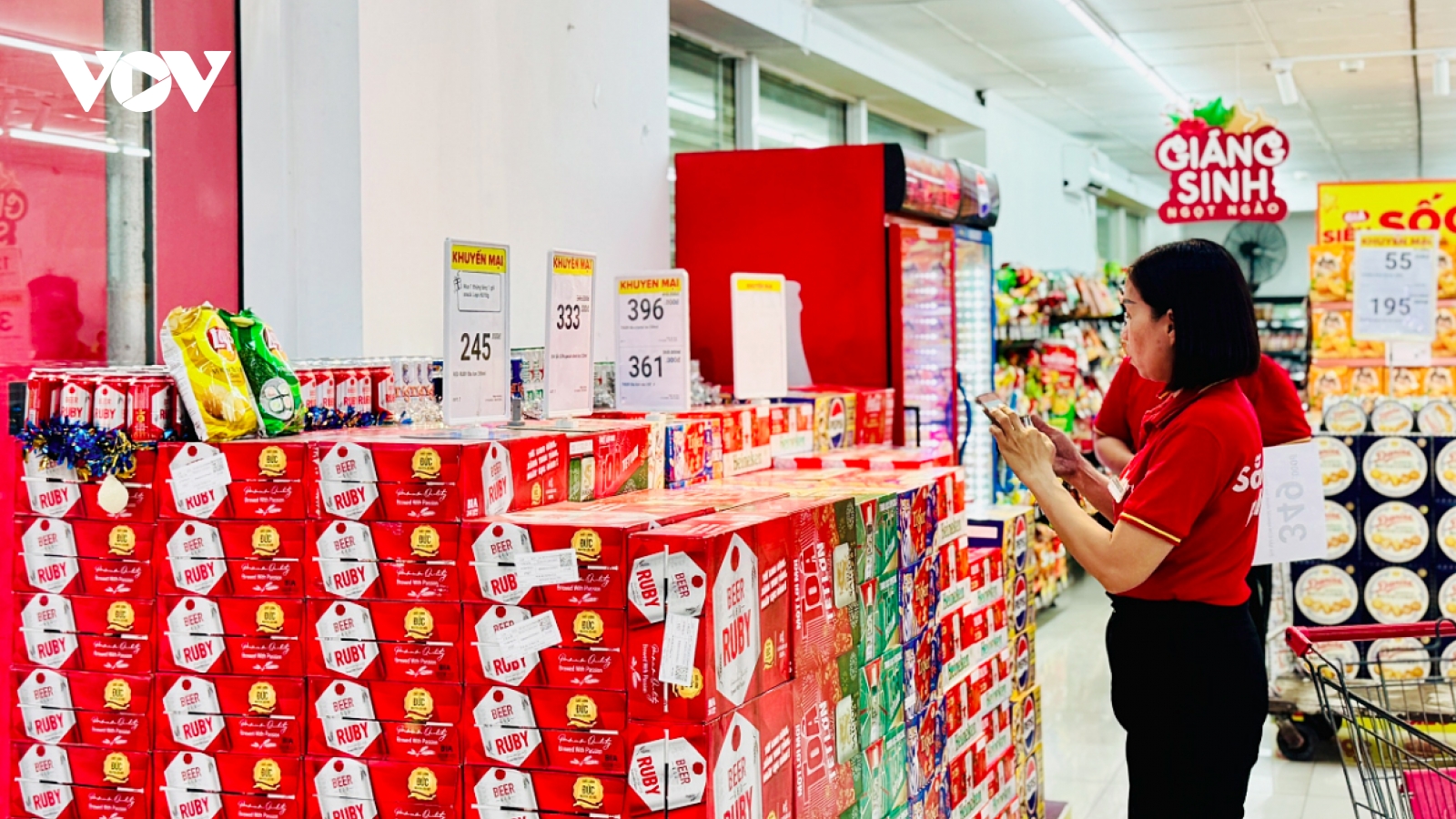
Consumers wary as rising costs drive prices of essentials up

As input costs continue to rise, pushing up prices of goods and services in Ho Chi Minh City, consumers are becoming increasingly tight with their purse strings, prioritising essential items and discounted products.
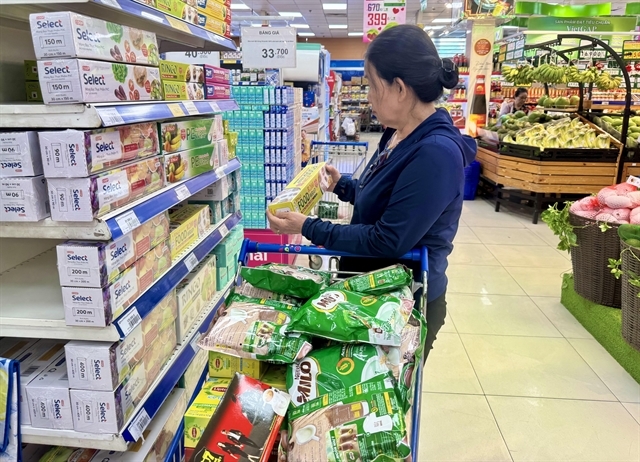
Retailers and businesses are striving to stabilise prices and sustain demand.
Across supermarkets and traditional markets in the city, shoppers are now more deliberate in their purchasing decisions, focusing largely on necessities.
Nguyen Thanh Kien, a resident of Tan My Ward, said she has noticed a visible increase in food prices compared to just a few weeks ago.
“Prices have clearly gone up. Vegetables like Malabar spinach and water spinach are a few thousand đồng more per bunch, while meat, fish and eggs are no longer at pre-Tet levels.
“We have to tighten spending, cut back on snacks and only buy basic ingredients. I now cook all meals at home and carry food to work.”
This shift in consumer behaviour is also reflected in buying patterns at markets.
“People used to buy ten units, now it’s down to seven or eight,” a seafood vendor at Phuoc Long Market said.
“Instead of large, expensive prawns, they choose smaller, cheaper ones. Big prawns now only sell when customers have special occasions.”
The tightening of household budgets comes amid mounting pressure from rising input costs, which have forced many food vendors and eateries to increase prices.
On Pham Huu Lau Street, several breakfast stalls reported a noticeable drop in customers after price hikes.
“With higher ingredient costs, we had no choice but to raise prices, and that immediately affected our sales,” a phở shop said.
“Customer traffic has declined, and those who still come tend to order fewer items.”
Nguyen Thi Toan, a resident of Tan Thuan Ward, said her family has changed its breakfast habits.
Since it relies on eating out, her family now has to spend an additional VND20,000–VND30,000 (US$0.8-1.2) per meal, and so she decided to switch to simpler options or make food at home whenever possible, she said.
Retailers are also bracing for lower sales.
Phan Minh Tâm, purchasing director at local retail giant WinCommerce, said around 80% of suppliers have sought price hikes due to surging input costs.
“We have not yet quantified the impact, but demand is certainly affected.
“From a consumer’s perspective, when prices rise too much, people will prioritise essential goods first. Retailers are therefore very cautious about managing and stabilising prices.”
Meanwhile, major retail chains are making efforts to absorb part of the cost increases to remain competitive.
Nguyen Thi Bich Van, communications director of country supermarket chain Central Retail Vietnam, said while some items such as vegetables have seen price hikes due to higher transportation costs, the company is trying to keep prices of many essential goods steady.
“Market volatility has created challenges for both retailers and suppliers.
“However, we have been able to maintain promotional programmes and stable prices thanks to early stockpiling. We are also negotiating with suppliers to minimise the impact of rising costs.”
Retailers warn that uncontrolled price increases could further dampen consumer demand and hit their sales.
As a result, many continue to implement price stabilisation programmes.
A representative of country retail chain AEON Vietnam suggested expanding the list of price-stabilised goods to include more essential items, giving consumers greater choices.
The company also wanted the Government to consider reducing VAT to ease the pressure on consumers.
According to Nguyen Nguyen Phuong, deputy director of the city Department of Industry and Trade, rising production costs are putting pressure on everyone in the supply chain from manufacturers to retailers.
“Price increases will immediately affect purchasing power and disrupt the flow of goods.
“However, this also presents an opportunity to filter out weaker businesses while enabling larger firms with stable production capacity to offer more competitive prices.”
He added that authorities are encouraging retailers to prioritise suppliers capable of controlling costs and to actively participate in price stabilisation programmes.
The Ministry of Industry and Trade has also called on businesses to keep prices steady to ensure market balance amid rising fuel, material and operational costs.
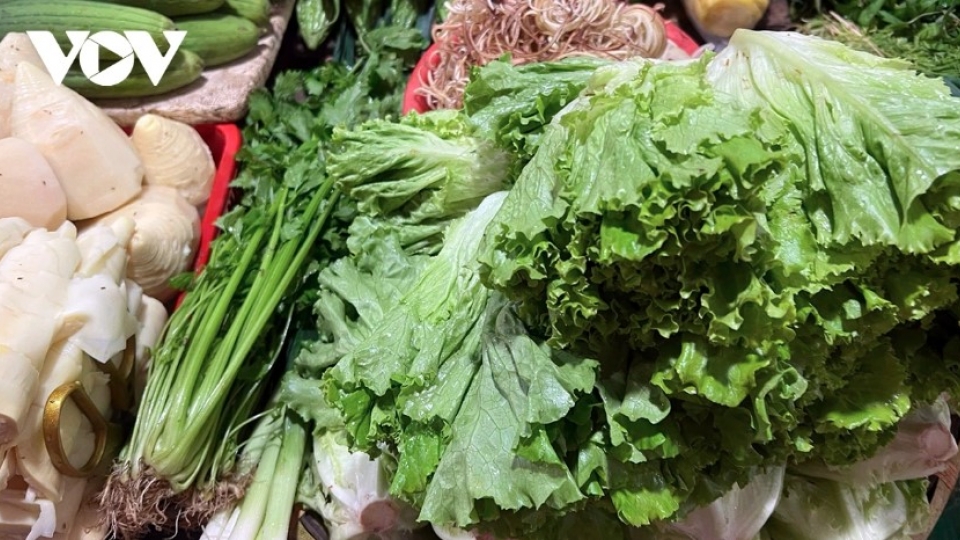
Consumers struggle as vegetable prices triple following devastating floods
VOV.VN - Vegetable prices, especially for everyday leafy greens, have soared to multi-year highs, with some varieties doubling or even tripling due to subsequent storms and flooding severely reducing harvests in key growing regions.