




Commodity exchanges to provide real-time data from September 15

Commodity exchanges will be required to provide transaction and risk-monitoring data to the Ministry of Industry and Trade in real time from September 15, under a new circular aimed at strengthening market transparency and shifting supervision towards data-driven monitoring.
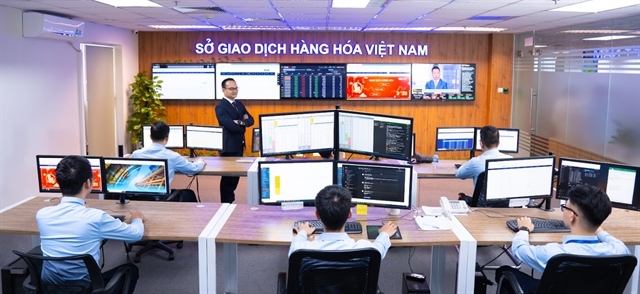
Under Circular No 47/2026/TT-BCT issued on September 3 and taking effect from September 15, transaction data including orders, trading results, prices and volumes must be provided in real time.
Alerts on transactions and signs of unusual activity used for market surveillance and risk management must also be supplied in real time.
Commodity exchanges and clearing houses will connect to the Ministry of Industry and Trade through the ministry's trade and market management platform or another method notified by the ministry.
Data must be provided fully, accurately, continuously and in a timely manner, while complying with regulations on electronic transactions, cybersecurity, personal data protection and other relevant laws.
The data system will cover a range of market information, including transactions, exchange members, listed commodities, margin requirements, clearing and settlement, position management, delivery and risk management.
The circular also requires information on commodity delivery, including contracts, volumes, locations and delivery times.
The new reporting system is expected to gradually move oversight away from a system based mainly on periodic reports towards monitoring based on market data.
The circular also sets out requirements for companies seeking to establish commodity exchanges.
Applications must include a report describing the proposed information technology system and documents demonstrating that the system meets required standards, together with a plan explaining the exchange's operating model, organisational structure and market development strategy, including measures and a five-year roadmap for listing commodities produced in Vietnam.
The requirement is aimed to link the development of modern commodity trading with domestic production and could help Vietnamese businesses establish transparent reference prices, hedge against price risks and expand markets for their products.
The ministry also said the framework will support the development of commodity trading activities within Vietnam's international financial centre and improve links between domestic, regional and global markets.
Commodity exchanges and clearing houses already operating before the circular takes effect must comply with its reporting requirements and complete connection and data-sharing arrangements within 12 months after the ministry announces that its trade and market management platform is ready for connection.
The circular is designed to implement Government Decree No 302/2026/NĐ-CP, issued on August 1, which provides detailed rules for commodity trading through exchanges, as well as Decree No 330/2025/NĐ-CP on the establishment and operation of commodity exchanges within Vietnam International Financial Centre.

Vietnam considers listing silver bullion on commodity exchange
Vietnam is considering listing silver bullion for trading on its Mercantile Exchange to standardise transactions and improve transparency in a rapidly growing market amid volatile global prices.

