


China rises to become Vietnam’s second-largest rice export market

VOV.VN - China spent nearly US$505 million importing about 1.03 million tonnes of Vietnamese rice in the first eight months of 2026, making it Vietnam’s second-largest rice export market after the Philippines, according to the Ministry of Agriculture and Environment.
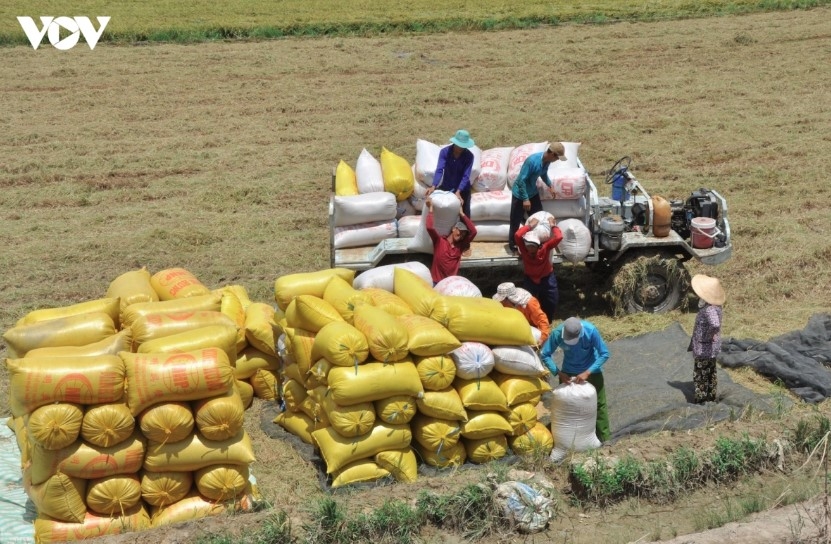
China, Philippines account for more than 64% of exports
China accounted for 17.4% of Vietnam’s rice exports by volume in the reviewed period, rising from fourth place a year earlier. Statistics show it imported just over 565,000 tonnes of Vietnamese rice worth US$286.7 million between Jan. – Aug. 2025.
The Ministry of Agriculture and Environment said demand for broken rice in China has risen sharply, mainly for animal feed production.
Meanwhile, the Philippines was Vietnam’s largest rice export market, making up 40.9% of exports through August, although shipments to the market fell 16.8%.
Exports to Iraq surged 98.9-fold from a year earlier, but remained modest at nearly US$14 million. The recovery in exports to Iraq showed room for further market diversification, which should be pursued more proactively and sustainably in the remaining months of the year.
The Philippines and China together accounted for more than 64% of Vietnam’s rice exports in eight months. While this concentration provides an advantage in the short term, it also increases the risk of dependence on a small number of markets, highlighting the need for greater diversification.
Vietnam exported 377,400 tonnes of rice worth US$205.6 million in September, bringing nine-month exports to about 6.4 million tonnes worth US$3.11 billion, down 6.1% in volume and 10.9% in value from a year earlier. The average export price was estimated at US$484.8 per tonne, down 5.1% from the same period in 2025.
The Vietnam Food Association expects rice exports to total 400,000 tonnes in October, 220,000 tonnes in November and 268,300 tonnes in December. Full-year rice exports are forecast at nearly 7.74 million tonnes worth about US$3.94 billion. Export value is expected to fall 4% from 2025, mainly because average export prices were low in the first months of the year. At that volume, Vietnam would remain the world’s second-largest rice exporter, behind India.
Higher-value rice offers room for export growth
Industry insiders pointed out that rice export prices could receive support in the final months of the year as the global supply-demand balance for the 2026-27 crop year is projected to shift into deficit, while global rice trade could reach a record high.
The Philippines recently said it would not suspend rice imports in 2026 and would continue importing to build up reserves. Vietnam currently accounts for a large share of the Philippines’ rice imports.
Growing demand from China is also creating opportunities for Vietnamese suppliers of raw rice, broken rice and glutinous rice.
In the premium, low-emission segment, certified Vietnamese rice has fetched more than US$1,000 per tonne in markets including Japan, the European Union and Australia, highlighting the potential to increase the value of exports.
Global rice supplies could also be affected by El Niño, monsoon conditions in India and the area planted with Kharif rice. In addition, geopolitical tensions in the Middle East could put further pressure on energy and ocean freight costs.
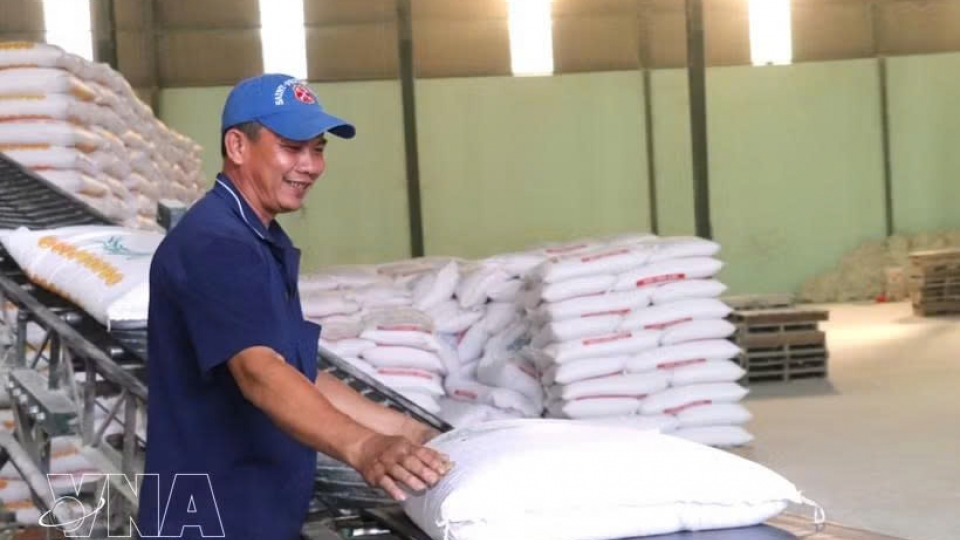
Vietnam’s rice exports reach US$2.91 billion in eight months
Vietnam exported an estimated 6.03 million tonnes of rice worth nearly US$2.91 billion in the first eight months of 2026, down 5% in volume and 10.7% in value year-on-year, reported the Ministry of Agriculture and Environment.


