Canada, Vietnam open new areas of cooperation in energy

VOV.VN - The elevation of Vietnam-Canada relations to a Strategic Partnership is opening new areas of cooperation in energy, spanning liquefied natural gas (LNG), clean energy, hydrogen, civil nuclear power, and equipment supply chains.
Notably, both sides have begun establishing implementation mechanisms to turn high-level commitments into concrete programs and projects.
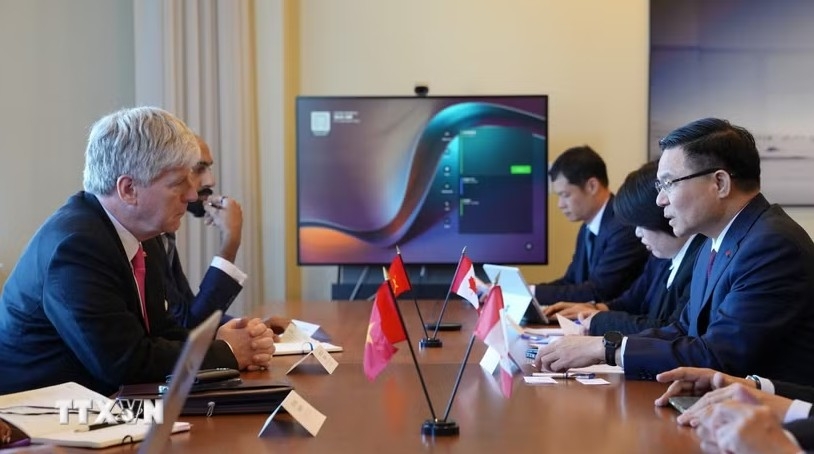
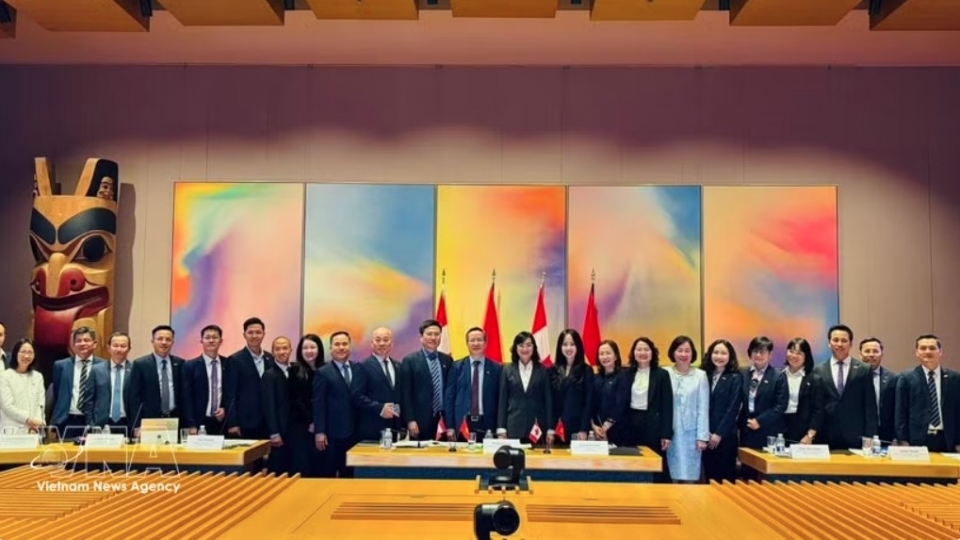
During the state visit to Canada by General Secretary of the Communist Party of Vietnam Central Committee and President To Lam, Minister of Industry and Trade Le Manh Hung held talks with Canadian Minister of Energy and Natural Resources Tim Hodgson, focusing on implementing the newly signed Memorandum of Understanding on energy cooperation and clean energy transition.
The two ministers agreed to establish a joint working group to accelerate implementation and deliver concrete results. The Vietnamese side assigned the Department of Energy and Petroleum as the focal point, with participation from the Electricity Regulatory Authority, Vietnam National Energy Industry Group (Petrovietnam), and relevant agencies.
Speaking to the press in Canada, Vietnam’s Trade Counselor Tran Thu Quynh noted that immediately after the leaders of both nations announced the upgrading of bilateral ties to a Strategic Partnership, the two ministries rapidly launch a wide range of activities to substantiate the new framework.
According to Quynh, the two ministries discussed specific projects and respective demands in the energy sector. Promising areas identified include LNG, LPG (liquefied petroleum gas), clean energy, hydrogen, and notably, nuclear energy.
LNG has emerged as an immediate focal point. Minister Le Manh Hung outlined Vietnam's growing LNG import demand to fuel gas-fired power development under Power Development Plan VIII, while proposing expanded cooperation to position Vietnam as Canada's LNG storage and distribution hub in the region.
Minister Tim Hodgson introduced investment opportunities in Canadian LNG projects and invited Vietnamese enterprises to consider participation.
Another key highlight is the prospect of civil nuclear energy cooperation. Vietnam asked Canada's sharing of experience in building regulatory frameworks, supervision, safety management, and human resource training.
Minister Hodgson introduced Canada's deployment of small modular reactor (SMR) projects and invited Minister Le Manh Hung to visit them.
According to Counselor Tran Thu Quynh, to carry out this direction, Minister Le Manh Hung worked with AtkinsRéalis, a Canadian corporation holding CANDU technology with proven capabilities in engineering, design, and nuclear project execution.
Both sides consented to continue discussions on supporting Vietnam in training and public outreach regarding nuclear technology.
A seminar involving relevant parties to discuss CANDU technology and AtkinsRéalis's capabilities is scheduled in about three weeks.
Nuclear cooperation is not viewed solely from the perspective of Vietnam receiving technology. Quynh stated that the Canadian side highly values Vietnam's design, manufacturing, and engineering capabilities in precision mechanical equipment. This serves as a basis to connect the manufacturing capacities of both countries, creating opportunities for Vietnamese enterprises to progressively integrate deeper into gas and nuclear energy supply chains.
From the perspective of the Canadian business community, Goldy Hyder, President and CEO of the Business Council of Canada, emphasized that energy is a vital sector in bilateral economic relations. Hyder stressed that Canada possesses abundant energy resources, and the critical challenge is delivering those resources to markets with demand, including Vietnam.
He noted that in the current global context, energy security is closely linked to economic and national security. With global electricity demand projected to surge, traditional energy sources such as oil and gas, large-scale nuclear power, small modular reactors, and emerging energy sources will jointly secure supply.
Upgrading bilateral relations to a Strategic Partnership, according to Hyder, will provide an enhanced foundation to foster two-way investment and co-investment. Both nations can leverage complementary economic strengths and utilize the Comprehensive and Progressive Agreement for Trans-Pacific Partnership (CPTPP) to boost trade, while simultaneously engaging in joint investment, production, and value creation.
The formation of the joint working group to implement the ministerial MOU, alongside initial steps with Canadian enterprises, demonstrates that energy cooperation is transitioning from identifying potential to establishing concrete mechanisms and programs. Backed by Vietnam's mounting energy demand and Canada's strengths in resources, technology, and finance, this sector is expected to add substantive economic substance to the Vietnam-Canada Strategic Partnership./.
Given Vietnam's growing energy demand and Canada's strengths in resources, technology, and finance, this sector is expected to add substantive economic substance to the Vietnam-Canada Strategic Partnership.
Vietnam-Canada trade moves toward value-chain integration: official
The state visit to Canada by General Secretary of the Communist Party of Vietnam Central Committee and President To Lam is expected to provide fresh momentum for economic cooperation, as trade ties are shifting toward stronger production linkages and greater use of the complementary strengths of the two economies.
Vietnam, Canada broaden economic cooperation beyond trade
Vietnam-Canada economic ties are expanding beyond goods trade towards deeper cooperation in investment, technology, energy and manufacturing, as both countries seek to diversify markets and supply chains, according to experts.