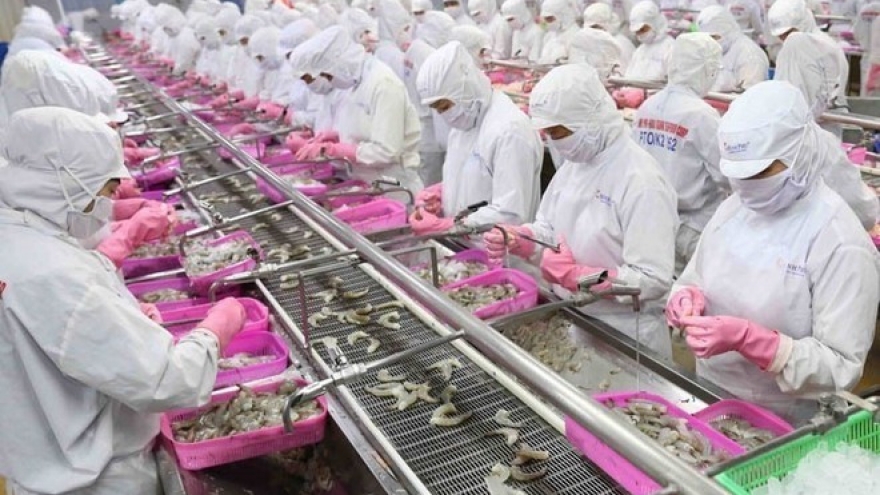
Building cultivation-area data to help agro-forestry exports enter EU market

VOV.VN - The European Union Deforestation Regulation (EUDR) is imposing traceability requirements down to production land plots, prompting Vietnam to accelerate the development of cultivation-area databases to maintain agro-forestry exports to the EU.
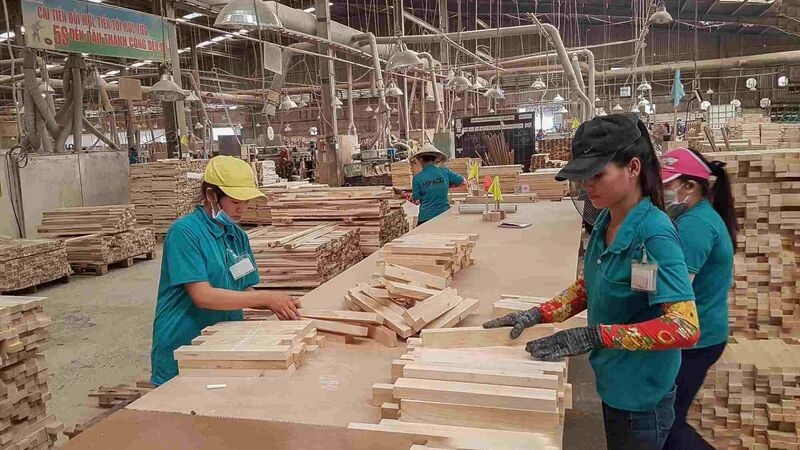
At a recent webinar titled “Collecting and managing cultivation-area data to meet EUDR requirements: Choosing solutions under resource constraints,” held on May 8 by the Forestry EUDR Network and the Agroforestry Policy Research Network, experts said cultivation-area data was no longer merely a “supporting factor” but had become a core foundation for demonstrating EUDR compliance.
According to Dr. To Xuan Phuc of Forest Trends, traceability is no longer a requirement unique to the EU market but is gradually becoming a broader regulatory requirement in Vietnam. Under the Government’s roadmap, by the end of 2026 all agricultural products, including imported goods consumed domestically, must be traceable.
“Traceability is the ability to identify and track products through each stage of the supply chain in order to trace them back to their original source,” Phuc said.
He noted that traceability requires two core elements: input data and accompanying legal documentation. Input data includes information on cultivation areas, land plots, crop conditions, acreage and geographic coordinates, while legal documentation includes land-use right certificates, land allocation contracts or other papers proving lawful cultivation rights.
Assessing the current situation, Phuc said Vietnam had already established multiple databases managed by regulatory agencies, including data on coffee and rubber cultivation areas, planted forests and timber output.
However, he said the biggest limitation was that the data remained insufficiently detailed and had yet to meet EUDR standards for accuracy.
“EUDR requires identification of each specific land plot together with clear legal status. Meanwhile, much of the current data remains aggregated by total area and is still insufficient for traceability purposes,” he noted.
Phuc added that Vietnam had also developed several raw-material area databases through sustainable development programs and international certification schemes.
In forestry, around 260,000 hectares of forest have received Forest Stewardship Council (FSC) certification, while areas certified by the Programme for the Endorsement of Forest Certification (PEFC) have exceeded 500,000 hectares.
However, most of the data remains concentrated within supply chains linking businesses and farming households rather than covering entire production areas.
According to Dr. Truong Tat Do of the Department of Forestry and Forest Protection under the Ministry of Agriculture and Environment, the two issues currently receiving the most attention are the development of a 2020 forest-boundary map and cultivation-area databases serving traceability requirements.
December 31, 2020 is considered the EUDR’s “mandatory reference date,” as any changes in forest status after that point may be regarded as linked to deforestation.
“To prove a product is deforestation-free, it is mandatory to have forest-boundary maps from or before December 31, 2020 for comparison. If data from after that date is used, it will no longer be valid for EUDR purposes,” Do stressed.
In addition, EUDR requires businesses to provide geographic coordinates for production areas. Areas smaller than four hectares may be identified with a single coordinate point, while areas larger than four hectares must be identified using closed polygons.
Experts said developing and publishing 2020 forest-boundary maps was necessary at a time when many international organizations had already released global forest datasets based on satellite imagery.
However, international datasets could produce inaccuracies without on-the-ground verification. Some coffee-growing areas with shade trees or agroforestry models risk being identified as forests, potentially affecting EUDR compliance assessments.
Pham Ngoc Hai of the Forest Inventory and Planning Institute said the core data required by EUDR was information on land-plot locations and land-use history to prove products are deforestation-free.
However, implementation in Vietnam still faces major challenges due to limitations in financial resources, manpower and data infrastructure.
“In conditions where resources are fully available, meeting EUDR requirements is not overly difficult. But for a developing country like Vietnam, especially among smallholder farmers, this is a major challenge,” Hai said.
He added that various methods were currently being used to collect data, including handheld GPS devices, RTK systems, remote sensing imagery and smartphones. Among them, smartphones were considered the most feasible solution because of their low cost and ease of large-scale deployment.
Experts noted that no existing tool could fully meet the needs of all user groups, from farming households and cooperatives to businesses and regulatory agencies. What mattered most, therefore, was not the tool itself but whether the data remained consistent and could be integrated into centralized databases.
Under the roadmap, EUDR will officially take effect from the end of 2026, while many localities in Vietnam still lack input cultivation-area data. Experts said relevant parties should not wait for a perfect solution before taking action but should instead begin implementation immediately while making adjustments along the way to meet the EUDR timeline.

Agro-forestry-fishery exports target US$74 billion in 2026
VOV.VN - Vietnam has identified 2026 as a base year for realizing its 2026-2030 strategy, with agro-forestry-fishery exports targeted at US$73-74 billion.