Brazil, Vietnam target sustainable value chains in smart agriculture

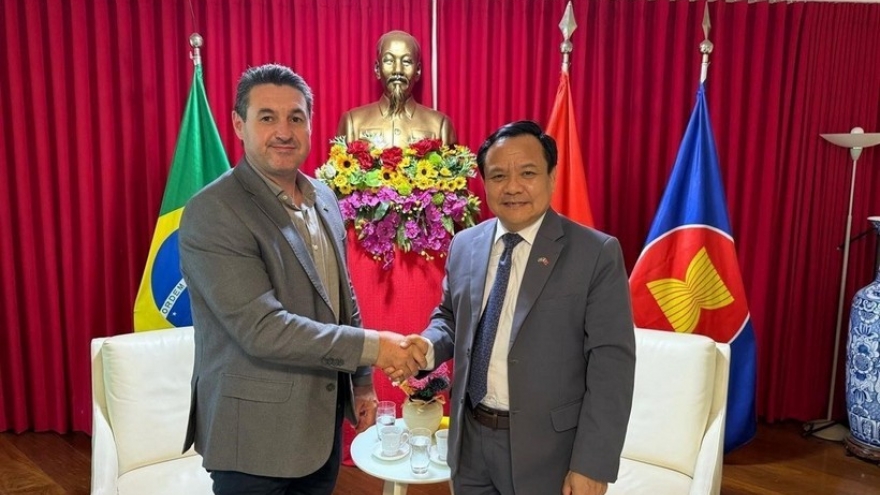
VOV.VN - The Vietnamese Embassy in Brazil has recently hosted a seminar on opportunities for developing the Vietnam-Brazil smart agriculture value chain both in person and online, featuring the participation of over 50 delegates from government agencies, research institutions, industry associations, and business communities of both countries.

Attendees included representatives from Vietnam’s Ministry of Agriculture and Environment; Brazil’s Ministry of Agriculture and Family Farming; Ministry of Science, Technology, and Innovation (MCTI); Ministry of Agriculture and Livestock (MAPA); administrations of Goiás and Tocantins; the Brazilian Soybean Association (Aprosoja); as well as numerous Vietnamese and Brazilian investors and enterprises.
Opening the seminar, Vietnamese Ambassador to Brazil Bui Van Nghi outlined an impressive picture of Vietnam’s economy, targeting over US$510 billion in GDP and nearly US$70 billion in agricultural, forestry, and seafood exports by 2025. From a nation once facing poverty, Vietnam has risen to become a leading global exporter of agricultural products, including Robusta coffee, rice, pepper, cashew, and seafood. This success has been driven in large part by agricultural digitalization, with technologies such as the Internet of Things (IoT), drones, smart sensors, and blockchain for traceability, boosting productivity by 20-30% while reducing costs.
On bilateral ties, Ambassador Bui Van Nghi emphasized that Vietnam-Brazil cooperation has taken strategic steps forward, particularly following the upgrade to a Strategic Partnership in November 2024 and the adoption of the 2025–2030 Action Plan. Bilateral trade currently stands at around US$8 billion, with a target of US$15 billion by 2030.
Amid global pressures on agriculture from climate change, resource depletion, and increasingly strict requirements for food safety, traceability, and low carbon emissions, Nghi stressed that smart agriculture and sustainable value chains are no longer optional, and they are essential. Both Vietnam and Brazil are prioritizing development along these lines, laying the groundwork for long-term strategic cooperation.
Luiz Rodrigues, Special Advisor on Agriculture at Brazil’s Ministry of Science, Technology, and Innovation, stated that smart agriculture is a strategic pillar of national development. Brazil is ready to share breakthroughs in artificial intelligence, semiconductor-based agricultural sensors, and crop gene editing. Strengthened cooperation between Embrapa and Vietnamese partners is seen as key to transferring technology for cold chain management and precision agriculture.
Mirela Janice Eidt, Chief of Staff of Brazil’s Ministry of Agriculture and Livestock (MAPA), affirmed that agricultural cooperation has entered a substantive phase since the 2018 Memorandum of Understanding, focusing on strategic areas such as farm machinery, forestry, fisheries, and biofuels. Brazil is committed to sharing leading expertise in animal health, particularly in controlling foot-and-mouth disease, alongside sustainable farming solutions. Notably, Brazil’s appointment of Mirela Eidt as Agricultural Attaché to Vietnam from February 2026 is expected to serve as a direct link, advancing joint research projects and realizing innovation commitments for the new term.
Ngo Van Thanh, Project Director at Alpha Capital, said the two countries will focus on three main production pillars to maximize complementary advantages. Brazil will support Vietnam with seedlings and techniques for growing Palmito Pupunha (Peach Palm) to improve export processing capacity.
In return, Vietnam, a global rice powerhouse, will transfer high-yield rice varieties such as purple-black rice and milky white rice, along with water rice cultivation techniques, to Brazil’s extensive farmland. Notably, a project to establish a genetic improvement and development center for Queen Red Ginseng and medicinal plants in Brazil, using Vietnamese germplasm, is expected to create a breakthrough in the herbal industry.
Vietnam, Brazil boost agri-trade cooperation
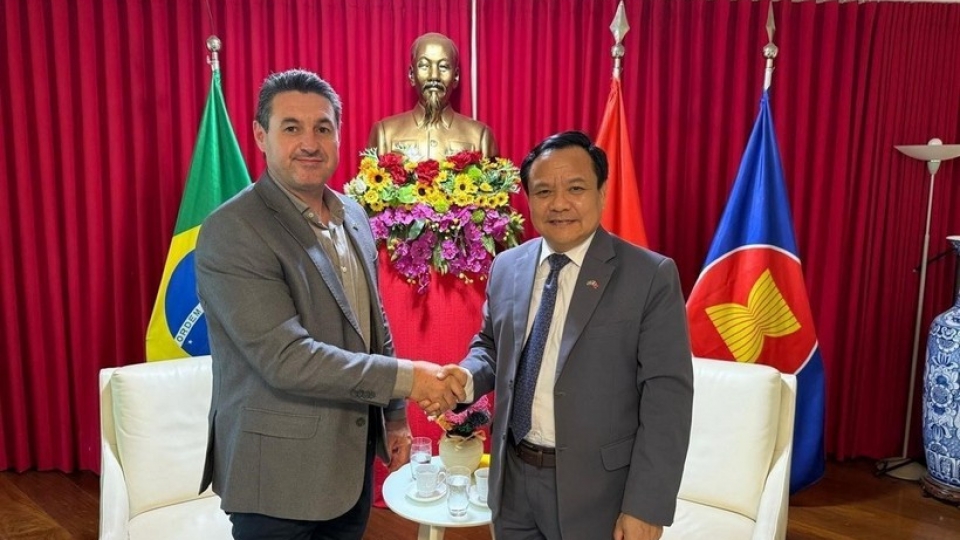
Vietnam has strong demand for soybeans, corn, cotton, and iron ore to support feed production, textiles, and metallurgy, said Vietnamese Ambassador to Brazil Bui Van Nghi during a recent meeting with Mauricio Buffon, President of the Brazilian Association of Soybean Producers (Aprosoja), in Brasilia.
Vietnam, Brazil promote launch of Vietnam - MERCOSUR FTA negotiations
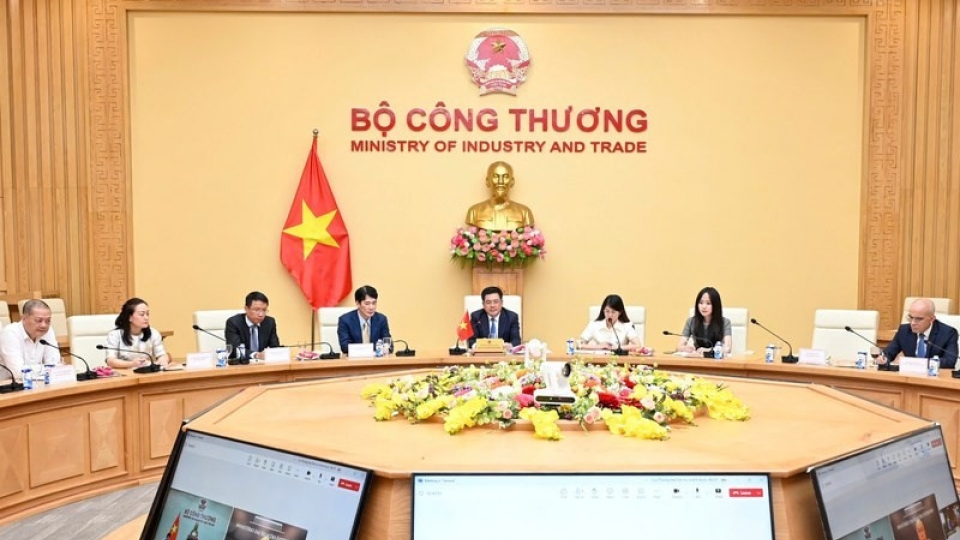
Brazil is committed to supporting and coordinating with other Southern Common Market (MERCOSUR) member countries to promote the internal process towards beginning official negotiations on the bloc’s free trade agreement (FTA) with Vietnam during Brazil's term as its rotating chair in the second half of 2025.