


APEC seminar focuses on standards-based AI governance adapted to regional economies

VOV.VN - The Directorate for Standards, Metrology and Quality of Vietnam under the Ministry of Science and Technology hosted an APEC seminar on artificial intelligence (AI) governance in Ho Chi Minh City on October 19, 2026, within the framework of Asia-Pacific Economic Cooperation (APEC) forum.

Running through October 20, the two-day event gathers representatives from APEC member economies, international organizations, management agencies, standard-setting organizations, experts, and the business community. The seminar is designed to enhance the capacity of APEC economies in AI governance while promoting responsible, transparent, and ethical AI development.
In his opening remarks, Tran Hau Ngoc, Vice Chairman of the Directorate for Standards, Metrology and Quality, emphasized that artificial intelligence has become a primary driver of innovation, productivity growth, and digital transformation globally. While rapid AI advancement opened new opportunities for economies, businesses, and society ranging from production optimization and management efficiency to new business models it simultaneously introduces complex challenges regarding safety, reliability, transparency, accountability, data protection, and risk management. This dual reality demands a balanced approach that boosts innovation while ensuring safe, reliable, and responsible AI deployment.
According to Tran Hau Ngoc, international standards play an increasingly vital role by providing technical principles, frameworks, and tools to help organizations and enterprises manage and utilize AI effectively. Applying international standards alongside conformity assessment and technical safeguards helps strengthen trust in AI applications, narrow technical divergences, and facilitate trade and cooperation among economies.
For Vietnam, science, technology, innovation, and digital transformation are identified as crucial drivers of socio-economic development, with AI serving as a high-potential technology capable of boosting productivity, competitiveness, and digital transition across sectors. In this context, the country places strong emphasis on developing quality infrastructure, building and applying standards, enhancing conformity assessment capacity, and strengthening international cooperation and experience-sharing with regional peers.
Discussions at the seminar highlighted that while APEC economies adopt diverse approaches to AI development and governance in line with their respective priorities and conditions, they share a common goal: harnessing AI benefits effectively, managing risks, and consolidating public and business trust in the technology. Consequently, deepening dialogue and cooperation in AI governance carries practical significance for every economy.
During the sessions, delegates focused on global AI standards, responsible governance frameworks, and practical implementation experiences across APEC economies. Discussions also addressed risk management, algorithmic transparency, accountability, human oversight, AI lifecycle management, conformity assessment, product safety, and digital trust. Through these discussions, the seminar aims to formulate practical, standards-based AI governance recommendations in conformity with the conditions of APEC member economies.
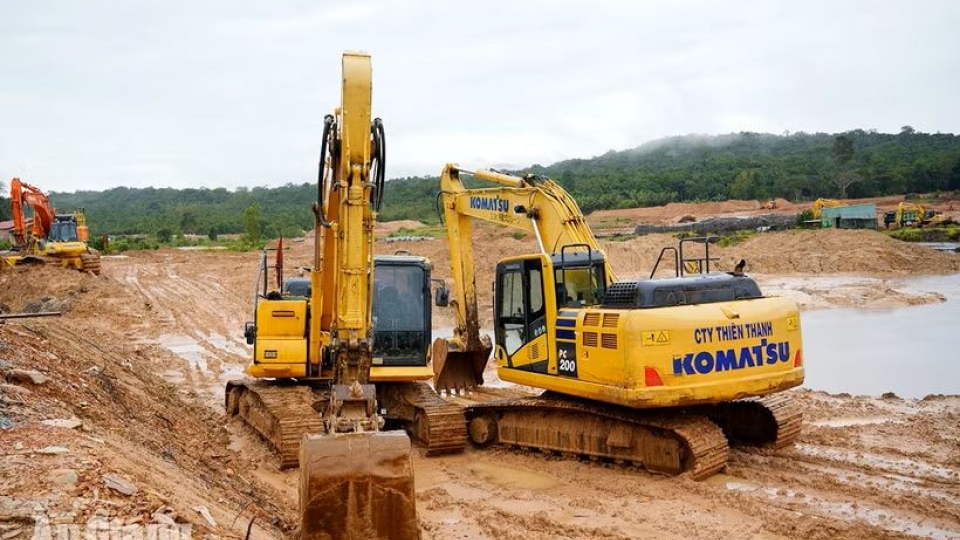
Phu Quoc accelerates water projects to ensure supply for APEC 2027
Phu Quoc Special Zone in the southern province of An Giang is speeding up construction of reservoirs and water plants despite the rainy season to prepare for the APEC 2027 Economic Leaders’ Meeting and address the island’s chronic clean water shortage.
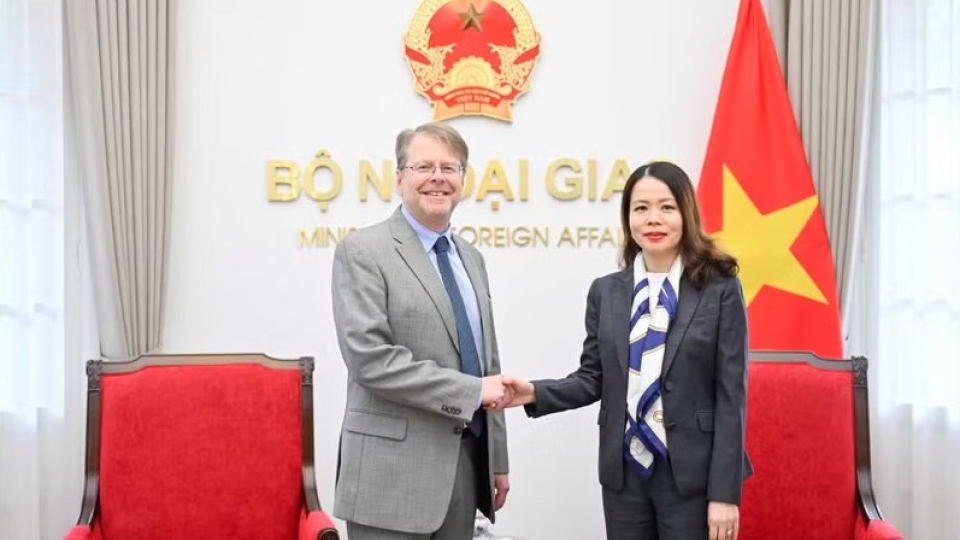
Vietnam encourages greater US business participation in APEC Year 2027 activities
Deputy Minister of Foreign Affairs Nguyen Minh Hang met with John Goyer, Vice President for Southeast Asia and Oceania at the US Chamber of Commerce (USCC), in Hanoi on October 12 to discuss Vietnam-US economic ties and preparations for APEC Year 2027.


