Agricultural exports target US$100 billion beyond 2026

VOV.VN - Stepping up deep processing, enhancing value chain transparency and applying technology are key drivers for agricultural exports to move toward a long-term target of US$100 billion.
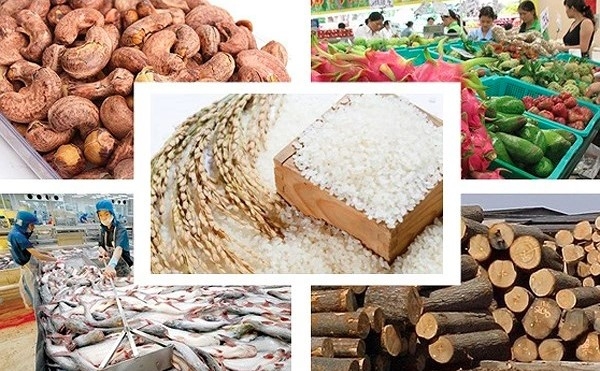
Proactively upgrading the value chain
The year 2025 recorded positive signals for agricultural exports. Phan Minh Thong, Chairman and General Director of Phuc Sinh Group said that the company’s revenue reached about US$350 million, up more than 20% compared with 2024.
Coffee exports to Asian markets alone rose by over 22%, continuing to serve as an important driver in its business structure.
However, 2026 is forecast to be more challenging as global markets fluctuate, consumer demand shifts rapidly, and logistics costs and technical barriers increase. In response, Phuc Sinh has identified improving adaptability and gaining deeper understanding of partners and markets as core factors to maintain a stable supply chain.
The year 2026 is regarded as a pivotal period for accelerating investment in deep processing and expanding factory systems. According to Thong, while many enterprises remain cautious, proactive long-term investment will create advantages in the medium and long term.
Alongside technology investment, high-quality human resources are prioritized. The company is strengthening training for management, technical and operational staff to meet increasingly stringent standards in export markets such as the EU, the United States and North America. At the same time, expansion into the Middle East and other Asian countries is viewed as a way to diversify risks and create new room for growth.
Ha My Joint Stock Company has likewise chosen deep processing as a fundamental solution for differentiation.
Pham Ngoc Thanh, Deputy General Director in charge of business at the company, said that if it only produced salted roasted cashew nuts, a widely available product, it would be difficult to leave a distinct mark.
The company has begun construction of a processing plant to produce cashew-based products such as cashew milk, cashew butter and sesame-salt cashews, targeting specific segments including vegetarians, children, the elderly and tourism.
According to the company, cashew nuts must become the foundation of a diversified product ecosystem with higher technical content and added value. Building product narratives, from health benefits to raw material origins, is seen as a way to reach consumers. Once customers trust one product, expansion into other product lines becomes more feasible, forming a closed consumption cycle within the brand ecosystem.
Transparency and technology as prerequisites
Accelerating deep processing is not only a matter of factory investment but also requires restructuring the entire value chain. In the context of the EU’s implementation of regulations on deforestation-free supply chains (EUDR), traceability requirements are becoming more stringent, compelling enterprises to shift from formalistic management to data-based management.
For agricultural export sectors, controlling output from growing areas has become urgent. The number of trees, average yields, raw material output and the volume of finished products in circulation must all be grounded in verifiable calculations. If actual output does not correspond with the volume of products bearing geographical indications on the market, the credibility of the sector will be seriously affected.
Agricultural expert Hoang Trong Thuy said a sustainable agricultural value chain must rest on two pillars: transparency of origin and discipline in implementation. When international markets detect inconsistencies or fraud, they assess individual enterprises as well as the entire sector.
In the long term, digitalizing production data, traceability and output control will help enhance competitiveness and provide a foundation for developing key product portfolios in each sector that meet international standards while reflecting the characteristics of local agricultural produce.
In January 2026, total export turnover of agro-forestry-fishery products reached approximately US$6.51 billion, with a trade surplus of US$2.08 billion. Many key items recorded strong growth, including fruit and vegetables, cashew nuts, pepper, rubber and coffee.
China, the United States and Japan remained the three largest export markets. Maintaining growth momentum in traditional markets while expanding into potential regions will play a decisive role in the coming period.
In 2026, the agriculture and environment sector targets export turnover of US$73-74 billion and aims to reach US$100 billion in the longer term. Achieving this target will depend not only on increasing output but also on raising added value through deep processing and technology.
Selecting appropriate technologies, focusing investment, developing key product portfolios and ensuring value chain transparency are critical conditions.
As global trade conditions shift rapidly and market requirements become stricter, many agricultural enterprises are intensifying investment in deep processing, standardizing value chains and expanding markets.
This is regarded as a step toward achieving the export target of US$73–74 billion in 2026 and fulfilling the long-term goal of US$100 billion.
Unlocking consumer markets for agricultural exports during peak season
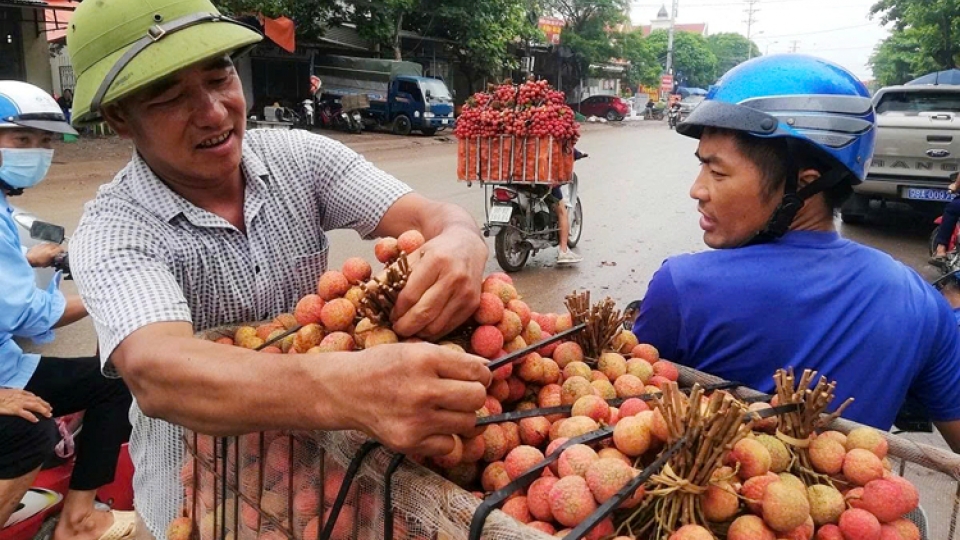
VOV.VN - As Vietnam enters the peak harvest season for key crops such as rice, durian, lychee, longan, dragon fruit, and mango, there is an urgent need to find markets for these agricultural products to prevent the recurring issue of “a bumper harvest, falling prices.”