


Hanoi hotels seek new sources of demand amid rising arrivals

Hanoi’s tourism sector continues to grow, but expanding hotel supply, particularly in the high-end segment, is prompting businesses to seek new sources of demand and encourage longer stays to improve operational efficiency.
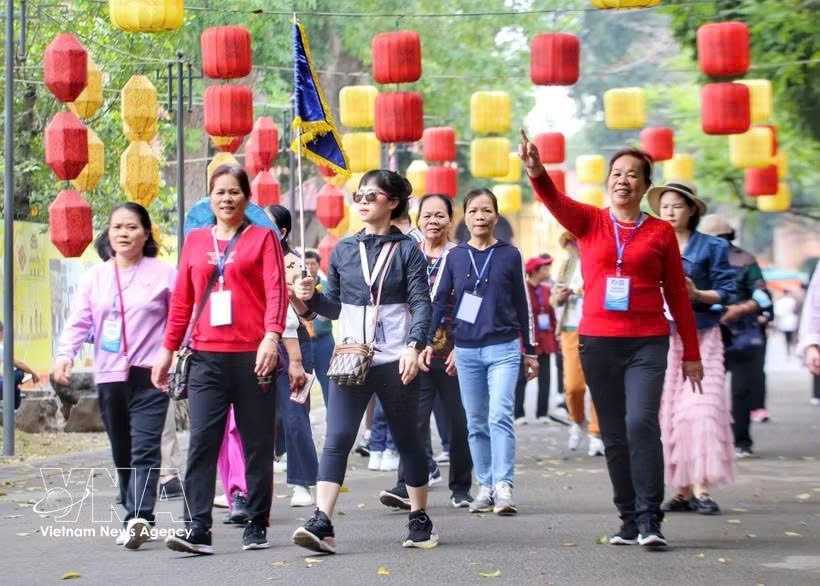
Rather than relying solely on rising visitor numbers, Hanoi’s accommodation market has further room for growth from business travellers, MICE (Meetings, Incentives, Conferences, and Exhibitions) tourism and new tourism products. The ability to encourage visitors to stay longer, increase room nights and boost revenue from non-room services will become increasingly important as new supply enters the market.
Experts from the real estate consulting company Savills Vietnam cited data for the first two quarters showing that the capital welcomed 18.01 million visitors, up 15.7% year-on-year, while total tourism revenue rose 19.1% to VND74.23 trillion (US$2.85 billion). The average hotel occupancy rate stood at 65.64%, according to the Ministry of Culture, Sports and Tourism.
In the second quarter alone, Savills Vietnam recorded an occupancy rate of around 70% across 65 surveyed hotels with 10,967 rooms. Demand came mainly from three groups: leisure travellers, business travellers and MICE visitors. The figures show that there is still room to increase occupancy, even as visitor numbers continue to rise. The challenge, therefore, is not only to attract more tourists but also to convert these arrivals into actual accommodation demand.
This will become an important issue as supply continues to expand. According to Savills, around 1,900 rooms from six projects are expected to enter the Hanoi market in 2026, five of them in the five-star segment. New supply will help improve the market’s quality and service capacity, but will also intensify competition among hotels to attract guests, maintain occupancy and sustain room rates.
For the high-end segment, this pressure is more pronounced as customers have more choices. Operational efficiency will therefore depend on the ability to differentiate products and services and attract high-spending customer segments.
One potential growth direction is to extend visitors’ length of stay rather than simply increase visitor numbers. Hanoi aims to raise the average length of stay to 2.5-3.5 days by 2030, while increasing the share of night-time spending to 25-30% of total tourist expenditure. If achieved, this would generate significant additional demand for accommodation while creating more room for growth in restaurants, entertainment and other ancillary hotel services.
Developing new tourism products, connecting multiple destinations and expanding night-time activities could help encourage visitors to stay longer. Cultural, historical, heritage, culinary and entertainment experiences not only provide additional reasons to extend stays but also create greater opportunities for visitor spending.
According to Tran Thi Thu Huyen from the faculty of tourism and hospitality at the University of Economics – Technology for Industries, MICE is a high-value-added segment, and Hanoi has favourable conditions for its development thanks to its system of high-end accommodation, cultural heritage and international connectivity.
Matthew Powell, Director of Savills Hanoi, said the capital’s master planning with a 100-year vision is expected to create more destinations outside the historic core, thereby redistributing visitor flows and expanding the development space of the accommodation market.
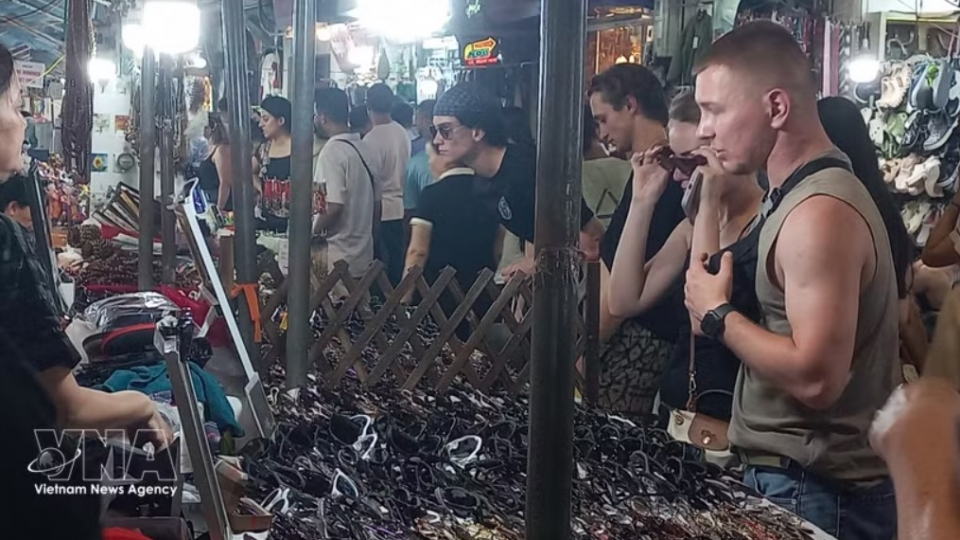
Hanoi aims to raise tourists' night-time spending to 30%
Hanoi plans to develop night-time economy zones, corridors and public spaces centred on heritage, culture, creativity and visitor experiences to increase the value of its tourism industry, with an aim to raise the proportion of tourist spending at night to 25-30% of total travel expenditure.

