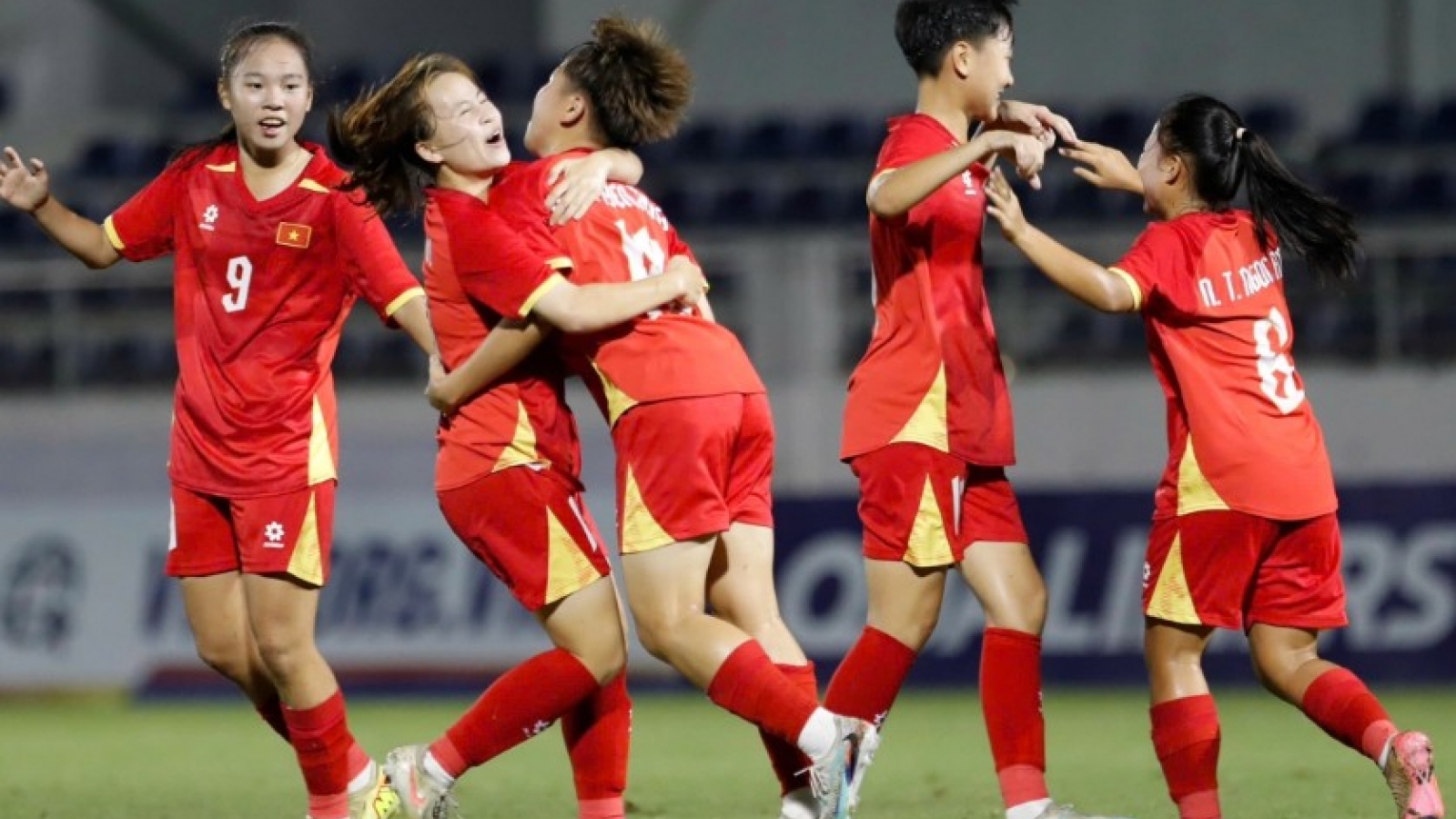
2027 Asian Cup delay gives Kim Sang-sik more time to reshape Vietnam team

VOV.VN - The revised schedule for the 2027 AFC Asian Cup gives head coach Kim Sang-sik more time to test young players, broaden his selection options and build a deeper Vietnam squad for the continental tournament and the 2030 FIFA World Cup qualifiers.

The Asian Football Confederation (AFC) has moved the 2027 Asian Cup from January 7–February 5, 2027 to December 23, 2027–January 21, 2028, giving Vietnam nearly an additional year to prepare for the tournament.
The longer lead-in allows Kim to assess emerging talent, experiment with tactical options and build a more competitive team. The FIFA international windows in November 2026, March 2027 and June 2027 will be key periods for the coaching staff to evaluate players and shape the team’s next generation.
Vietnam are expected to play six matches in the second round of qualifying for the 2030 FIFA World Cup, scheduled across September, October and November 2027 and March 2028, with the Asian Cup taking place in between. This demanding calendar will require the team to reach peak form for the continental tournament while sustaining its competitiveness throughout a lengthy international campaign.
A wider door for young players
Signs of a broader selection strategy are already evident in the squad named for November 2026. Kim has included several younger players, particularly members of Vietnam's U23 side that won bronze at the 2026 AFC U23 Asian Cup.
Although several established players, including Xuan Son, Hoang Hen, Hoang Duc, Quang Hai and Xuan Manh, are dealing with fitness issues, the inclusion of 10 players born in 2003 or later highlights Kim’s intention to widen his pool of options.
The Korean coach has also shown greater flexibility in his selection policy by considering players competing in the First Division. This points to a more open competition for places, rather than continued reliance on the established core.
Football expert Doan Minh Xuong said the revised Asian Cup schedule should be used to prepare comprehensively for both the continental tournament and the 2030 World Cup qualifiers. He also expressed hope that the Vietnam Football Federation’s congress in January 2027 would help establish an appropriate personnel and development strategy for the 2027–2031 period.
On November 4, Kim further expanded his squad by calling up striker Nguyen Dang Duong of Hung Yen FC, midfielders Khuat Van Khang and Le Quoc Nhat Nam of The Cong Viettel, and defender Nguyen Duc Anh of Hanoi FC. The additions bring the squad to 27 players and give the coaching staff further opportunities to assess their form and capabilities.
A window to refresh the team
The Asian Cup’s rescheduling need not be a setback for Vietnam. The longer runway could instead allow the coaching staff to address personnel challenges and improve squad depth ahead of a demanding cycle of international competition.
Players working their way back from fitness problems, including Xuan Son, Hoang Hen, Duy Manh and Tien Dung, could benefit from the revised timeline. Nguyen Dinh Bac, who faces a two-match suspension in the second round of the 2030 World Cup qualifiers following his red card in the 2026 AFC U23 Asian Cup bronze-medal match, will also have a longer period before the senior team’s qualifying campaign begins.
The revised calendar may also give overseas Vietnamese players and foreign nationals seeking Vietnamese citizenship more time to complete the necessary procedures, potentially expanding the pool of players available to the national team.
Expert Doan Minh Xuong believed the extra preparation period is particularly favourable for accelerating the team’s rejuvenation. He also pointed to the uninterrupted V.League schedule as a factor that could help players maintain match fitness and competitive rhythm.
The friendlies against Chinese Taipei on November 11 and Kyrgyzstan on November 17 will offer Kim an early chance to gauge the squad's readiness, try out different personnel and fine-tune his tactical approach.
Greater squad depth, stronger competition for places and tactical flexibility will all be vital to Vietnam’s long-term ambitions.
The revised Asian Cup calendar does not alter Vietnam’s main objectives. Instead, it creates scope for the national team to look beyond a single tournament and build towards an entire cycle of competition. How effectively Kim makes use of this longer preparation phase could prove crucial to Vietnam’s prospects at both the 2027 Asian Cup and the 2030 World Cup qualifiers.

AFC postpones 2027 Asian Cup to December amid regional turmoil
VOV.VN - The Asian Football Confederation (AFC) has decided to postpone the 2027 Asian Cup in Saudi Arabia by nearly a year amid regional instability, travel disruptions and logistical challenges.