Ho Chi Minh City plans English as second language in schools by 2027

VOV.VN - Ho Chi Minh City is laying the groundwork to introduce English as a second language across schools, with a particular focus on enhancing teacher capacity, updating teaching methods, and piloting bilingual programs in high-quality and internationally integrated schools.
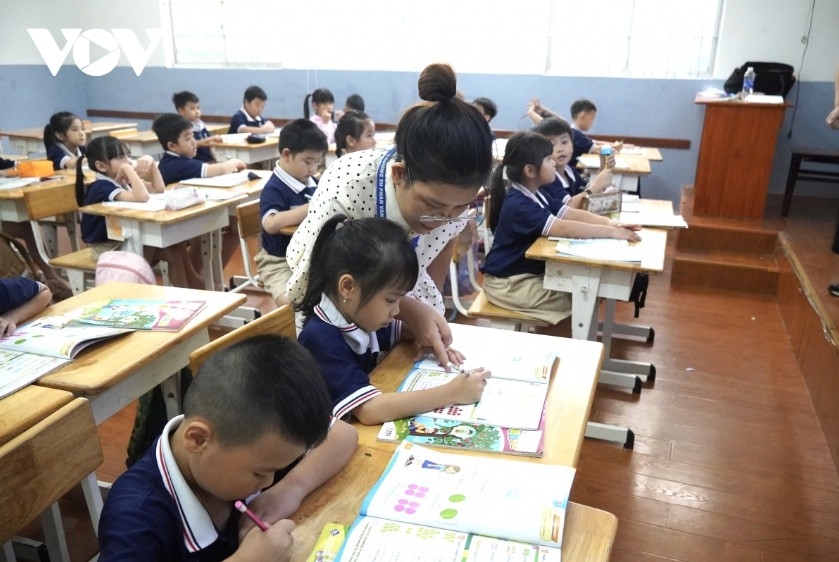
The initiative aims to expand citywide by 2027-2030, leveraging digital learning tools, bilingual resources, and AI-assisted platforms to support students’ language development.
Teacher training and capacity building
Nguyen Van Hieu, Director of the Ho Chi Minh City Department of Education and Training, emphasized the need to foster an environment where students use English daily, focus on practical communication skills, and apply English across subjects. Improving the quality of English teachers and those teaching other subjects with adequate language proficiency is crucial, and the city is studying successful models from other countries.
The city has developed a phased plan, specifying the number of subjects taught in English, required English usage time, and assessment standards for schools to be recognized as bilingual. Among more than 100,000 teachers after recent mergers, non-specialist teachers are currently self-training and supporting each other.
Le Nguyen Tra My, Head of the English Department at Nguyen Hue Primary School, said her department has established a language club to help non-English subject teachers practice and exchange ideas.
Many teachers now confidently communicate with foreign English teachers, and younger staff are piloting classes entirely in English with support from English teachers to refine lesson plans. Long-term, systematic training and language standardization are necessary.
Teachers report that introducing English from grade 1 with interactive methods helps students gain confidence. However, some long-serving teachers still face pressure due to limited language skills, particularly in teaching other subjects such as history and geography. Coordinated training sessions will help unify teaching methods and build confidence.

Workforce and roadmap
Principals stress that implementing the program requires a standardized curriculum and qualified teachers. A school principal noted that teacher quality accounts for up to 80% of student learning outcomes. Recruiting new English graduates and upgrading current teachers’ skills are priorities, alongside encouraging all teachers to obtain relevant English certifications over the next two years.
Cao Duc Khoa, Principal of Nguyen Du Secondary School, said that while teacher numbers have increased, quality remains a challenge. Many teachers struggle to meet the six-level foreign language proficiency framework, particularly in communication and listening, and older teachers face additional barriers. Schools are addressing this through peer exchange, inter-grade and inter-department collaboration, and partnerships for professional development.
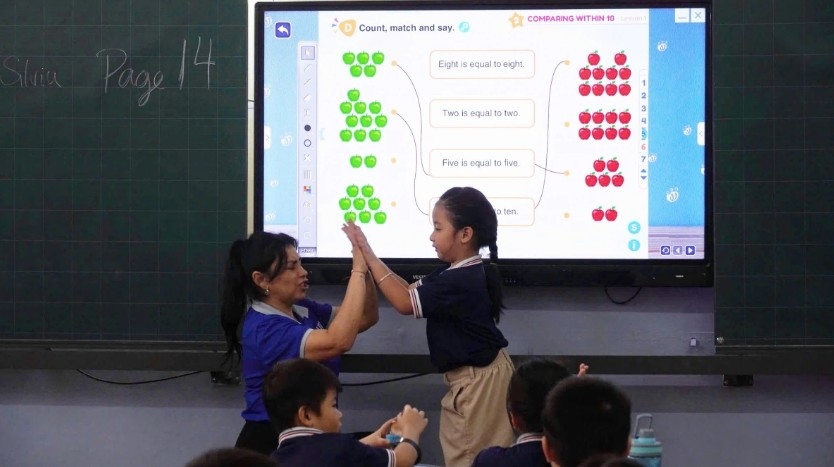
Recently, Ho Chi Minh City recruited more than 3,900 teachers across levels, with English showing promising numbers compared with previous years. Huynh Van Son, Rector of Ho Chi Minh City University of Education, noted that high-quality English teachers can be trained through teacher education programs, second degrees, professional development, and even international recruitment. The city is preparing a structured roadmap to ensure training and development meet program needs.
English is being piloted as a second language in high-quality, advanced, and internationally integrated schools. From 2027 to 2030, the program will expand citywide, enhancing teaching quality and providing broader opportunities to use English beyond the classroom. Digital learning platforms, bilingual resources, and AI-assisted tools will support students’ language development. Lessons from pilot schools will inform scaling and replication across the city.
Ho Chi Minh City’s move aligns with practices in regional peers such as Singapore, the Philippines, and Malaysia, which have long established bilingual education in schools.

MoET intensifies efforts to make English second language in schools
VOV.VN - The Ministry of Education and Training (MoET) has announced that it is actively building a draft national scheme to gradually make English the second language in schools in the 2025 - 2035 period, with a vision towards 2045.