Vietnam, Brunei issue joint statement

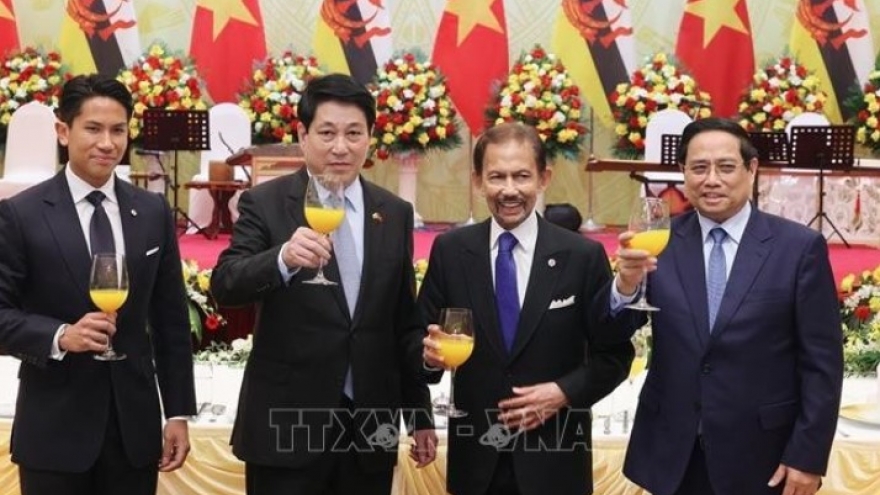
Vietnam and Brunei have issued a Joint Statement on the occasion of Sultan Haji Hassanal Bolkiah’s state visit to Vietnam from November 30 to December 2.
The following is the full text of the Joint Statement.
VIETNAM – BRUNEI DARUSSALAM JOINT STATEMENT
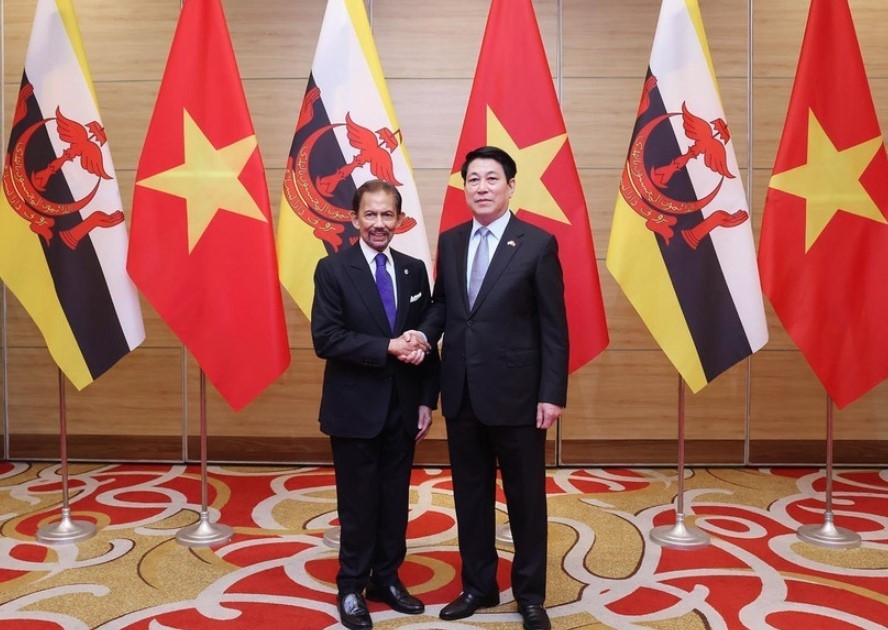
At the invitation of His Excellency Mr. Luong Cuong, President of the Socialist Republic of Vietnam, His Majesty Sultan Haji Hassanal Bolkiah Mu'izzaddin Waddaulah, Sultan and Yang Di-Pertuan of Brunei Darussalam, made a State Visit to Vietnam from 30 November to 2 December 2025.
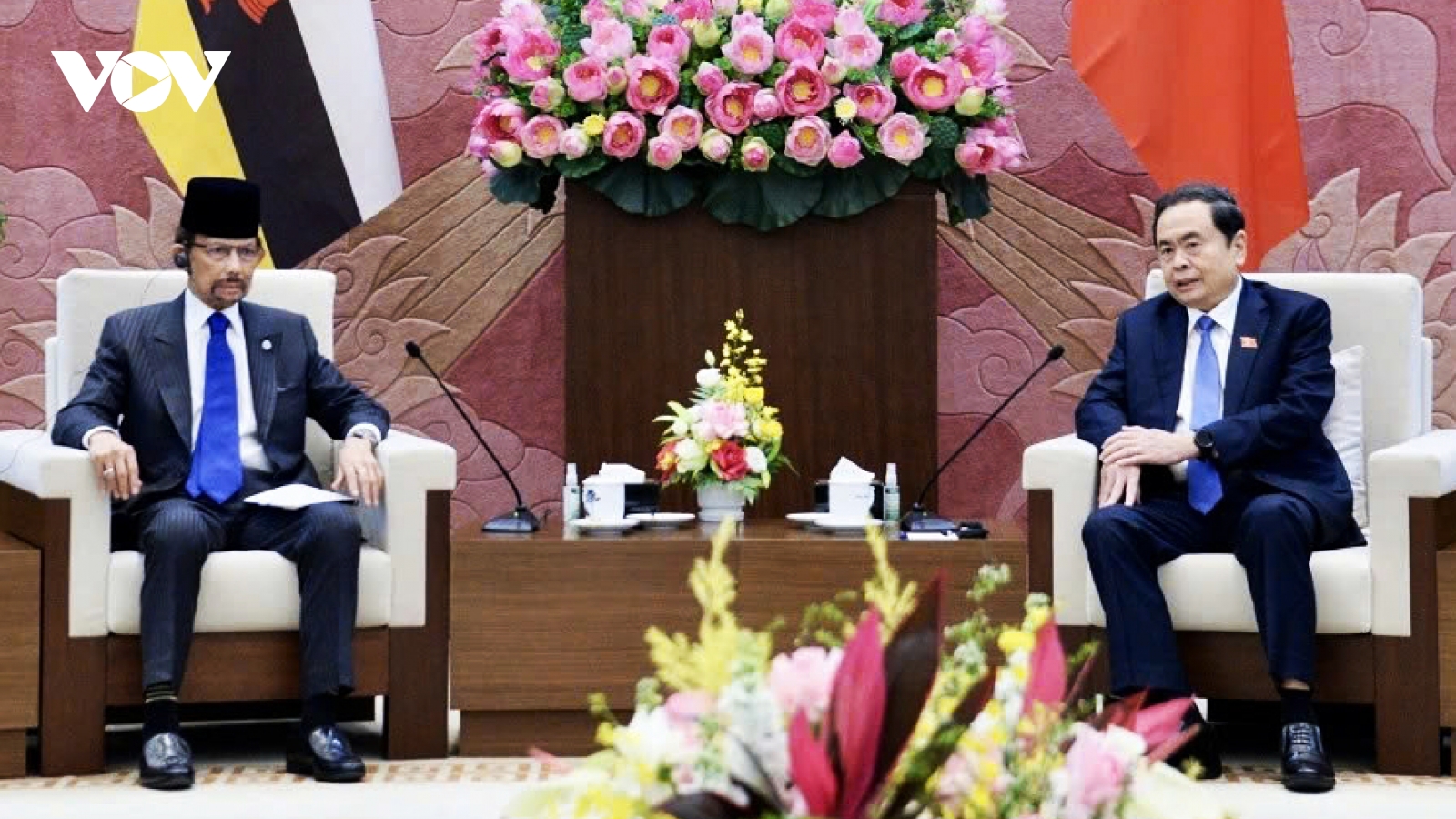
During the visit, His Majesty was accorded a ceremonial welcome, held official talks with President Luong Cuong, and paid courtesy calls on General Secretary of the Communist Party of Vietnam To Lam, Prime Minister Pham Minh Chinh, and President of the National Assembly Tran Thanh Man.
The Leaders noted the socio-economic developments in both countries and expressed pleasure at the substantive and positive progress in bilateral relations since the elevation of ties to a Comprehensive Partnership in 2019. The Leaders underscored the importance of the Plan of Action for the Implementation of the Comprehensive Partnership between Vietnam and Brunei Darussalam for 2023-2027, and agreed to work closely to ensure its comprehensive and effective realisation.
The Leaders affirmed their commitment to further strengthen cooperation in all areas, including political, defence and security, trade and investment, energy, education, culture and society, people-to-people exchanges, and other areas of mutual interest, as well as cooperation within multilateral frameworks.
Political Cooperation
Both sides recognised the importance of maintaining regular exchanges of high-level delegations and contacts across all channels, including the State, Government, National Assembly, people, and localities to strengthen political trust and mutual understanding. They agreed to organise activities to commemorate the 35th anniversary of the establishment of diplomatic relations between Vietnam and Brunei Darussalam in 2027. Both sides acknowledged the effectiveness of the Joint Commission for Bilateral Cooperation (JCBC), co-chaired by the Foreign Ministers, as well as other existing dialogue and sectoral cooperation mechanisms.
Defence and Security Cooperation
The Leaders noted the positive outcomes of cooperation between the Defence Ministries and Armed Forces of both countries in the following areas: implementation of the Memorandum of Understanding on Defence Cooperation in 2005 and the Memorandum of Understanding on Naval Cooperation in 2013; establishing and maintaining effective mechanisms between the armed forces of both countries including the Joint Defence Working Group (JDWG) meeting; enhancing the professional capacity of officers and personnel through joint training and courses; promoting cooperation in maritime security and safety, defence industry, cybersecurity, counter-terrorism, defence intelligence information exchanges; and exploring cooperation between Vietnam Coast Guard and Brunei maritime law enforcement agencies.
Both sides commit to continued close coordination and mutual support at multilateral defence forums, particularly under ASEAN frameworks such as the ASEAN Defence Ministers’ Meeting (ADMM), ADMM Plus, ASEAN Chiefs of Defence Forces’ Meeting (ACDFM), and ASEAN Regional Forum (ARF).
The Leaders also agreed to promote maritime cooperation among others, through dialogue and exchanging experiences and information, as well as addressing maritime security challenges in accordance with international law, in particular the 1982 United Nations Convention on the Law of the Sea (UNCLOS), in order to ensure safe and secure seas.
The Leaders reaffirmed the importance of cooperation in public security through the sharing of information and experiences in combating transnational organised crimes such as illicit drug trafficking, trafficking in persons, people smuggling, terrorism, cybercrime, and money laundering. They expressed satisfaction with the regional cooperation under the ASEAN Ministers Meeting on Transnational Crime (AMMTC), ASEAN Chiefs of National Police (ASEANAPOL), and ASEAN Intelligence Community Conference (AICC). The Leaders welcomed the new progress in security cooperation within bilateral and ASEAN frameworks, including negotiations on agreements relating to preventing and combating transnational crimes, extradition, and the transfer of prisoners. They also welcomed the Signing Ceremony of the United Nations Convention Against Cybercrime in Ha Noi and agreed to amend domestic procedures for its ratification and contribute to the early entry into force of the Convention.
Economic Cooperation
Trade: The Leaders expressed pleasure in achieving ahead of schedule the trade target of US$500 million by 2025 and agreed to work closely in doubling the two-way trade by 2035 through diversifying import and export products and aiming for balanced trade.
Both sides agreed to enhance trade promotion and encouraged greater engagement between businesses and business associations of both countries, including deepening linkages and cooperation in agriculture, forestry, and fishery products. They also agreed to explore measures to facilitate bilateral trade, including through improved customs procedures and by leveraging existing FTAs to which both are parties. Both sides expressed openness to continue discussions on rice trade cooperation, particularly to facilitate opportunities for importers to strengthen mutually beneficial cooperation in food security. The Leaders also encouraged both business communities to enhance trade and freight transport activities through BIMP-EAGA and the Mekong sub-region.
Investment: Vietnam reaffirmed its commitment to facilitating investments from Brunei Darussalam through the Brunei Investment Agency (BIA), and other Bruneian organisations and investors in projects aimed at developing the International Financial Centre. Brunei Darussalam welcomed and extended support for Vietnamese investors to expand business activities in Brunei Darussalam, particularly in sectors that align with the goals and priorities of Wawasan 2035.
Digital Economy: The Leaders agreed to promote cooperation in new areas such as digital economy, green transformation, and circular economy through sharing of best practices, capacity building, encouraging cooperation between relevant agencies, organisations and businesses and establishing research cooperation mechanisms between institutes and universities.
Halal Cooperation: The Leaders recognised the vast potential to collaborate in the Halal industry, including promoting cooperation between the Halal certification bodies of both countries towards mutual recognition of Halal certification. Vietnam encouraged Bruneian enterprises to invest in building Halal industrial zones, developing Halal food and production projects in Vietnam. Brunei Darussalam encouraged Vietnamese enterprises and localities to cooperate with Bruneian partners in the production and processing of Halal-standard food production for the domestic markets of both countries, and also exportation to third countries. The Leaders agreed that both sides would share their experience on Halal-related issues, including good practices and processes in Halal food production, and support capacity building of experts in this field through training programs and experience sharing.
Agriculture and Fisheries: The Leaders agreed to strengthen cooperation in agriculture, fisheries and food security by encouraging businesses, universities and research institutions to strengthen exchanges and research cooperation in agriculture, fisheries and food security. Brunei Darussalam committed to facilitating Vietnamese businesses to expand investments in agriculture, fisheries and food security by strengthening cooperation with businesses and partners on the basis of mutual benefit, towards ensuring the resilience of regional food supply chains. Brunei Darussalam welcomes investments from Vietnam in the fisheries sector through joint ventures with registered local enterprises towards fostering a competitive, transparent and sustainable fisheries industry.
The Leaders agreed to enhance information exchanges and cooperation to address illegal, unreported and unregulated (IUU) fishing. Brunei Darussalam acknowledged and appreciated efforts by Vietnam in strengthening fisheries governance and sustainable practices, and looked forward to positive developments in Vietnam’s engagement with the European Commission.
Energy Cooperation
The Leaders welcomed their respective energy companies to cooperate on a commercial basis in the oil and gas sector, in accordance with international law and the principles of mutual respect, equality and mutual benefits. They welcomed businesses from both sides, especially the Vietnam National Industry - Energy Group (PVN) and Brunei Energy Services and Trading (BEST) to increase engagement and strengthen cooperation in oil and gas trade and services, and cooperation in midstream and downstream projects; encouraged the potential for collaboration across various areas of the oil and gas industry and expressed openness to continued exchanges amongst relevant agencies. Brunei Darussalam encouraged greater participation from Vietnamese businesses, including potential trade and investment opportunities.
Brunei Darussalam highly appreciated the positive contributions of PetroVietnam Drilling and Well Service Corporation (PV Drilling) in delivering drilling services to Brunei Darussalam's oil and gas industry, particularly in the upstream sector. Both sides encouraged the continued expansion of cooperation between PV Drilling and its partners in Brunei Darussalam in the provision of drilling and well services, and affirmed their support for facilitating processes where appropriate.
The Leaders agreed to further strengthen cooperation extended to the area of energy transition, through among others, the exchanges of expertise, training and capacity building, enhanced business and investment collaborations, as well as mutual consideration of services and opportunities between both countries.
People-to-People Exchanges
The Leaders agreed to strengthen cooperation between educational institutions through student and teacher exchanges, joint research, training programmes, cultural activities and internships. They also welcomed the Vietnamese Language Courses at the Universiti of Brunei Darussalam (UBD) towards fostering mutual understanding and stronger people-to-people ties.
The Leaders also agreed to enhance linkages through sports and cultural activities, regional and international tourism events and promotional activities. They agreed on the potential to enhance air connectivity, contributing to the common goal of promoting substantive cooperation and deepening people-to-people exchanges.
The Leaders agreed to promote cooperation through the parliamentary channel and continue the close coordination in inter-parliamentary forums, especially on regional and international issues of mutual concern. Both sides will explore the establishment of the Vietnam - Brunei Darussalam Friendship Association and Brunei Darussalam - Vietnam Friendship Association, when appropriate.
Regional and International Issues
The Leaders underscored the importance of upholding multilateralism and the rules-based international order founded on the principles stipulated in the Charter of the United Nations (UN) and on the basis of international law for the maintenance of peace, security and prosperity, as well as sustainable development. In this regard, the Leaders expressed their satisfaction with the excellent cooperation and close consultation between the two countries at regional and international fora, particularly within ASEAN and existing ASEAN-led mechanisms, the UN, the Asia-Pacific Economic Cooperation (APEC), and the Non-Aligned Movement (NAM). Brunei Darussalam extended its steadfast support for Vietnam as the APEC Chair in 2027. Both sides reaffirmed their commitment to continued coordination in supporting efforts to strengthen and reform global institutions, including the World Trade Organisation (WTO), to advance mutual interests and address global, regional and sub-regional challenges of common concern.
The Leaders agreed to promote cooperation in ensuring mutually beneficial outcomes from participating in free trade agreements such as the Regional Comprehensive Economic Partnership (RCEP), the Comprehensive and Progressive Agreement for Trans-Pacific Partnership (CPTPP) and ASEAN Trade in Goods Agreement (ATIGA).
The Leaders emphasised the importance of strengthening ASEAN Centrality and unity, pledged to enhance coordination to advance the ASEAN Community building process, effectively implement the ASEAN Community Vision 2045 and its strategic plans, and expand and deepen cooperation between ASEAN and its partners, especially in areas of common interest such as trade, investment, digital transformation, innovation, science and technology, climate change response, connectivity and food, water and energy security.
The Leaders emphasised the important and complementary role of sub-regional development in the regional integration process and ASEAN Community building, especially in the field of enhancing economic integration and narrowing the development gap, pledged to promote sustainable, inclusive and equitable development in the ASEAN Community through linking sub-regional growth with ASEAN’s overall development and strengthening relations with sub-regional cooperation frameworks.
The Leaders underlined the importance of upholding international law, particularly the 1982 UNCLOS that sets out the legal framework within which all activities in the oceans and seas must be carried out. Both sides reaffirmed maintaining peace, security, stability, safety and freedom of navigation in and overflight above the South China Sea and recognised the benefits of having the South China Sea as a sea of peace, stability and prosperity. The Leaders emphasised the importance of the exercise of self-restraint and non-militarisation, and to refrain from actions that may further complicate the situation and escalate tensions in the South China Sea. Both sides further committed to pursue peaceful resolution of disputes, including full respect for legal and diplomatic processes, without resorting to threat or use of force, in accordance with international law, including the 1982 UNCLOS.
They underscored the importance for all countries concerned to promote a calm, peaceful and conducive environment, with a view to building confidence and enhancing mutual trust in the region. In this regard, they reaffirmed the importance of the full and effective implementation of the 2002 Declaration on the Conduct of Parties in the South China Sea (DOC) in its entirety, and looked forward to the early conlusion of an effective and substantive Code of Conduct in the South China Sea (COC) that is in accordance with international law, particularly the 1982 UNCLOS.
During the visit, both sides signed the following documents: Memorandum of Understanding (MOU) between the Government of His Majesty the Sultan and Yang Di-Pertuan of Brunei Darussalam and the Government of the Socialist Republic of Vietnam on Maritime Cooperation; MOU between the Ministry of Agriculture and Environment of the Socialist Republic of Vietnam and the Ministry of Primary Resources and Tourism of Brunei Darussalam on the Use of Hotline for Information-Exchange to Address Illegal, Unreported and Unregulated Fishing; and MOU between the Ministry of Agriculture and Environment of the Socialist Republic of Vietnam and the Ministry of Primary Resources and Tourism of Brunei Darussalam on Cooperation in Fisheries.
The Leaders expressed satisfaction with the open and candid exchanges held in the spirit of friendship and mutual understanding and looked forward to strengthening cooperation in areas of mutual interest. His Majesty expressed appreciation for the warm hospitality extended to the Brunei Darussalam delegation by the Leaders and the people of Vietnam during the visit and cordially invited the Leaders of Vietnam to pay a visit to Brunei Darussalam at a mutually convenient time.
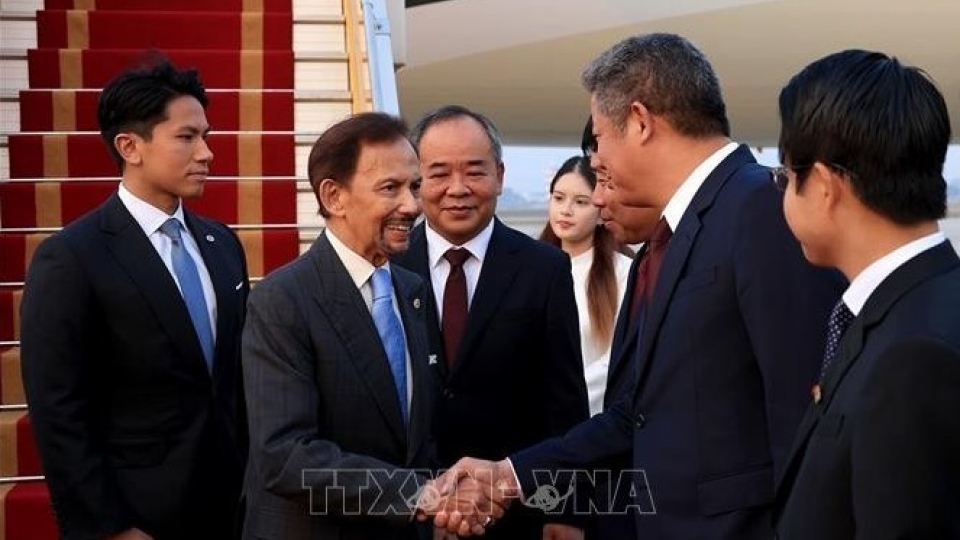
Sultan of Brunei arrives in Hanoi for state visit to Vietnam
VOV.VN - Sultan of Brunei Darussalam Haji Hassanal Bolkiah arrived in Hanoi on the afternoon of November 30, beginning a state visit to Vietnam from November 30 to December 2, at the invitation of President Luong Cuong.