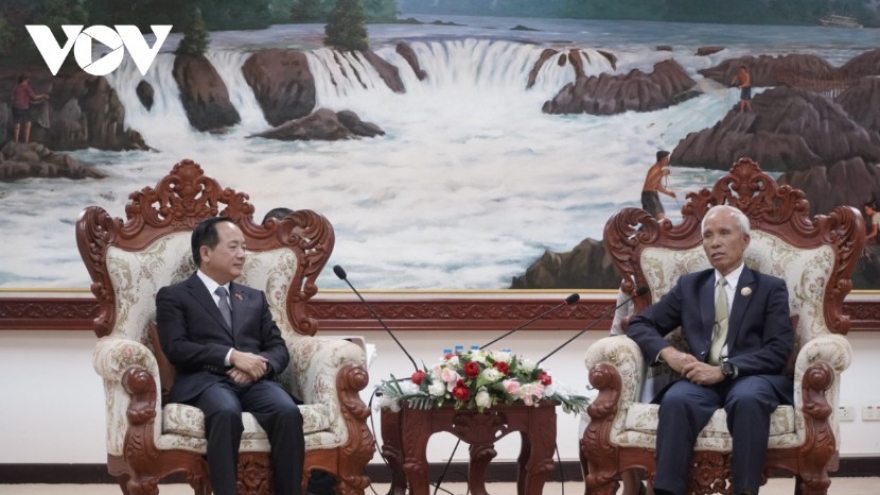
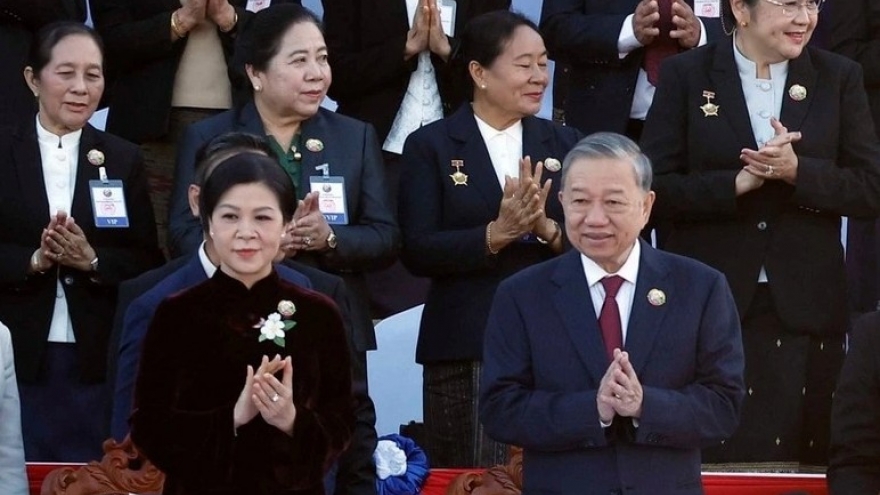
New Laos-Vietnam Friendship Park symbolizes enduring ties between nations

VOV.VN - Party General Secretary To Lam and his spouse, along with a high-level Vietnamese delegation, attended the inauguration of the Laos-Vietnam Friendship Park in the capital, Vientiane, on the afternoon of December 2.
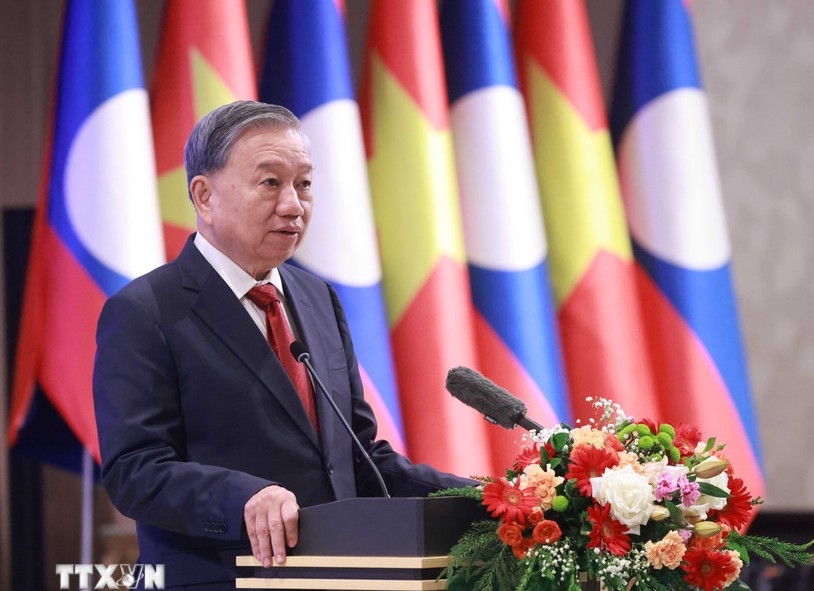
The activity is part of the Vietnamese Party chief’s state visit to the Lao People’s Democratic Republic, attendance at the 50th anniversary of Laos’ National Day, and co-chairing the high-level meeting between the Communist Party of Vietnam and the Lao People’s Revolutionary Party.
Those in attendance also included Lao General Secretary and President Thongloun Sisoulith and his spouse, leaders of the Lao Party and State, representatives of several ministries, and a large number of Lao citizens.
Speaking at the ceremony, Deputy Prime Minister Nguyen Chi Dung highlighted the event’s special significance, marking a new milestone in relations between the two Parties and States and reinforcing the deep, trustworthy, and enduring bond of friendship between Vietnamese and Lao comrades.
Dung noted that the park’s completion was the result of the shared commitment and determination of the two Parties, States, people, ministries, local administrations, and enterprises to accelerate construction while ensuring quality, safety, and effectiveness.
Looking ahead, to make the Laos-Vietnam Friendship Park a lasting spiritual asset reflecting bilateral friendship, Deputy PM Nguyen Chi Dung called on relevant agencies to continue allocating appropriate resources, strengthen management, coordinate operations, and maximize the park’s benefits, ensuring it meets the expectations of the people of both countries. He expressed confidence that following this project, more large-scale, meaningful initiatives will emerge in the future.
He also pledged continued efforts to carry out key cooperative projects as a contribution to the shared prosperity of both nations.
At the inauguration, Thongsalith Mangnomek, Chief of the Office of the Central Committee of the Lao People's Revolutionary Party (LPRP) emphasized that Laos and Vietnam are close neighboring countries with a longstanding, special traditional friendship built by Presidents Kaysone Phomvihane, Souphanouvong, and Ho Chi Minh, forming a priceless legacy passed down through generations and integrated into regional and global development.
He noted that the park serves not only as a symbol of bilateral relations but also as a space for children and young people to learn, play, and practice sports. It is intended to educate future generations about the shared traditions of Laos and Vietnam.
On behalf of the Lao Party, Government, and people, Thongsalith Mangnomek formally accepted the project, vowing to preserve and promote its value, and expressed thanks to the Vietnamese Party, Government, and people for their contributions of effort, expertise, and funding toward this historically significant project.
The Laos-Vietnam Friendship Park was established under the agreements of the two Parties, Governments, and Politburos, as well as the 2025 cooperation plan and the 47th session of the Vietnam-Laos Intergovernmental Committee.
Covering over 30,000 square meters, the project has a total value exceeding VND 340 billion, including VND 330 billion in Vietnamese official development assistance and VND 10 billion contributed by the Lao Government (equivalent to 9 billion Kip). The park is a symbolic cultural gift from the Vietnamese Party, Government, and people to their Lao counterparts, celebrating Laos’ 50th National Day and the Parties’ national congresses.
Located in a prime area planned as a major urban center of Vientiane, with modern cultural and ecological design and landscapes featuring the ethnic identity of both nations, the park serves the community while symbolizing the enduring, steadfast, and exceptional bond in the history of both countries.
It will also serve as an educational centre, raising awareness among young generations about the historical ties between the two peoples, while nurturing a sense of responsibility to continue and promote the special tradition of bilateral solidarity.
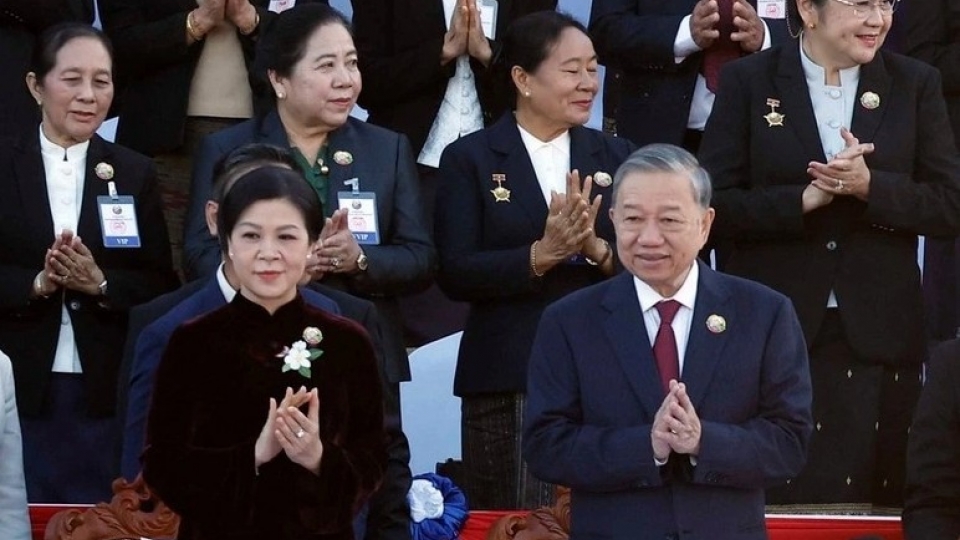
Party General Secretary To Lam attends grand 50th National Day celebration in Laos
VOV.VN - Party General Secretary To Lam and his spouse, along with a senior Vietnamese delegation, joined the grand 50th National Day celebration at ThatLuang Square in Vientiane on December 2, sharing the occasion with the people of Laos.
Laos, Vietnam bolster cooperation in propaganda and mass mobilization
VOV.VN - Amid a string of prominent joint communication activities marking major national holidays, Vietnam and Laos have stepped up the dissemination of their special solidarity across media platforms.