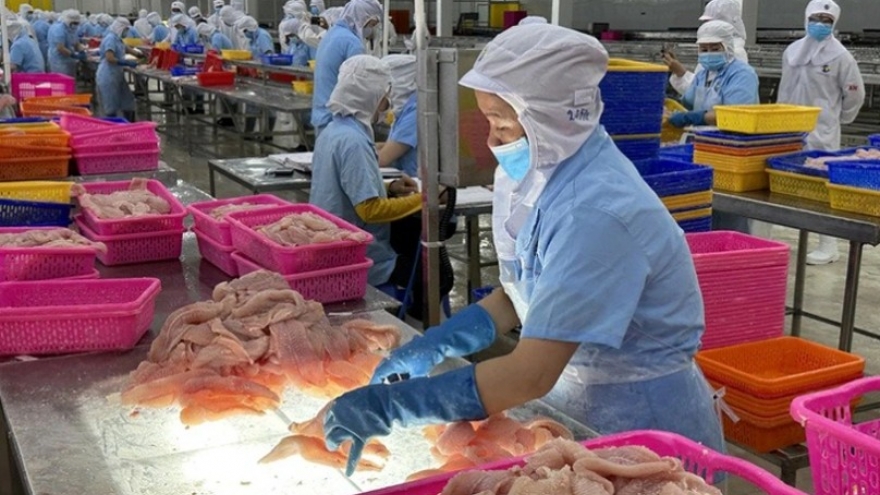
Vietnamese seafood poised to expand market share in Japan

VOV.VN - Vietnamese seafood exports to Japan reached US$1.445 billion over the past ten months of the year, standing out despite a contracting Japanese market caused by inflation, a weakened yen, and subdued consumer spending.
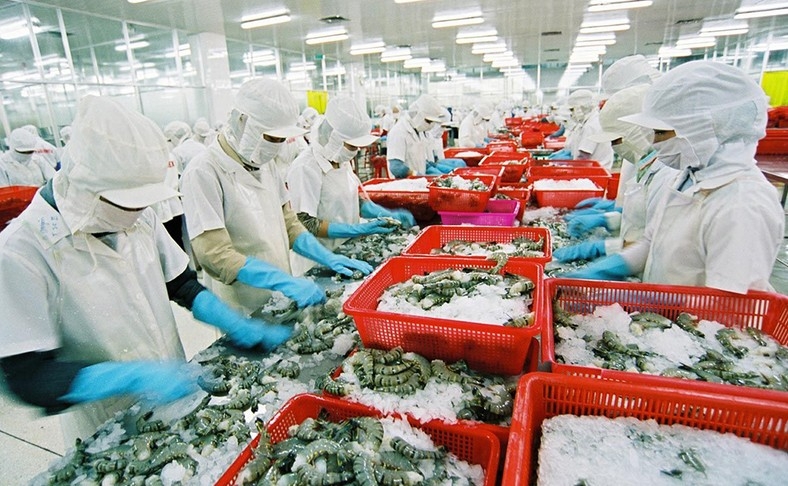
Whiteleg shrimp maintains lead, mackerel posts surprising surge
According to the Vietnam Association of Seafood Exporters and Producers (VASEP), several trends stand out in exports to Japan this year. Whiteleg shrimp, a strategic product for Vietnam, reinforced its market position, approaching US$324.1 million, up 15.1%, accounting for over 22% of total seafood exports to Japan. Salmon followed with US$224 million (+9.45%), maintaining steady growth amid intensifying competition.
Notably, mackerel exports surged 35.6% to US$116.6 million, climbing into the top export group. This jump reflects both Vietnam’s supply capacity and a clear trend in Japan: consumers are tightening spending, shifting toward affordable, convenient, and easy-to-prepare products. Meanwhile, crab exports reached nearly US$100 million (+24.2%), while black tiger shrimp declined slightly by 3.27%, highlighting growing competition in traditional segments.
Reports from Japan’s Ministry of Agriculture, Forestry and Fisheries (MAFF) and the Japan Fisheries Association (JFA) indicate that the Japanese seafood market is undergoing a profound “restructuring.” Self-sufficiency has fallen to 59%, a long-term low with no signs of recovery, while per capita consumption dropped to 23.2 kg per year, continuing a decade-long decline. Imports remain above US$20 billion annually, a cornerstone for ensuring supply.
“Alongside weaker purchasing power, Japanese consumers favor reasonably priced, reliable products that are convenient for family meals or industrial catering. This explains the rise of common marine species such as mackerel, sardines, and chub mackerel. Retail chains are also tightening sustainability requirements, including certifications from the Aquaculture Stewardship Council (ASC) and the Marine Stewardship Council (MSC), as well as traceability standards, pushing suppliers to enhance production and processing practices,”VASEP noted.
Clear opportunities amid market shifts
VASEP highlighted that although Japan’s overall demand may not rise sharply, market structure shifts offer opportunities for Vietnamese businesses. Vietnam holds strong advantages in the common marine fish segment, which is experiencing growth.
Whiteleg shrimp continues to compete effectively due to stable quality and high production capacity. In particular, processing capabilities are a key strength, especially as Japan favors convenient products. Japanese importers value consistency and long-term relationships, which Vietnamese exporters have built steadily over the years.
These factors provide ample room for expanding Vietnam’s market share, particularly in frozen, semi-processed, and value-added seafood products.
However, challenges persist. Japan is a high-standard market, where only companies that meet strict requirements can succeed. Competition from Thailand, Indonesia, India, and China is intensifying, especially in shrimp and low-cost marine fish segments. Stringent residue regulations mean even a few non-compliant shipments could trigger industry-wide restrictions.
Additionally, the weaker yen encourages importers to press for lower prices, squeezing profit margins. Japan is also shifting toward sustainable, environmentally friendly consumption, requiring Vietnamese firms to invest in international certifications to maintain market position.
Despite these hurdles, export results over ten months indicate strong resilience and rapid adaptation by Vietnamese companies. With Japanese demand moving toward affordable, convenient, and safe products, Vietnam is well-positioned to serve this segment.
“In the coming period, businesses should promote value-added products, differentiate offerings through quality and sustainability certifications, expand supply chains for common marine fish, and maintain stable quality, the factor most highly valued by the Japanese market. If leveraged correctly, Vietnamese seafood can consolidate its position and expand market share in a high-potential yet challenging Japanese market,” VASEP advised.

Two-month wood exports to Japanese market sees slight fall
VOV.VN - The export turnover of wood and wood products to the Japanese market in February is estimated to reach US$110 million, a drop of 32.5% compared to January and down 22.7% compared to February, 2023, according to figures released by the General Department of Customs.